Ear Infections in Poodles: Spotting Them, Treating Them and Stopping Them Coming Back
By The Poodle Guide editorial team · Updated on November 2, 2026
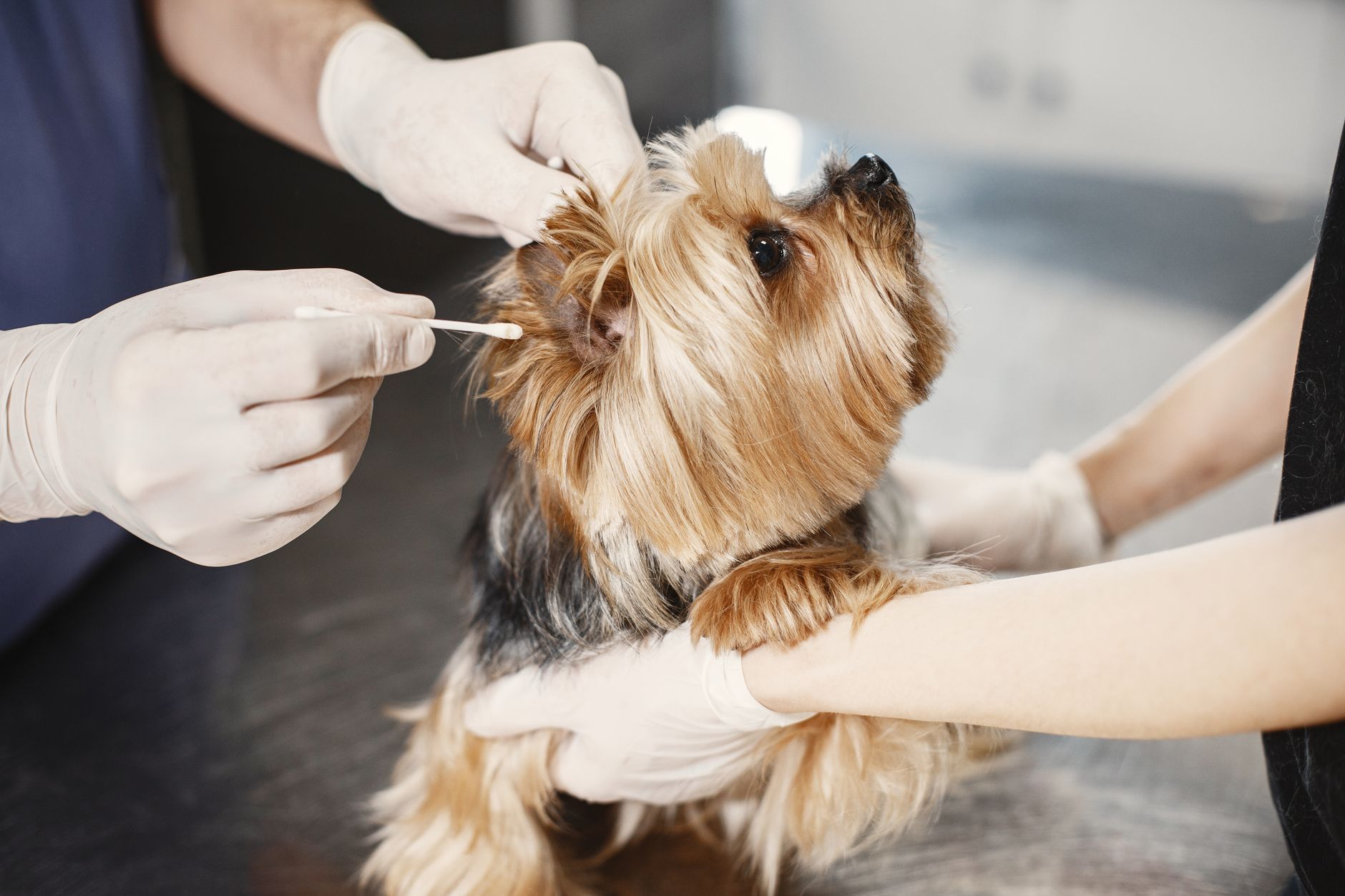
Your Poodle suddenly shakes his head more often, scratches one ear with a hind paw, and when you lift the ear flap there is a smell that should not be there. An ear infection is the likely culprit. It is one of the most common reasons dogs go to the vet, and Poodles are known for it. This guide covers how to recognise one, what your vet will do, and why the infection itself is often only half the story. For everyday ear care, see our guide to cleaning and caring for your Poodle's ears.
Why Poodles in particular
Researchers at the Royal Veterinary College (VetCompass programme) studied the records of 22,333 dogs seen at UK first-opinion practices. In one year, 7.3 per cent had a diagnosed outer ear infection (otitis externa), roughly one dog in fourteen. Poodle breeds together had about 1.9 times the risk of dogs that are not Poodles. Ear shape mattered too: drop ears carried about 1.8 times the risk of erect ears, and V-shaped drop ears about 1.8 times as well.
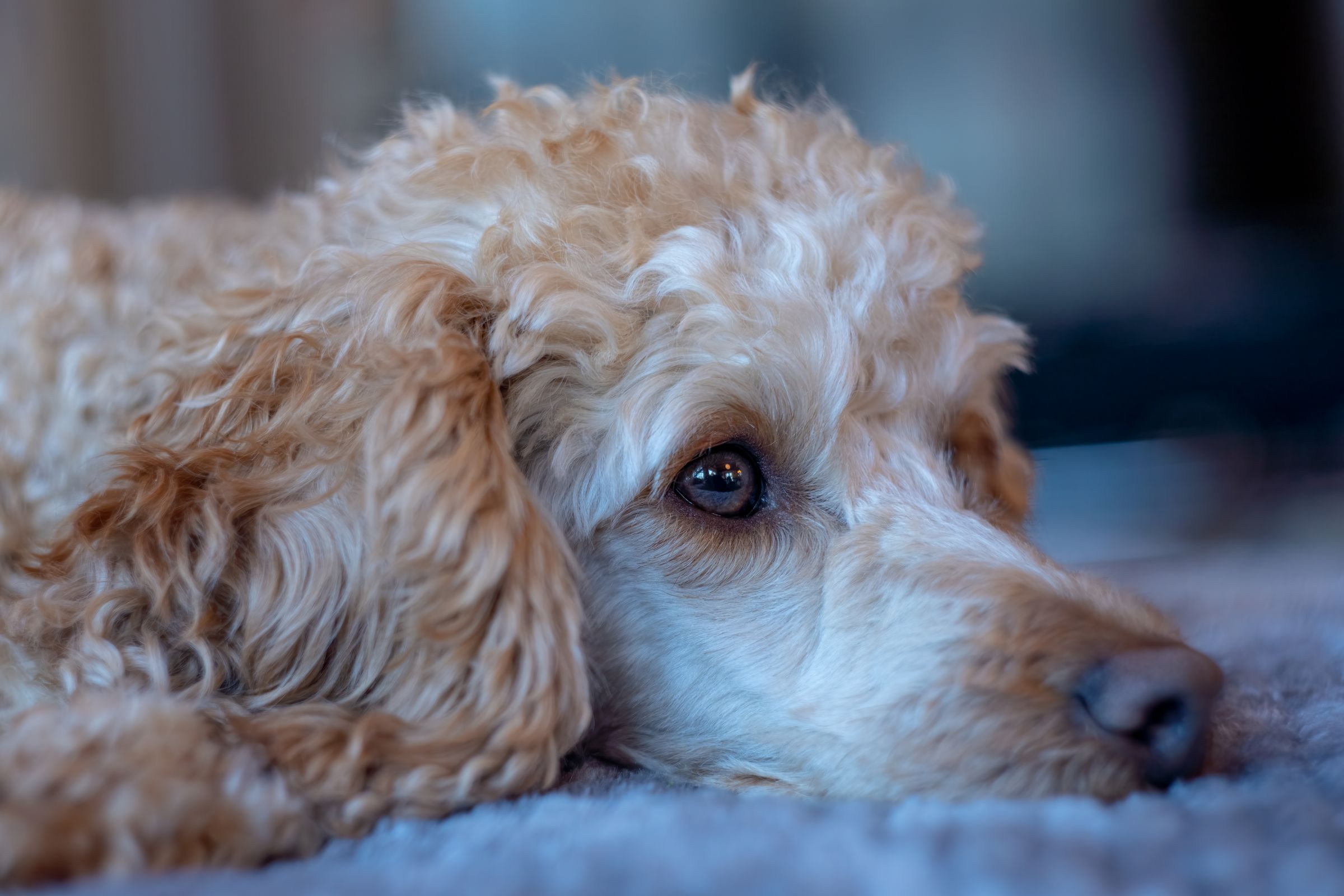
In a Poodle, two things come together. The ear flap hangs over the canal, and hair grows inside the canal. That makes it warm and poorly ventilated. Add moisture after swimming or a bath, and yeast and bacteria thrive. The risk applies across Poodles of every size, from Toy to Standard.
Signs of an ear infection
- Frequent head shaking, or rubbing the head along the sofa or floor.
- Scratching at the ear, sometimes with a yelp because it hurts.
- A sour, yeasty or sweetish smell.
- Red, swollen skin inside the ear, brown or yellow wax, or moist discharge.
- Flinching or growling when you touch the ear.
If your dog holds his head tilted, stumbles or circles, the infection may have reached the middle or inner ear. Phone the vet the same day. A thick, soft ear flap is usually an aural haematoma, a blood blister caused by all the shaking and scratching, and it also needs a vet. If you are unsure what you are seeing, our health check is a good first guide.
What the vet does
The vet looks into the canal with an otoscope and asks two questions: is there something in there that should not be, such as a grass seed or ear mites, and is the eardrum intact? The second matters because many ear drops must not be used when the eardrum is perforated. The vet will often take a sample of wax to look at under the microscope (cytology). It shows whether yeast (most often Malassezia) or bacteria are mainly responsible, and that decides which medicine works.
Treatment is usually a clean-out plus ear drops. In the UK these drops are prescription-only veterinary medicines (POM-V): a vet may only prescribe them after a clinical assessment of your dog, so they cannot be bought over the counter or "kept in the cupboard" from last time. At home, finish the whole course even if the ear looks better after a few days, and go back for the recheck. Skip home remedies.
The infection is often a symptom
Vets look at ear disease in four layers, known as PSPP. The primary cause starts the problem, a secondary infection (yeast and bacteria) follows, predisposing factors make it easier (drop ears, hair in the canal, moisture), and perpetuating factors keep it going once it drags on. Drops mostly tackle the infection. If the primary cause stays, the infection comes back.
That primary cause is most often allergy, either to something in the environment such as house dust mites or pollen, or to an ingredient in the food (atopy and food allergy). In one study of 100 affected dogs, allergy was behind 43 of them, grass seeds behind 12 and ear mites behind 7. Look for signs outside the ear: licking or chewing the paws, or scratching the belly and armpits, points towards allergy.
If your vet suspects a food allergy, an elimination diet is the way to find out: at least eight weeks on a single novel protein or a prescription diet, followed by a challenge with the old food to see whether the signs return. Blood and saliva tests for food allergy are not reliable for this.
Why you should not let it drag on
An infection that keeps coming back changes the ear canal. The skin thickens, the canal narrows and can eventually calcify. The ear can then no longer be cleaned properly and drops work less and less well. In the worst cases the only option left is surgery to remove the whole ear canal (total ear canal ablation, TECA), which leaves the dog with reduced, though not completely lost, hearing. It rarely has to come to that if you act early and take the underlying cause seriously.
Because ear disease can become a long-running problem, insurance matters. In the UK, lifetime policies generally keep covering a condition that began after you took them out, up to the annual limit, while time-limited policies usually stop paying for a condition after about twelve months, and a recurrence is typically treated as the same condition. Check the wording in our guide to Poodle pet insurance, and remember that problems already present before the start date are excluded.
Prevention: what you can do yourself
- Look and sniff weekly. A healthy ear is pale pink, clean and has no smell, so you spot a beginning early.
- Dry after water. Pat the ear flaps dry with a towel after swimming or bathing.
- Do not over-clean. A clean ear should be left alone, and cotton buds never go down the canal.
- Ear hair: ask first. Trimming around the ear opening belongs with regular grooming. Plucking is debated; only do it on the advice of your groomer or vet.
- If it keeps coming back, look for the cause. Two or three ear infections a year is not bad luck but a signal.
Ear trouble is one of the well-known weak spots in the breed; the full picture is in our Toy Poodle health overview.
In short
- Poodle breeds had almost twice the risk of an ear infection compared with other breeds.
- Signs: head shaking, scratching, smell, redness, discharge, pain.
- Tilted head or stumbling: see the vet the same day.
- Do not use drops yourself: the eardrum has to be checked first.
- Finish the course and attend the recheck, even if the ear looks better.
- If it keeps coming back, allergy is the most likely underlying cause.