Legg-Calvé-Perthes in Poodles: The Young Dog Who Starts Limping
By The Poodle Guide editorial team · Updated on October 19, 2026
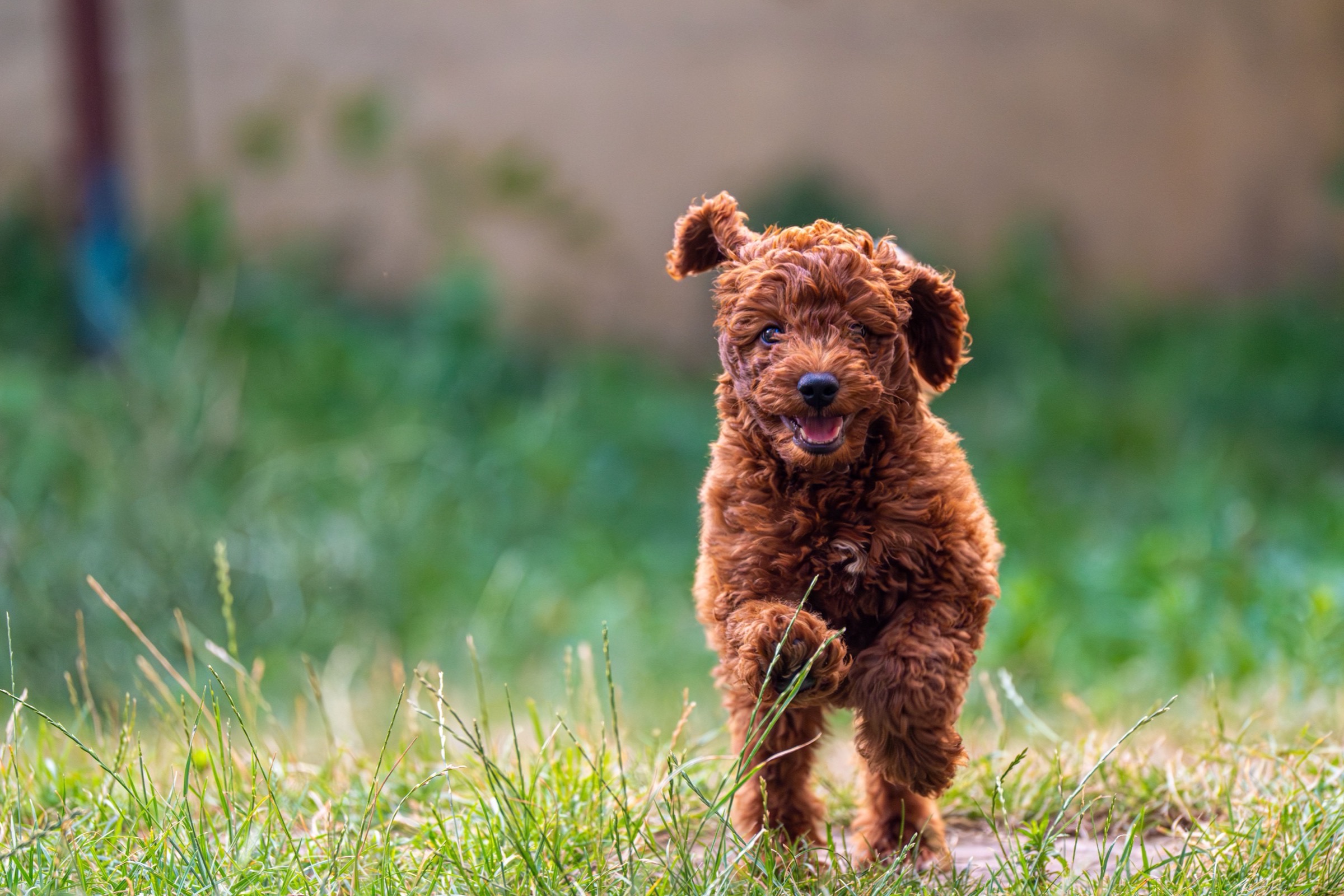
Your Poodle puppy is around six months old and runs and plays exactly as a puppy should. Then you notice he is going easy on one hind leg. At first only after play, a few weeks later on ordinary walks too. In a young, small dog who goes lame this gradually, a vet will think of one thing first: Legg-Calvé-Perthes disease, often shortened to LCPD or simply Perthes.
What happens in the hip
The head of the thigh bone is the ball that turns in the hip socket. In a growing dog it depends on a fragile blood supply. In Legg-Calvé-Perthes that supply is lost. The bone in the ball gets no oxygen, dies off and weakens, and under the dog's body weight it collapses and loses its shape. The hip no longer moves smoothly, which hurts, and arthritis follows.
Why the blood supply fails is not fully understood. What is clear is that it is a disease of small dogs. The Cornell Riney Canine Health Center names Miniature and Toy Poodles among the breeds affected, alongside small terriers and similar dogs,. It joins patellar luxation on the list in Toy Poodle health.
Which Poodles are affected
Size matters here, and the labels differ between registries. The FCI recognises four varieties, with the Toy at 24 to 28 cm and the Miniature at 28 to 35 cm. The AKC caps the Toy at 10 inches and works with three varieties, as does the UK Kennel Club. Our guide to Poodle sizes sorts out the overlap; go by weight, not label.
Legg-Calvé-Perthes belongs to the lightest end of the breed: Toys and Miniatures, and by extension small dogs up to roughly 12 kg. We found no breed-specific figures for Medium or Standard Poodles, so we will not quote any. If a young Medium or Standard Poodle limps on a hind leg, your vet will weigh up hip problems of a different kind first, such as hip dysplasia.
What you see, and when
Signs typically begin between 4 and 11 months of age, while the hip is still growing. Watch for:
- Lameness on one hind leg that slowly worsens over weeks. Occasionally it starts suddenly.
- Pain or a yelp when the hip is moved or the leg is stretched backwards.
- Stiffness, and no appetite for running or jumping.
- A thinner thigh on the affected side, because the muscles waste when the leg is spared.
Usually one hip is affected. In a Hungarian series of 43 dogs, onset fell between 4 and 10 months, and five dogs (about 12 per cent) had both hips involved.
Unlike patellar luxation, with its skipping step in the knee, Perthes sits in the hip and the lameness gets steadily worse and stays.
Diagnosis: an X-ray
The vet considers age, size and the way the lameness developed, and examines the hip by hand. An X-ray of the hips confirms the diagnosis. Early changes can be subtle, so a repeat X-ray after a few weeks is sometimes needed. Do not wait months in the hope that it is a strain.
Treatment: why surgery is usually the answer
Rest and pain relief help only a minority of dogs. Most stay sore, and the damaged bone does not regrow into its old shape. The standard treatment is therefore femoral head and neck excision. The surgeon removes the damaged ball and neck of the thigh bone, a firm fibrous joint forms in its place, and the hip muscles take over. In a light dog such as a Toy or Miniature this generally works very well, and the outlook is very good: most dogs end up pain-free, running and playing. A total hip replacement exists, but it is a specialist option mostly for larger dogs.
Recovery decides the result. Physiotherapy often starts within days of surgery, with gentle movement of the joint, and swimming can be added once the stitches are out. Expect a few months of gradual build-up. During that time a crate-trained dog has a far easier time with enforced rest than one who has never been in a box.
Costs differ too widely between countries and practices to quote. Ask for a written estimate, and check how your policy treats hereditary conditions and signs that predate it; see Poodle pet insurance. Perthes strikes in puppyhood, which is a strong argument for insuring early.
Hereditary, and what it means for breeders
Heredity plays an important part. The pattern of inheritance is unknown, probably involves several genes, and there is no DNA test. The advice is plain: dogs with Legg-Calvé-Perthes should not be bred from.
In the United States the Orthopedic Foundation for Animals keeps a Legg-Calvé-Perthes database. A hip X-ray taken at 12 months or later is read by a board-certified radiologist, and a normal dog receives an OFA number that anyone can look up. If the same X-ray is read as normal for hip dysplasia, the dog counts as normal for Perthes too, and the LCP number is issued free. Perthes is not a required test in the CHIC programme for Toys or Miniatures, so you have to ask.
So make it one of your questions when buying a puppy: has it ever appeared in the lines, and can they show the parents' hip results? A good breeder answers openly. A seller who says "all my puppies are healthy" but shows no results either does not know or is not telling you, which is how puppy farms work.
At home after surgery
- Keep the weight down. A lean dog loads the new joint less: see a healthy weight for your Poodle.
- Limit jumping. A ramp beside the sofa saves dozens of hard landings.
- Build up slowly. Short lead walks first, then longer ones. Ask the vet before returning to sport such as agility.
- Use the brain instead. Brain games keep a bored puppy busy without loading the hip.
In short
- Legg-Calvé-Perthes is the death of the hip joint's bony ball after its blood supply fails, mostly in Toy and Miniature Poodles and other small dogs.
- Signs usually begin between 4 and 11 months: lameness on one hind leg that slowly gets worse.
- Rest and pain relief rarely suffice. Head and neck excision with good rehabilitation gives small dogs a very good outlook.
- It is hereditary and there is no DNA test, so ask the breeder directly.