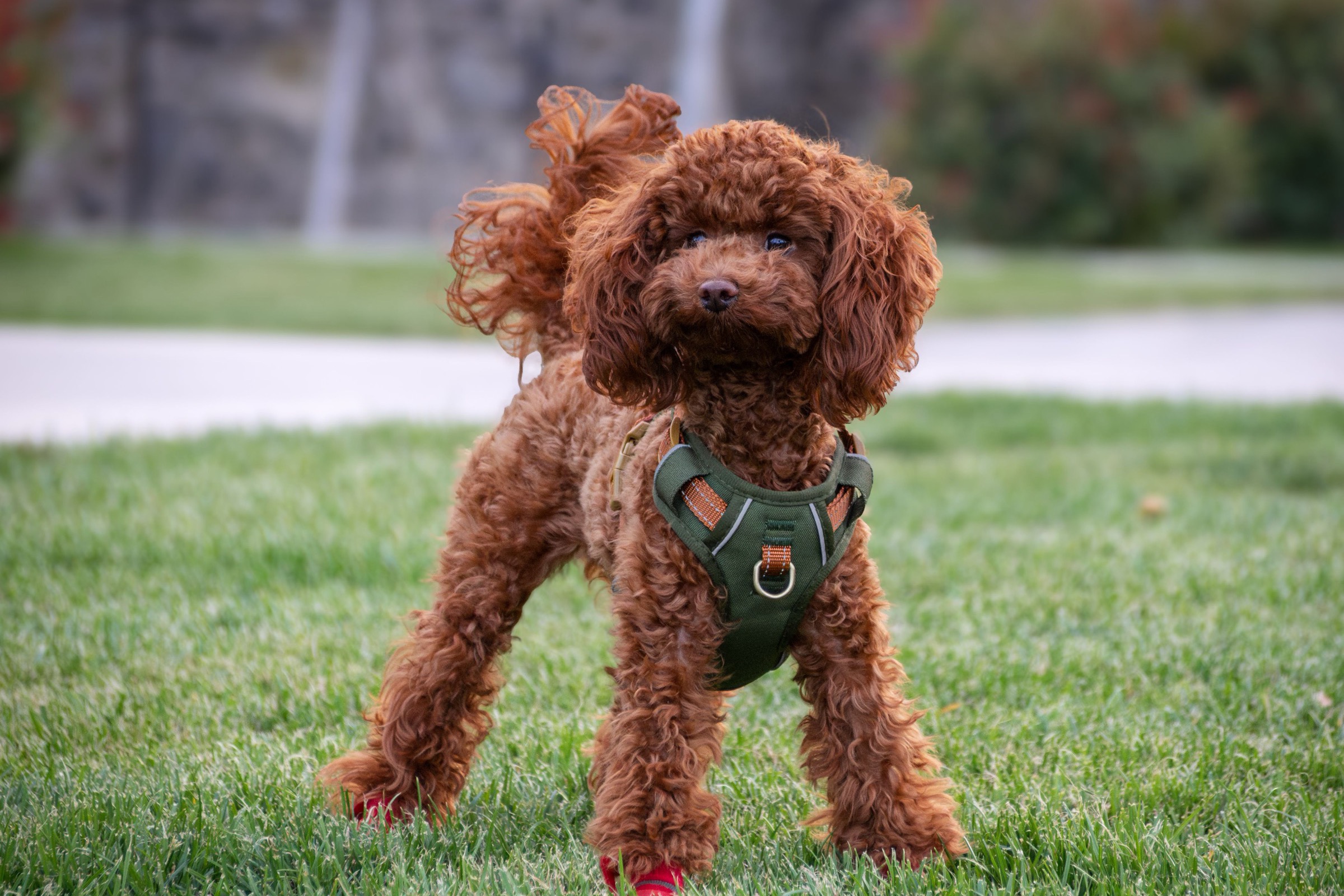
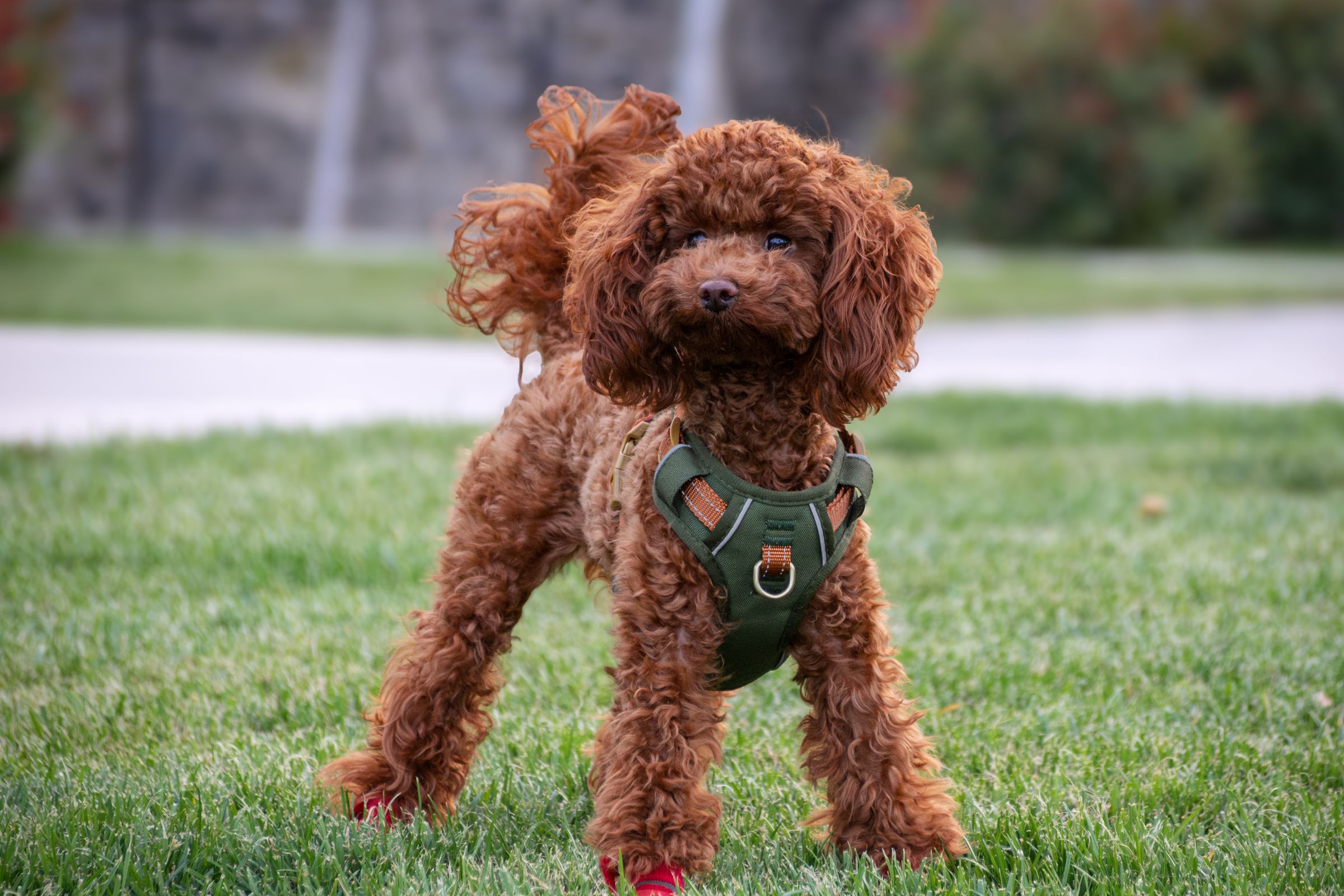
Poodle Apartment Living: One of the Best Breeds for It, With 3 Conditions
By The Poodle Guide editorial team · Updated on July 24, 2026
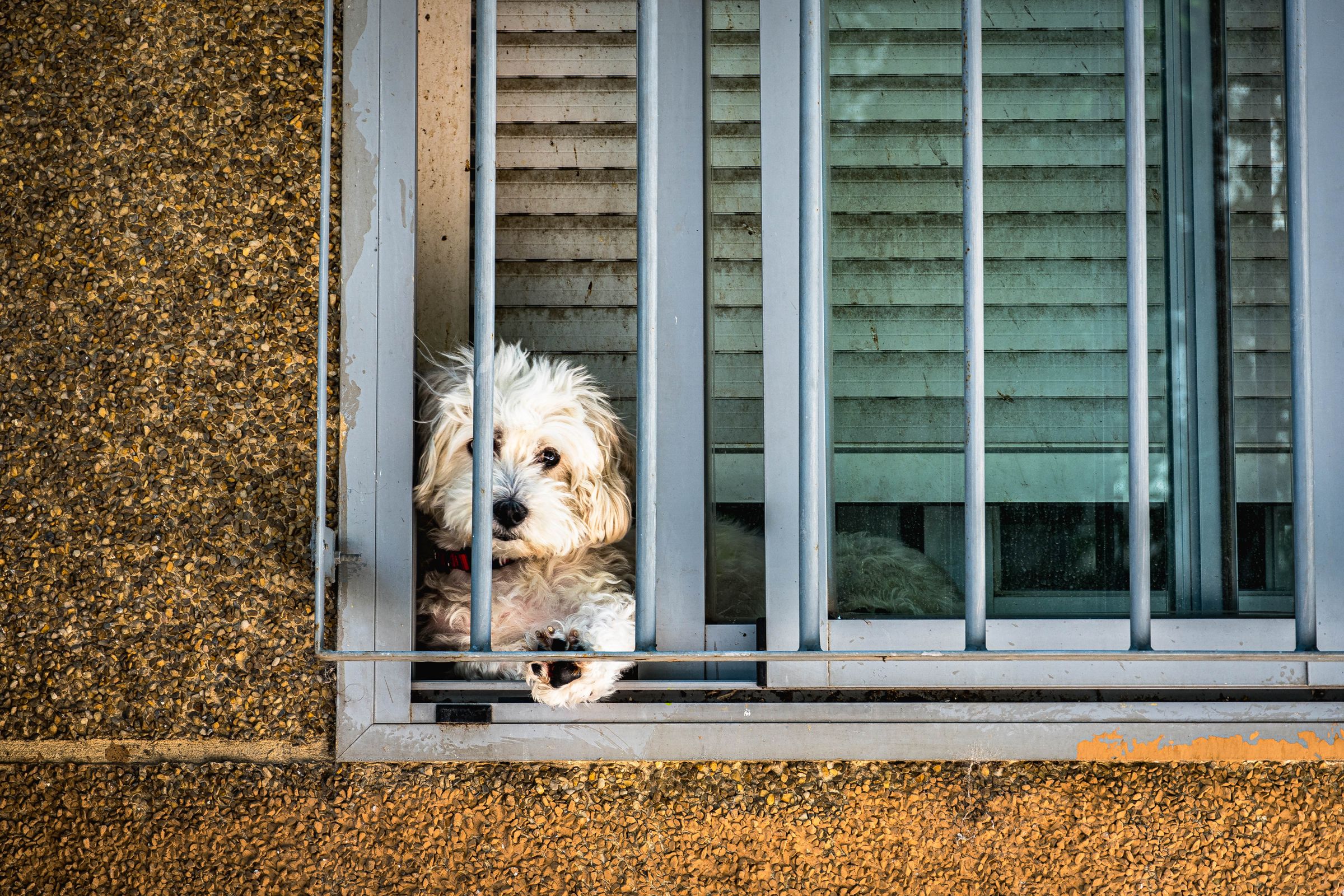
Can a Poodle live happily in an apartment? Yes, in fact, Poodle apartment living is one of the best matches in the dog world. The breed barely sheds, has no doggy odor to speak of, doesn't need a yard, and is smart enough to adapt to almost any household rhythm. But "one of the best apartment breeds" is not the same as "no effort required." There are three conditions that decide whether your neighbors love your Poodle or file complaints about it: bark management, daily mental work, and picking the right size for your floor plan and lifestyle.
Why Poodles suit apartment living so well
Three breed traits do the heavy lifting:
- They barely shed. The curly coat holds on to loose hair instead of dropping it on your floor and sofa. In a small living space where you and your dog share every square meter, that matters daily. (The trade-off: the coat needs brushing and a groom every 6-8 weeks.)
- No yard required. A yard was never the point for this breed. What a Poodle needs is walks, sniffing, training and time with you, all of which happen outside the apartment anyway. A dog with a bored brain and a big garden is worse off than a dog with a busy brain and no garden at all.
- They're compact and adaptable. A Toy Poodle at 2-4.5 kg (4.5-10 lbs) takes up less room than a house cat. Even the Miniature at 4-7 kg fits comfortably in a one-bedroom flat. And because Poodles rank #2 in working intelligence, they read your household routine quickly: quiet when you work, ready when you grab the leash.
Condition 1: take barking seriously from day one
Here's the honest part. Poodles are alert, people-oriented watchdogs-in-miniature: they hear the elevator, the neighbor's keys, the pizza delivery two doors down, and their instinct is to announce all of it. In a detached house that's a quirk; in an apartment building it's the single biggest reason Poodle-and-neighbor relationships go sour.
The good news: this is very trainable, precisely because the breed is so quick to learn. What works:
- Allow one alert bark, then reward silence. Acknowledge the alert ("thank you"), call the dog to you, reward the moment it's quiet. You're not punishing the warning: you're teaching that one bark is enough.
- Don't accidentally pay for barking. Rushing over, picking the dog up, or even scolding all count as attention. Calm gets attention; noise doesn't.
- Manage the triggers. A dog that spends the day at a window overlooking a busy walkway is on guard duty for hours. Frosted film on the lower pane or a bed away from the window removes ninety percent of the rehearsal.
- Tire the brain. A Poodle with daily puzzle work and training games has far less spare energy to spend on hallway surveillance.
Related and just as important in a building: a Poodle left alone too long will vocalize. This is a breed that should not be alone more than 4-5 hours: read our full guide on leaving a Poodle home alone before you commit, especially if you work away from home.
Condition 2: daily walks plus daily brain work
No yard means you are the activity plan. The physical part is manageable: for a Toy or Miniature, three or four walks a day totalling around an hour, with real sniffing time, covers it. The mental part is what people underestimate. Ten minutes of trick training, a snuffle mat at dinner, a food puzzle, hiding treats around the living room: that's the difference between a content apartment Poodle and one that reorganizes your shoe rack. If you enjoy going further, dog sports like agility are tailor-made for this breed and give a city dog a brilliant outlet.
Condition 3: pick the right size for your life
The FCI recognizes four Poodle sizes; the AKC recognizes three varieties (with the Toy capped at 10 inches). For apartment purposes, think of it in two groups, and see our complete size guide for the full picture:
| Size | Apartment fit | Watch out for |
|---|---|---|
| Toy (24-28 cm, 2-4.5 kg) | Ideal: smallest footprint, easy to carry, moderate exercise needs | Fragile joints: manage stairs and jumping (patella) |
| Miniature (28-35 cm, 4-7 kg) | Ideal: a bit sturdier than the Toy, still very portable | Same knee caution, slightly more exercise |
| Medium (35-45 cm, 9-13 kg) | Good, with a solid daily exercise routine | Needs more than a quick loop around the block |
| Standard (45-60 cm, 20-30 kg) | Only for genuinely active owners | Real daily exercise is non-negotiable; stairs and lifts with a 25 kg dog |
A Standard Poodle in a flat is not cruel, plenty live happily in cities, but it only works when running, hiking or serious training is already part of your week, every week. If your activity plan is "walks around the neighborhood," choose a Toy or Miniature.
The practical apartment details
Stairs and small knees
Toy and Miniature Poodles are prone to patellar luxation, and repeatedly bouncing down flights of stairs (or off the sofa) loads exactly those kneecaps. Carry a Toy puppy on stairs for the first months, teach calm stair manners rather than downhill sprints, and take the lift when you have one. Think of it as knee insurance.
Potty routine without a yard
No garden means no "just let the dog out": every toilet trip is a walk. Build a predictable rhythm (first thing in the morning, after meals, before bed), and expect house-training a puppy in an apartment to take a little longer simply because the front door is further away. Many apartment owners keep a puppy pad on the balcony or by the door as a backup during the puppy months, then phase it out.
Balconies and warm days
A balcony is a bonus, not a dog run. Secure the railing gaps for Toy-sized dogs, always provide shade and water, and never leave a dog out on a hot balcony: a small dog overheats fast. On genuinely hot days, follow the rules in our guide to Poodles in hot weather: walk early and late, and test the pavement with your hand.
Check the rules before the puppy
Unromantic but essential: check your lease or building regulations for pet clauses before you commit to a puppy, and remember that wherever you are, a puppy should never leave its mother before 8 weeks (check your national rules, as several countries set this in law).
In short
- Poodles are among the best apartment breeds: low-shedding, compact, no yard needed, highly adaptable.
- Condition 1: train the alert-barking early: it's the breed's main apartment risk.
- Condition 2: daily walks plus daily mental work replace the yard; a bored Poodle is a loud Poodle.
- Condition 3: Toy and Miniature fit almost any flat; a Standard only suits a genuinely active household.
- Practical: protect small knees on stairs, build a fixed potty-walk rhythm, secure the balcony, and never leave a Poodle alone longer than 4-5 hours.