Poodle Healthy Weight: How to Tell and What to Do
By The Poodle Guide editorial team · Updated on July 24, 2026
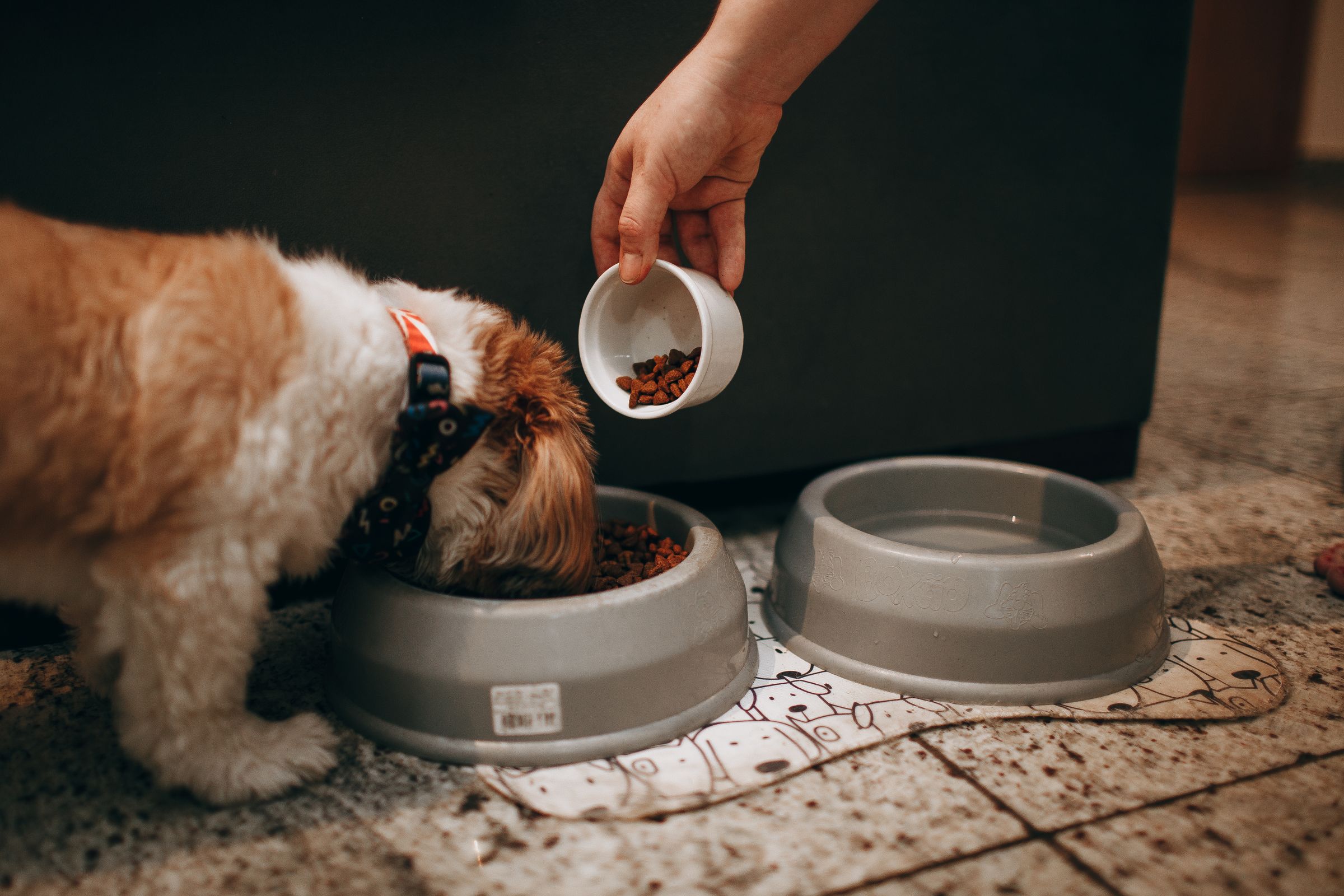
A healthy weight is the least glamorous and most powerful health factor you control in a Poodle's life. Extra kilos strain the knees of a Toy, the hips of a Standard, and the heart and joints of every size in between, and with a breed built to live long, carrying extra weight for years quietly shortens that life. The tricky part: under that curly coat, an overweight Poodle is genuinely easy to miss. This guide gives you the healthy weight per size, the two-minute check you can do at home, and a sensible route back down if the scale has crept up.
What should a Poodle weigh? The four sizes
The FCI recognizes four Poodle sizes, each with its own healthy range:
| Size | Height | Healthy weight |
|---|---|---|
| Toy Poodle | 24-28 cm | 2-4.5 kg (4.5-10 lbs) |
| Miniature Poodle | 28-35 cm | 4-7 kg (9-15 lbs) |
| Medium Poodle | 35-45 cm | 9-13 kg (20-29 lbs) |
| Standard Poodle | 45-60 cm | 20-30 kg (44-66 lbs) |
A note for American readers: the AKC divides the breed into three varieties instead of four sizes: Toy (under 10 inches), Miniature and Standard, but the principle is identical everywhere. These ranges are guidelines, not verdicts: a tall, well-muscled Miniature at the top of the range can be perfectly fit, while a small-framed one at the same weight is overweight. That is why the body check below beats the scale.
The rib and waist check: two minutes, no equipment
Vets score body condition with their hands, and you can copy the essentials at home:
- Feel the ribs. Run flat fingers along your dog's chest. You should feel each rib under a thin cushion, roughly like the bones on the back of your hand. Having to press to find them means too much padding.
- Look from above. Behind the ribcage, the body should tuck in visibly to a waist. A straight or bulging line means overweight.
- Look from the side. The belly should rise from chest toward the hind legs, not hang level or sag.
Do this monthly, ideally right after grooming when the coat is short: the classic Poodle trap is that a full coat makes every dog look fluffy-round while hiding what is underneath. And weigh regularly: small sizes fit on a household scale (weigh yourself with and without dog), and many vet practices are happy to let you use the walk-on scale between visits.
Why small Poodles gain weight so fast
Here the sizes really part ways. For a 25 kg Standard, a bit of leftover chicken is a rounding error. For a 3 kg Toy, that same bite is a serious slice of the whole day's energy needs: give a Toy Poodle "just a little something" a few times a day and you can quietly double its intake. Look at it this way: 500 grams of extra weight on a Toy Poodle is already more than 10% overweight, the equivalent of a full-grown adult gaining eight kilos. This is why small-Poodle health and weight are so tightly linked: the knees (patellar luxation is the classic small-size issue) simply cannot afford the load.
The main weight creepers, at every size:
- Uncounted treats and table scraps, the number one cause, and in small dogs by far the most damaging. Some human leftovers are also outright dangerous for dogs, so scraps deserve caution twice over.
- Free feeding: a bowl that is always full makes portions invisible.
- Portion drift: feeding "by eye" tends to grow over time. A measuring cup or kitchen scale keeps it honest.
- Life changes: neutering, aging and less exercise all lower energy needs while the portions stay the same. Senior Poodles are especially prone to gradual gain.
Slimming down: with the vet, never a crash
If the rib check fails, resist the urge to simply halve the food. Rapid weight loss is unhealthy for dogs, and in very small breeds skipping food is genuinely risky. Book a regular appointment with your vet instead, first to rule out medical causes (a thyroid issue, for example, can cause weight gain on a normal diet), then to set a realistic target weight and a gradual plan. A sensible plan usually looks like this:
- Measure the daily portion exactly, every day, and split it over two or more meals.
- Count every treat as part of that portion: take training treats out of the daily kibble ration rather than adding them on top.
- Swap, don't starve: replace calorie-dense snacks with green beans, cucumber or a few pieces of the regular kibble.
- Make the food work: a food ball or puzzle feeder turns dinner into slow, satisfying activity, a perfect match for the clever Poodle brain, and one of many brain games that burn energy without burning joints.
- Build exercise gradually: more and longer walks, swimming for dogs that enjoy it, but no sudden bootcamp for an overweight dog: the joints are already overloaded.
- Weigh monthly and adjust with your vet. Slow and steady is the entire game.
Underweight happens too
Less common, but worth naming: if ribs, spine and hip bones are sharply visible and easily felt with no fat cover at all, your Poodle is too thin. In puppies of the smallest sizes, eating too little is a genuine concern (tiny puppies have little reserve), and in any adult dog, unexplained weight loss is a classic early sign that something is wrong. Sudden loss of appetite or weight is not a wait-and-see situation: call your vet, and use our health check to structure what else you have noticed.
In short
- Healthy weight by FCI size: Toy 2-4.5 kg, Miniature 4-7 kg, Medium 9-13 kg, Standard 20-30 kg.
- Trust hands over eyes: ribs feelable without pressing, waist visible from above. The coat hides weight gain.
- Small sizes gain fastest: on a Toy, 500 grams extra is already over 10% overweight, count every treat.
- Weight loss always goes through the vet, gradually: measured portions, swapped snacks, slowly built exercise.
- Weigh monthly; unexplained loss or gain is a reason to call the vet.