Poodles in Winter: Cold, Road Salt and Snowballs in the Curls
By The Poodle Guide editorial team · Updated on July 24, 2026
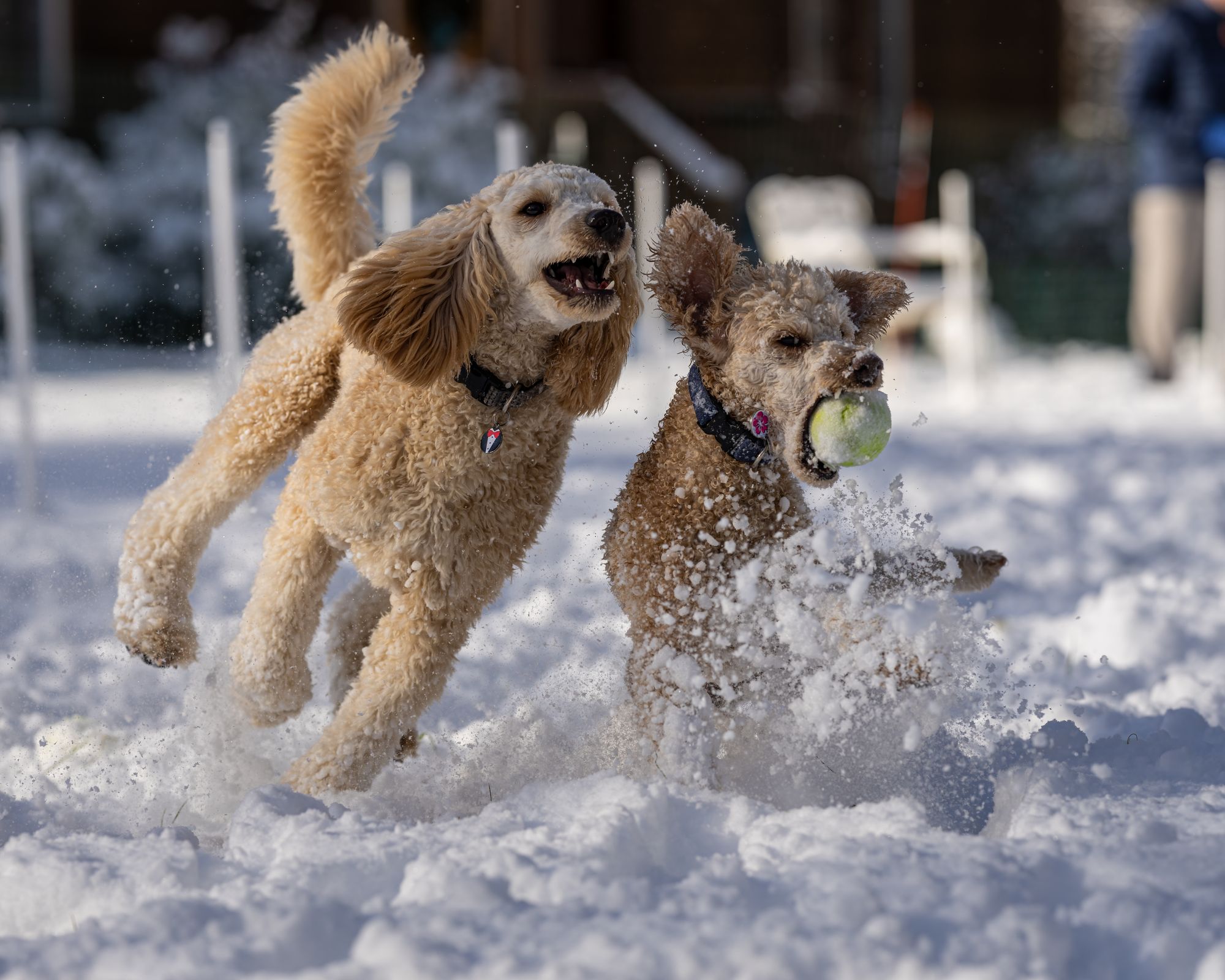
How well do Poodles handle winter? Honestly: less well than they look. That plush curly coat suggests a dog built for snow, but Poodles in winter are working with a single coat layer and no insulating undercoat: the dense woolly underlayer that true cold-weather breeds rely on. A Poodle in the cold is wearing a sweater, not a parka. Add the fact that the most popular sizes are small (and small bodies lose heat fast), and winter becomes a season that rewards a bit of planning: the right coat decision, a road-salt routine, snowball management, and an indoor plan for the short dark days.
Why Poodles feel the cold faster than they look
Two factors stack up:
- Single coat, no undercoat. The curls trap some air, but without an undercoat the insulation is modest, and it drops further when the coat is wet or clipped short in a fresh groom.
- Body size. Small bodies have a large surface area relative to their volume, so they radiate heat away quickly. A Toy Poodle at 2-4.5 kg (4.5-10 lbs) chills much faster than a 25 kg Standard on the same walk. Between them, the size classes scale accordingly: Miniatures (4-7 kg) still cool quickly, Mediums and Standards hold warmth noticeably longer, especially when moving.
Know the "too cold" signals for any size: shivering, walking hunched with a tucked tail, repeatedly lifting paws off the ground, or planting itself and refusing to go on. That's not stubbornness: that's data. Shorten the walk and warm the dog up.
A winter coat is functional, not fashion
For Toy and Miniature Poodles, a jacket in freezing weather is simply good husbandry. The internet loves mocking dressed-up small dogs, but the physics are on the jacket's side: small dog, single coat, low frost tolerance. What to look for:
- Coverage where it counts: chest and belly covered, not just a strip over the back.
- Freedom of movement: legs free, no chafing in the armpits, so the dog should trot normally.
- Water resistance: a wet coat on a wet dog is worse than no coat. Cold rain and sleet justify a jacket sooner than dry frost does.
- Fit over a clipped coat: if your dog just came from the groomer with a short winter-unfriendly trim, dress it a few degrees earlier than usual, or ask the groomer to leave the coat longer through winter.
An adult, healthy Medium or Standard Poodle in active motion usually doesn't need a coat in moderate frost. Standing around at the school gate or sitting on a cold terrace is a different story: inactivity in the cold chills any Poodle. Puppies, seniors and slim dogs of every size get a jacket sooner; our senior Poodle guide covers why older dogs regulate temperature less well.
Road salt: the winter enemy of paws
Gritted streets are the most underestimated winter issue. Salt granules irritate and dry out the paw pads, sharp grit can cause small cuts, and a dog that licks salty paws clean afterwards ingests something that doesn't belong in a dog: in quantity, salt is genuinely harmful. The routine that fixes it:
- Before the walk: a thin layer of paw balm (or petroleum-jelly-type protectant) on the pads
- Keep the hair between the pads trimmed short: less surface for salt and ice to cling to
- After every walk on gritted streets: rinse or wipe paws with lukewarm water and dry them
- Check between the toes for redness, cracks or stuck grit while you're there
- Don't let the dog eat snow along gritted roads: it's salt slush, not fresh powder
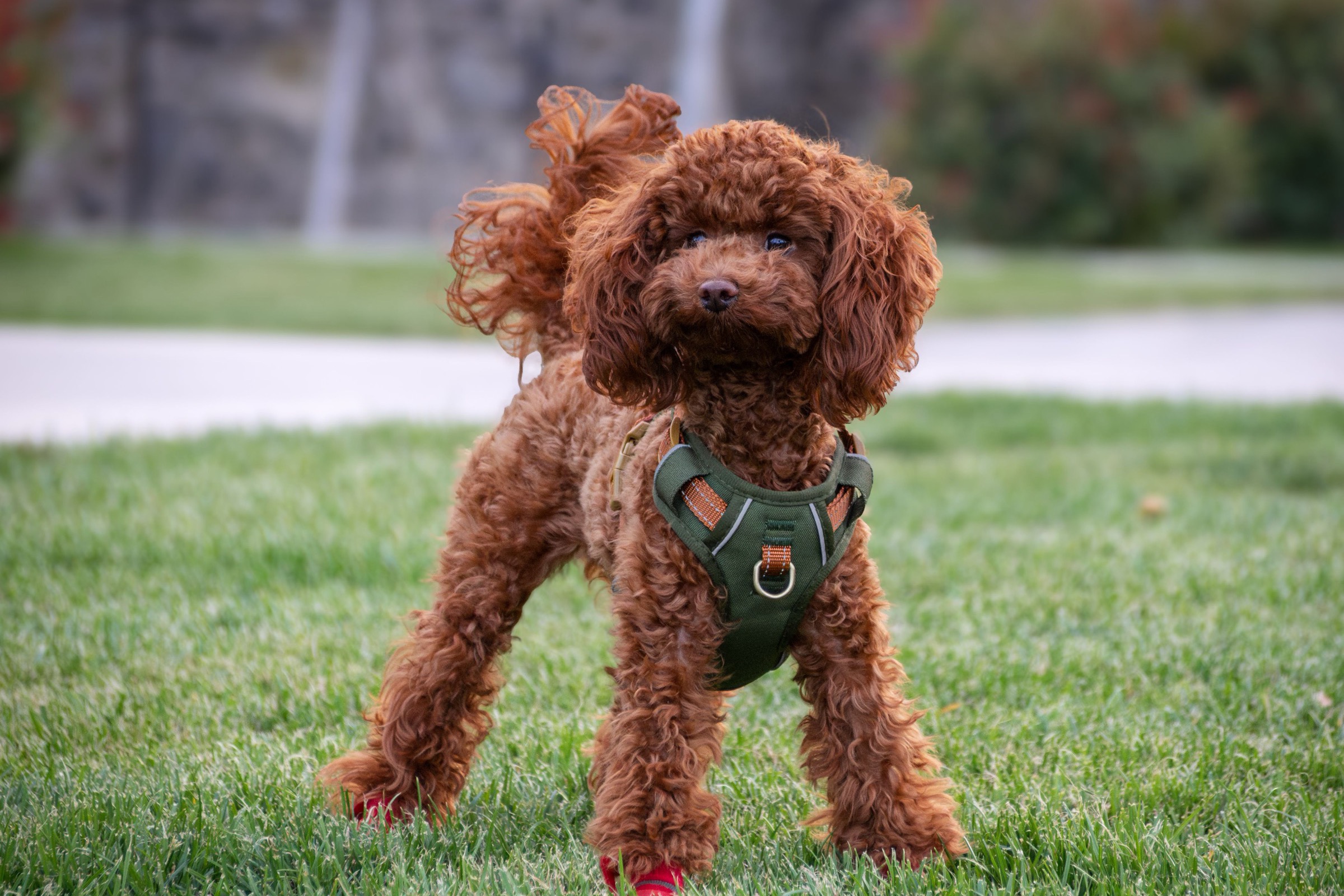
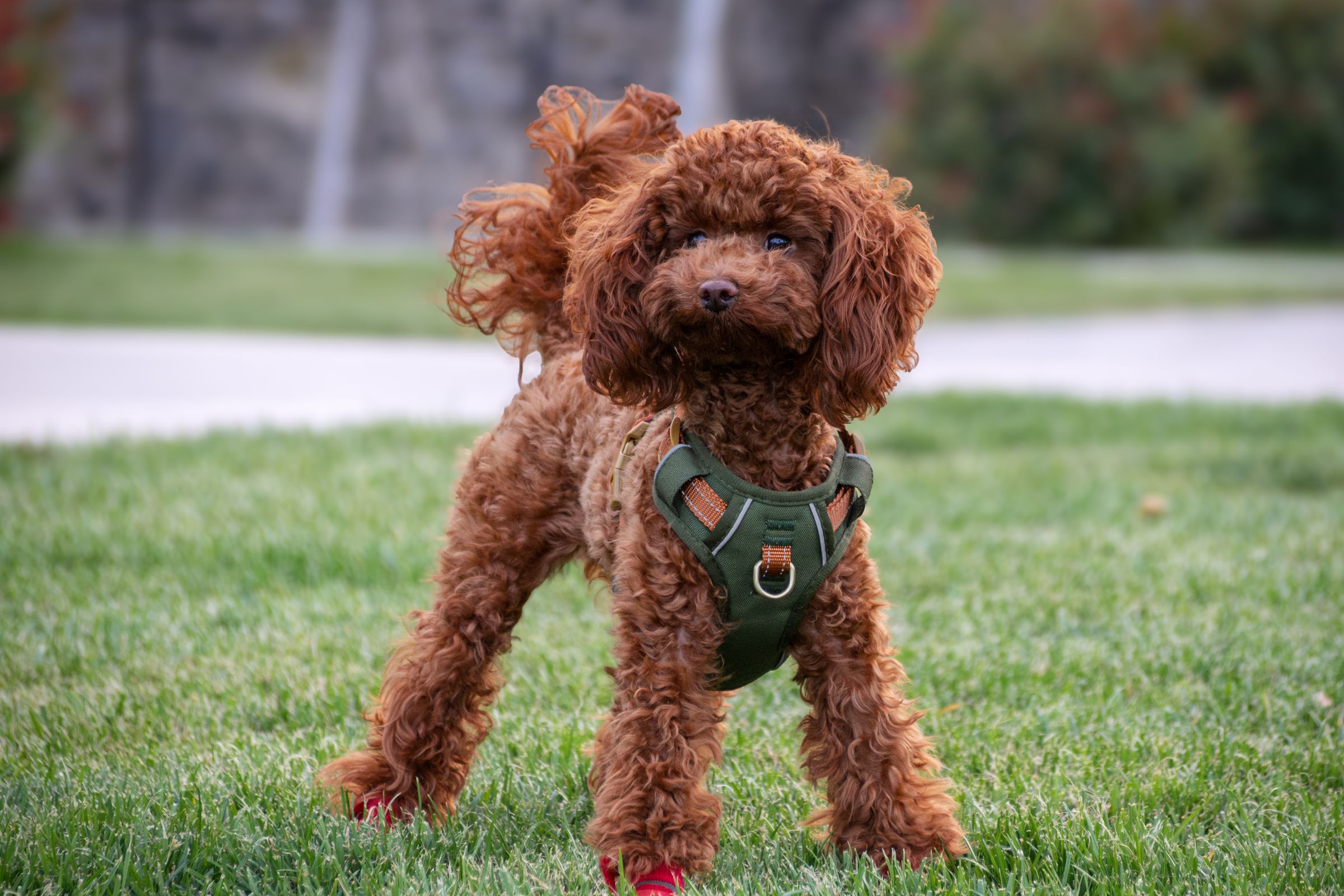
Dog boots are the maximal option; some dogs accept them readily, many need patient training. For most Poodles, balm plus rinsing covers it.
Snow clumps in the curls
Here the Poodle coat has a genuinely breed-specific winter quirk: snow balls up in curly hair. On a longer coat, walking through powder snow studs the legs, belly and beard with jingling ice marbles that pull on the skin. The rules:
- Melt, don't yank. Thaw clumps with lukewarm water or your hands and a towel: pulling them out takes coat and skin with them.
- Dry thoroughly afterwards, especially a small dog that's now wet and cold at once.
- Consider a shorter leg trim or a snowsuit for snowy regions: less coat, fewer clumps. Discuss a practical winter length with your groomer, and keep up the every-6-8-weeks schedule in winter too. A matted coat insulates worse and mats faster when repeatedly wet.
Short days: move the workout indoors
Winter shrinks your walking windows, but a Poodle's brain doesn't hibernate. When the weather cuts outdoor time, compensate with mental work indoors: this is the #2 smartest breed, and ten minutes of trick training, a snuffle mat or hide-and-seek burns surprising amounts of energy. Our collection of Poodle brain games is effectively a winter survival kit. Indoor exercise also keeps weight in check during the low-activity months; extra winter kilos land straight on small Poodle knees.
One more winter date for the calendar: New Year's Eve. Fireworks stress is common in alert breeds like the Poodle, so if yours struggles, start preparing well before December with the steps in our fireworks anxiety guide.
Finally, watch the thermometer with common sense. There's no single magic cutoff, but as a rule of thumb: light frost is fine for a moving, dressed small Poodle on a normal walk; deep frost with wind means short functional outings only. If your dog shivers despite the coat, or you're unsure whether limping paws are salt irritation or something more, call your vet.
In short
- Poodles have a single coat without undercoat: they get cold faster than they look, and small sizes fastest of all.
- A winter jacket for a Toy or Miniature Poodle in frost is functional, not fashion; cover chest and belly and keep it dry.
- Road salt routine: balm before, lukewarm rinse after, pad hair trimmed short.
- Snow clumps in the curls: melt them out with lukewarm water, never pull; a shorter winter trim helps.
- Compensate short dark days with indoor brain work, keep the grooming schedule going, and shorten walks when the dog shivers or lifts its paws.