The Poodle Coat Change: From Puppy Coat to Adult Coat
By The Poodle Guide editorial team · Updated on August 3, 2026
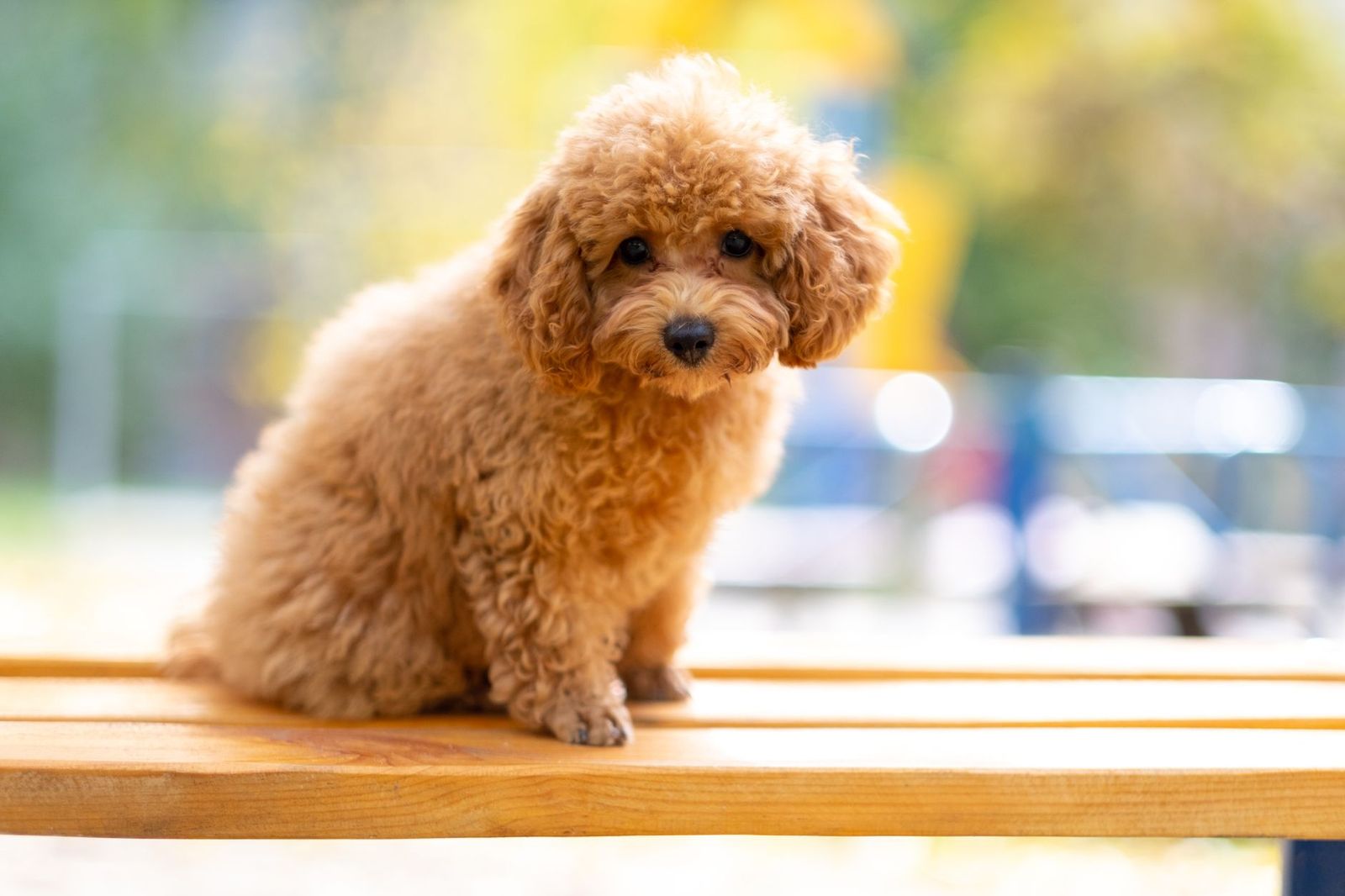
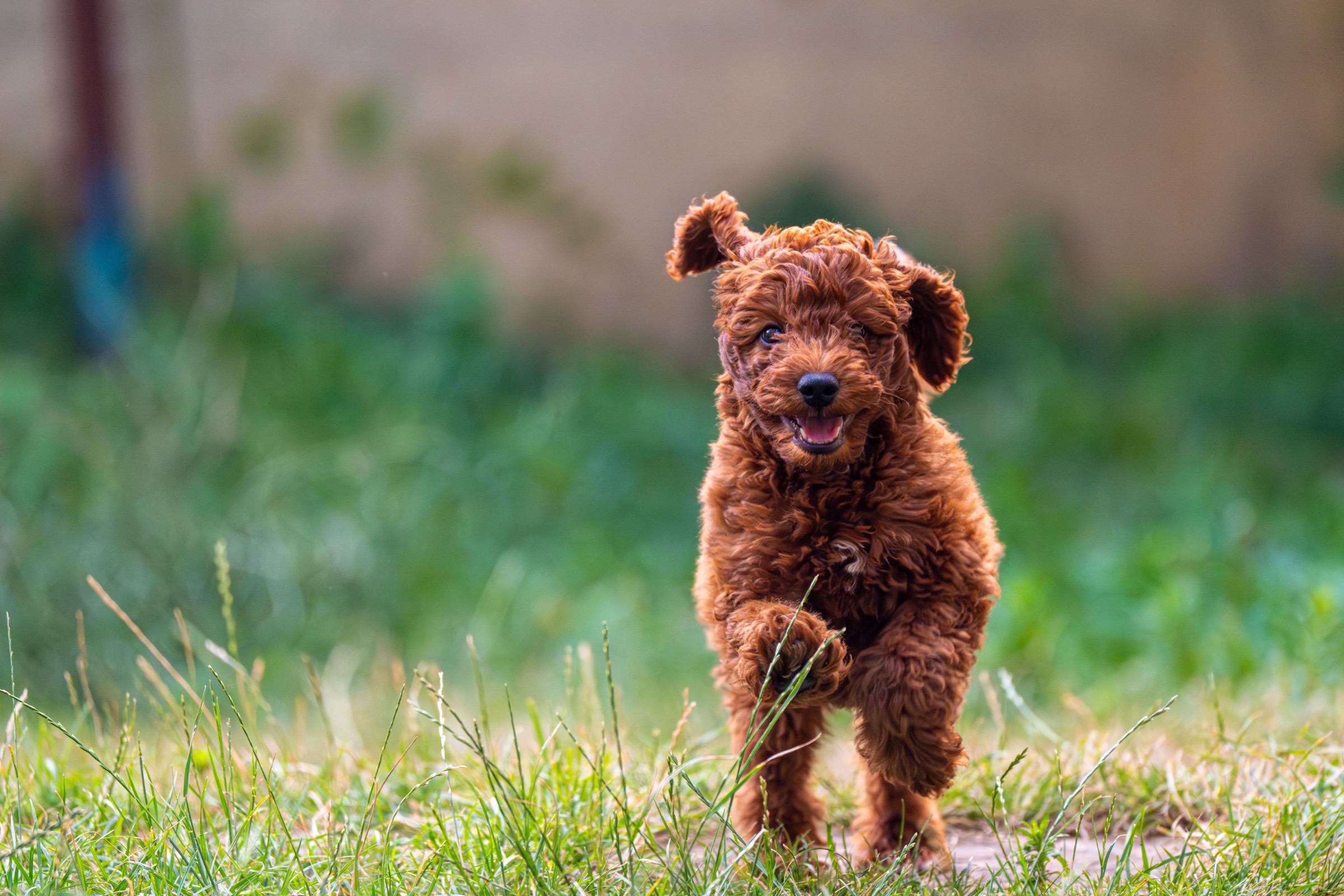
For months you had a cloud of a puppy that barely tangled, and then something shifts. The coat feels different, there is a fresh knot behind an ear every morning, and your groomer mentions "the coat change" as if you already knew. Your Poodle is trading its puppy coat for the adult coat it will keep for life. It is a normal, temporary phase, and also the most common reason young Poodles and doodles come home from the salon shaved down. Here is when it starts, how to recognize it, and how to get through it with the coat intact.
What is actually happening in the coat
A Poodle does not have a double coat with an undercoat that drops out in clumps twice a year. It has a single layer of hair that keeps growing, much like human hair. Dead hairs do release from the skin, but they do not land on your floor: they stay caught in the surrounding curls. That is exactly why the breed leaves so little hair around the house, and why the coat change hits so hard.
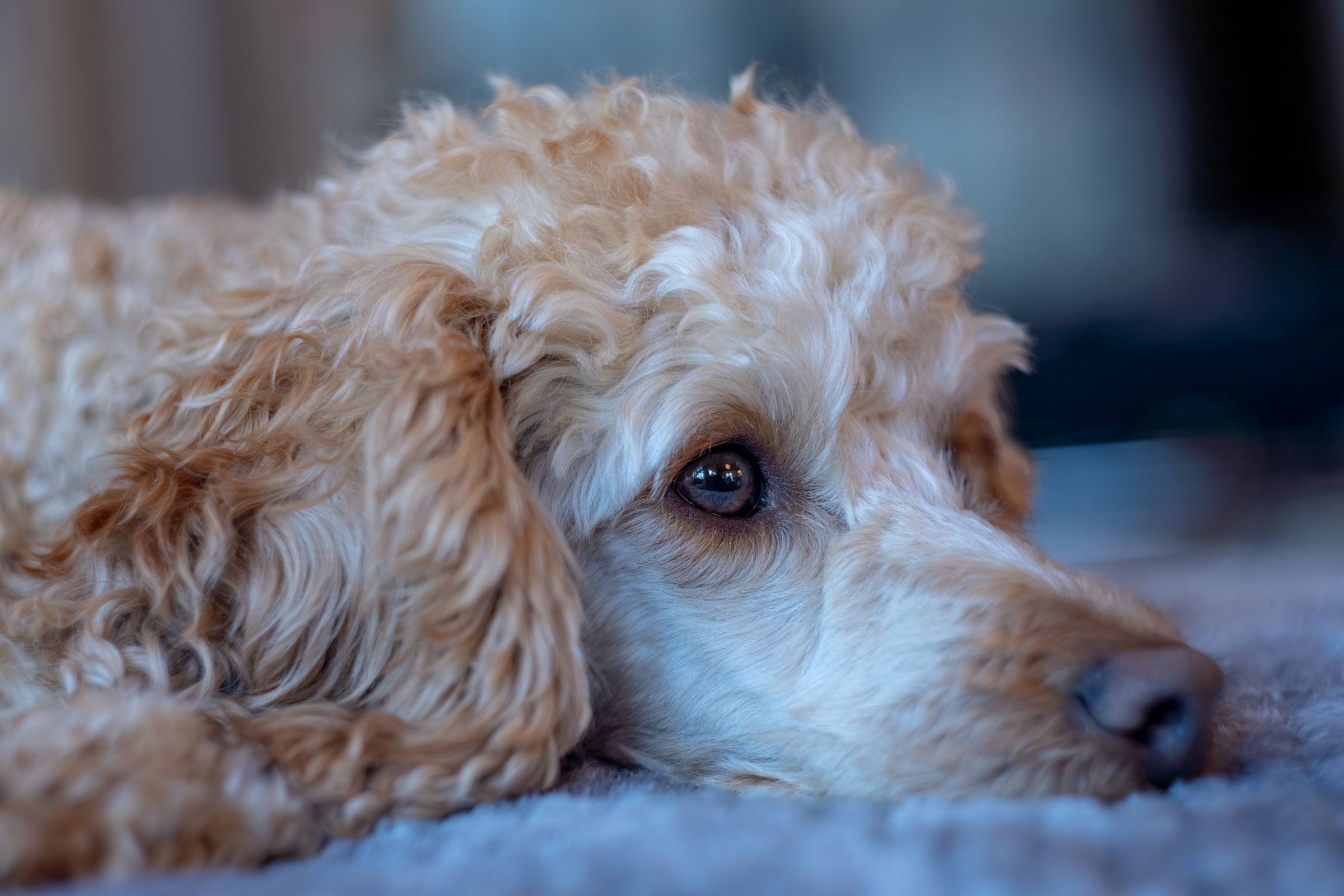
During the change, that release happens on a large scale at once. The soft, almost woolly puppy hair lets go in quantity while a coarser, springier adult coat with a tighter curl grows in underneath it. Loose hair, plus anchored hair, plus friction from movement, is the textbook recipe for felting. It is why a coat left alone for a week can sometimes not be saved at all, and why the same happens to Goldendoodles and Labradoodles that inherited the curl.
When does it start?
Timing tracks size, because smaller dogs mature faster. Across the four Poodle sizes:
- Toy (24-28 cm, 2-4.5 kg) and Miniature (28-35 cm, 4-7 kg): usually around nine months, in practice eight to twelve.
- Medium (35-45 cm, 9-13 kg): slightly later on average.
- Standard (45-60 cm, 20-30 kg): the latest of the four, between nine and sixteen months.
The heaviest phase runs about two to four months. After that the worst is over, but the coat carries on maturing until roughly eighteen to twenty-four months. In the US the AKC recognizes three varieties rather than four sizes, with the Toy capped at 10 inches, and the UK Kennel Club also works with three; the timing is the same, only the labels differ. Treat these numbers as orders of magnitude, not a calendar.
How to tell the change has started
- The texture changes. From soft and downy to firmer, drier and springier, with a tighter curl.
- Hair in your brush that was never there before.
- Mats at the friction points: behind the ears, in the armpits, inside the back legs, under the collar and at the base of the tail.
- The color shifts. Apricot often lightens; black can go grayer, or deepen.
- Grooming appointments run long, or a lot of dead coat had to come out.
The brushing routine that gets you through
The principle is simple: daily, and all the way down to the skin. Outside the change most Poodles are fine with a few sessions a week, but right now a mat can form overnight. Five to ten minutes a day is enough if you stay on top of it.
Technique matters more than frequency. The classic mistake is skimming the brush over the top of the coat: it feels like brushing, while everything underneath keeps felting. Work in lines instead. Push the coat up with one hand until you see a stripe of skin, brush that layer out with a slicker brush, then drop the next thin layer down and work your way up the body.
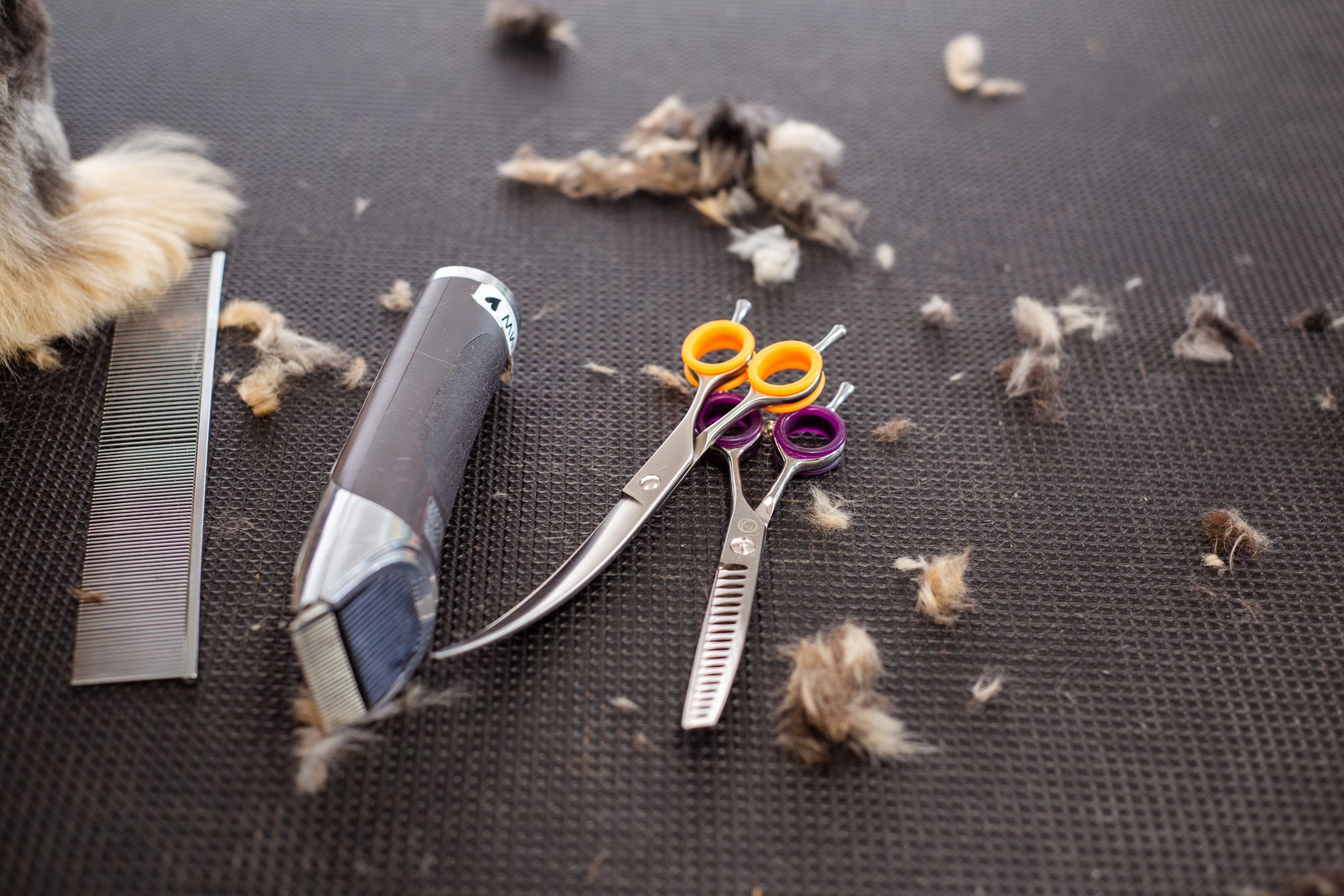
Then check your work with a metal comb. A slicker glides straight over a mat; a comb does not. If the comb passes everywhere and touches skin everywhere, you are done. Wherever it snags there is a mat you can still open up today and will not be able to open in three days.
When you find one, never pull. Hold the hair at the base so you are not tugging the skin, and tease the mat apart from the outside in. A detangling spray makes this much less painful. If a mat is welded flat against the skin, leave it for the groomer rather than reaching for scissors: on a small Poodle the skin sits thinner and closer to the coat than you would think, and cutting a dog while removing mats is a classic home grooming injury.
Going shorter: the honest trade-off
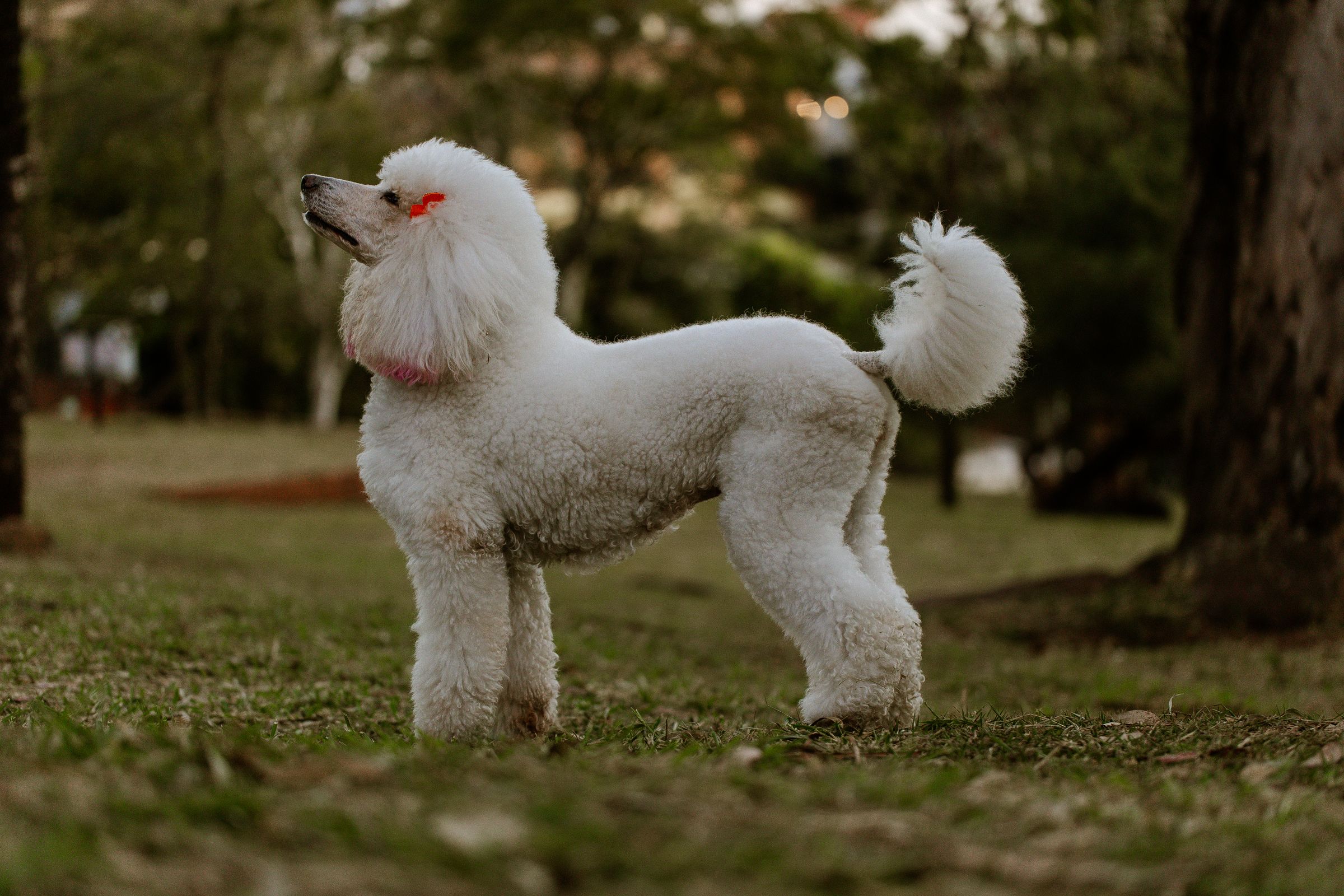
Most groomers suggest a shorter clip during the change, and it is not a sales pitch. On a short coat there is less length to tangle, the daily round takes minutes, and you spot trouble sooner. Set on keeping the long teddy bear cut? That is fine, but then daily line brushing is a requirement, not a recommendation.
Keep your normal grooming rhythm through this period too, every six to eight weeks at roughly $50-$90 (£35-£65) per session for a small Poodle and more for a Standard, and tell the salon your dog is in the coat change. Do not postpone an appointment because the dog "was just cut": a coat gets further out of hand in eight weeks now than in four months at any other age. Many salons work to a humane matted pet policy, so if your dog arrives pelted, shaving it off is the only kind option left.
In short
- It starts around nine months in Toys and Miniatures and up to sixteen months in Standards; the intense phase lasts two to four months.
- Loose puppy hair does not fall out, it stays trapped in the new curl, which is why matting explodes.
- Brush daily, line by line, down to the skin, and check afterwards with a metal comb.
- Never pull on a mat and never cut one out near the skin yourself.
- A shorter clip during these months is the easy route, not a defeat: the coat grows back.