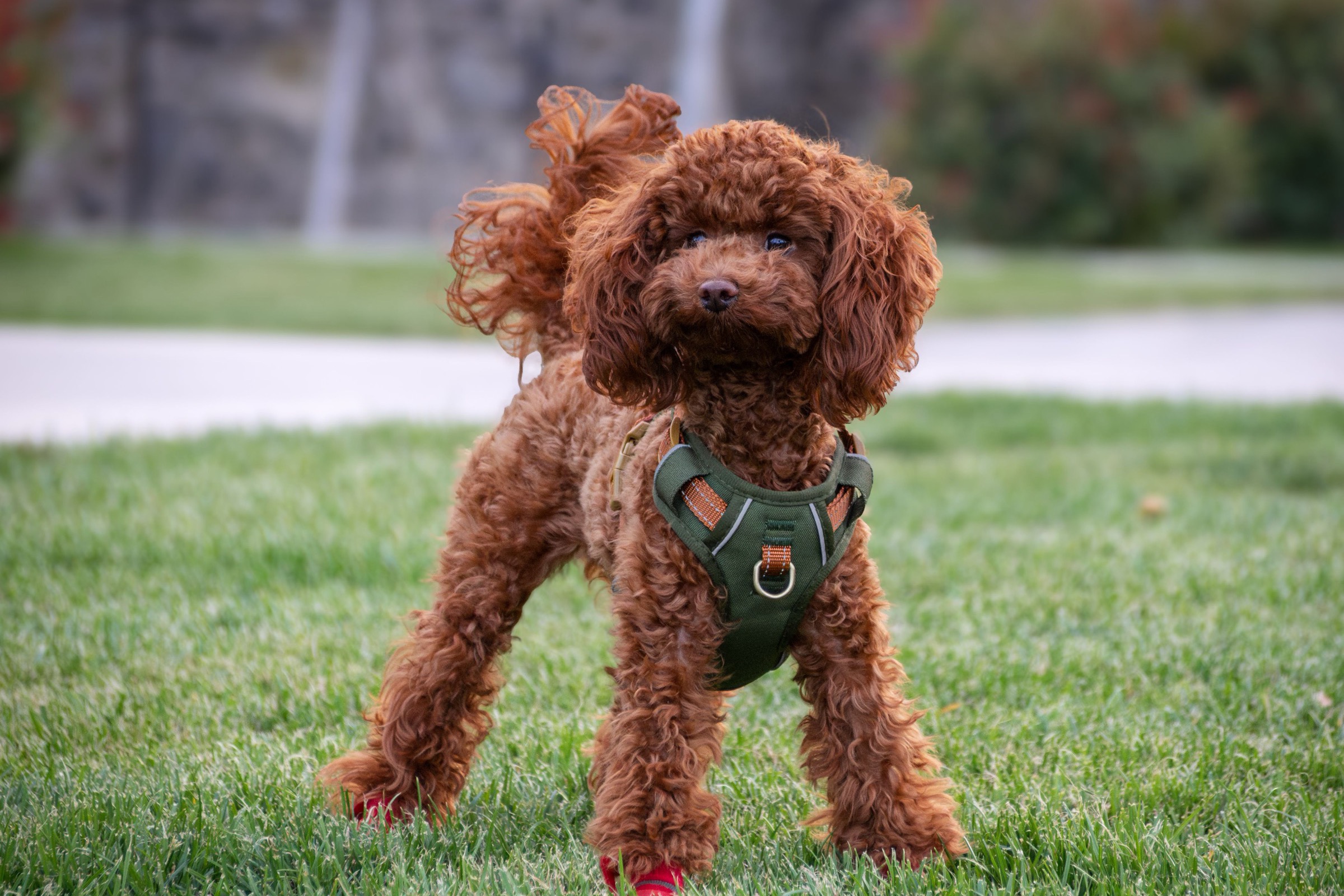
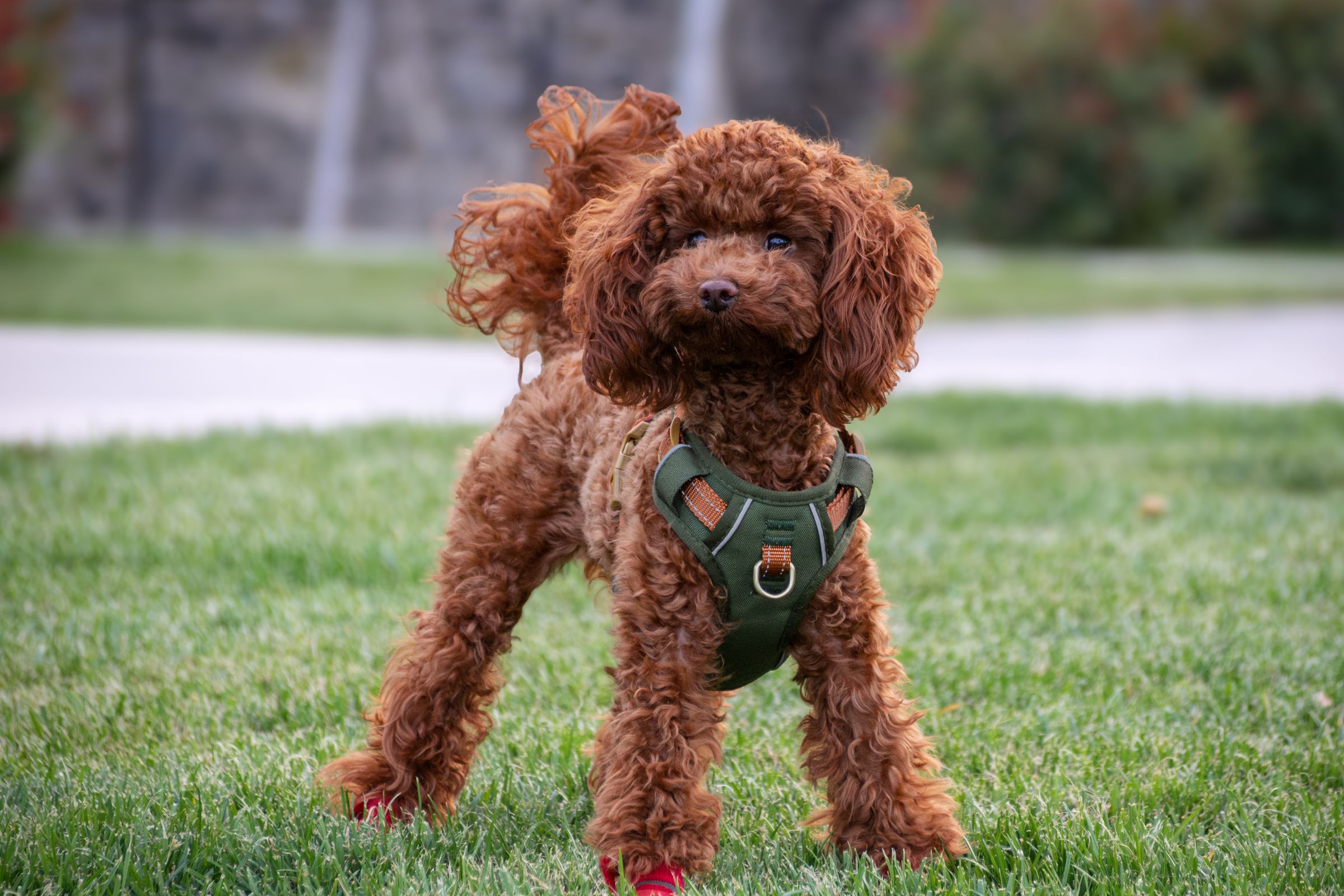
Poodle Puppy First Nights: A Realistic Day 1-7 Survival Plan
By The Poodle Guide editorial team · Updated on July 24, 2026
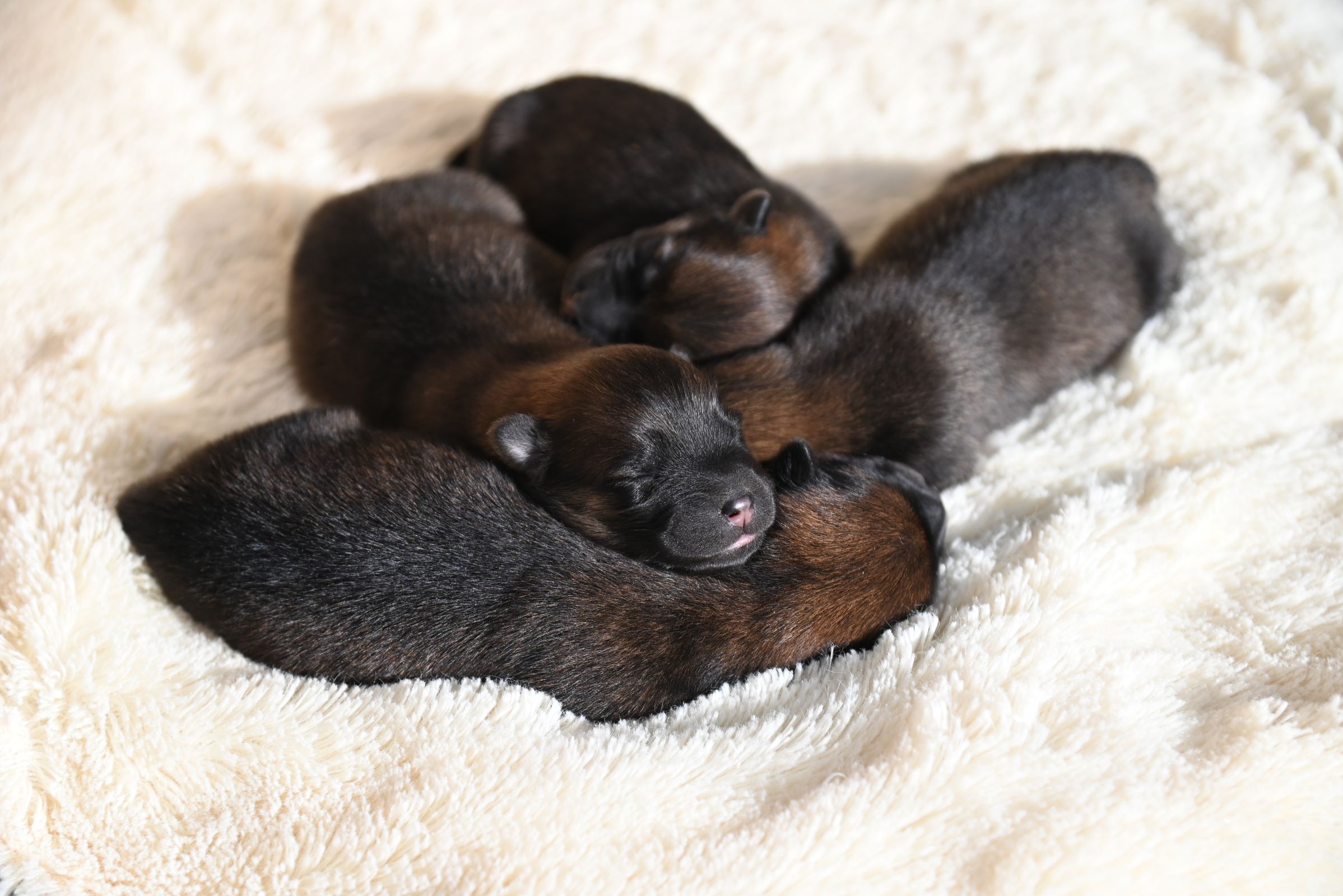
The first nights with a Poodle puppy are the part nobody romanticizes: a nine-week-old creature that has just lost its mother and littermates, a bladder the size of a walnut, and you, awake at 3 a.m., wondering what you've done. Here's the realistic version: put the crate next to your bed, expect one or two toilet trips a night, don't leave the puppy to "cry it out" alone, and know that it gets dramatically better within a week. This is the day-by-day plan.
Before the puppy arrives
One thing to check first: age. A puppy should never leave its mother before 8 weeks: that period with mother and littermates is where the foundations of bite inhibition and confidence are laid, and in many countries the 8-week minimum is law (check your national rules; a seller offering a younger puppy is a red flag worth walking away from, more on that in our guide to buying a Poodle responsibly).
Then set up the sleeping spot before day one: a crate or high-sided basket next to your bed, a blanket or cloth that smells of the nest (ask the breeder for one), water available, and the room dim and quiet. If you plan to crate train, and it pairs beautifully with the first nights, let the crate be open and full of nice discoveries from the first hour, never a place the puppy is shut into cold.
Night one: the honest version
Expect crying. This is not naughtiness and not manipulation: it's a baby animal alone for the first time in its life, doing the only thing evolution gave it: calling the family. Your job is to be boring and present:
- Crate directly next to the bed, at mattress height if you can, so the puppy can hear you breathe and you can drop a calm hand or word without getting up.
- Last toilet trip right before lights out, then straight into the crate with the nest-scented blanket.
- Whimpering: respond calmly, minimally. A quiet word first. If it escalates or it's been a few hours: silent toilet trip (see below), back in, lights off.
- Don't banish the puppy to the kitchen or hallway to cry alone. "Crying it out" in isolation doesn't teach independence; it teaches that calling for help is pointless. That's resignation, not rest.
- Don't turn 3 a.m. into playtime either. No games, no cuddling sessions, no food. Nights are for sleeping: boring is the message.
Night-time toilet trips: the routine
A young puppy physically cannot hold its bladder through the night. Count on one or two trips per night in the first weeks. The routine: pick the puppy up (don't let it patter through the house: motion wakes bladders and brains), carry it to the toilet spot, stand there silently, praise softly the moment it goes, carry it straight back to the crate. Total time: five minutes, zero entertainment value. Puppies also need to go immediately after waking, after eating and after play, the night trips are just the after-hours branch of the same rhythm.
A small-Poodle warning: eating is not optional
This matters especially if your puppy is a Toy or Miniature Poodle. Very small puppies, a Toy Poodle weighs 2-4.5 kg full-grown, so a puppy is tiny, have small energy reserves, and their blood sugar can drop after skipped meals, stress or cold. The move to a new home is exactly that kind of stress. So: several small meals a day, and if your small-breed puppy refuses food, seems lethargic, trembles or wobbles, call your vet, sooner than you would with a large-breed puppy. Don't wait until morning to "see how it goes". For non-urgent doubts, our health check helps you sort serious from normal, but a refusing, weak toy puppy is a phone call, not a search query.
The first week, day by day
- Day 1: Keep it small and calm. One room, the crate, the toilet spot, the family. No visitors parade, no puppy party. Start the routine you intend to keep, feeding times, toilet spot, sleeping place, from hour one.
- Days 2-3: Usually the hardest nights, then a corner gets turned. Daytime: short play, lots of sleep (puppies sleep 18-20 hours a day, protect that), toilet trips after every wake-sleep-eat-play transition. Begin second-long crate moments with the door open.
- Days 4-5: The puppy knows the rhythm. Night crying typically shrinks to brief protest. Introduce the household calmly: one new thing a day is plenty. Practice a few minutes of being in another room while the puppy is busy with a chew, the first seed of being alone later.
- Days 6-7: Most puppies now settle quickly at night, with one toilet break. You have a dog that trusts its new home. That trust, not obedience, is the actual achievement of week one.
When does it get better, and when should you worry?
The realistic curve: nights one to three are rough, the first week ends noticeably calmer, and within two to three weeks most Poodle puppies sleep through with at most one break. Poodles are quick studies, the breed ranks second in working intelligence, and routine is exactly what that clever brain latches onto. If night crying is still intense and unchanged after a few weeks, or your puppy panics rather than protests when alone, ask your vet or a qualified trainer for help early rather than soldiering on. And through all of it, remember the standard you're building toward: a calm dog that sleeps through the night isn't produced by toughness, but by a puppy that learned in week one that its new family is reliable.
In short
- A puppy never leaves before 8 weeks: check your country's rules, and walk away from sellers who offer younger.
- First nights: crate next to your bed, nest-scented blanket, calm and boring responses: never "crying it out" in isolation.
- Count on 1-2 silent night-time toilet trips: carry out, praise softly, straight back in.
- Toy and Miniature puppies: watch the blood sugar: a small puppy that won't eat, trembles or is lethargic means calling the vet promptly.
- Routine from day one; the hard phase is short: most puppies settle within a week and sleep through within two to three.