Can Poodles Swim? Yes, They Were Bred for It (With a Few Caveats)
By The Poodle Guide editorial team · Updated on July 24, 2026
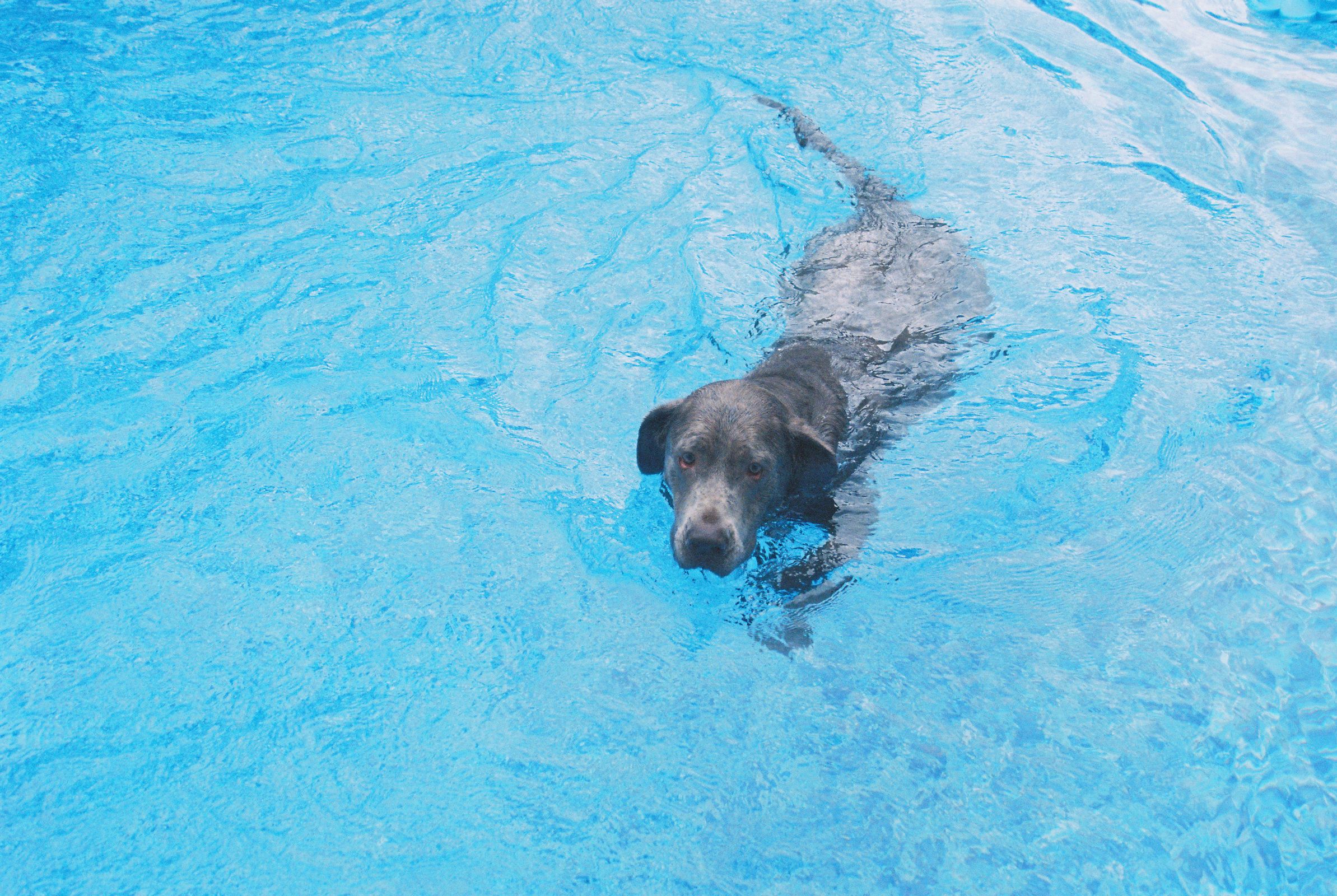
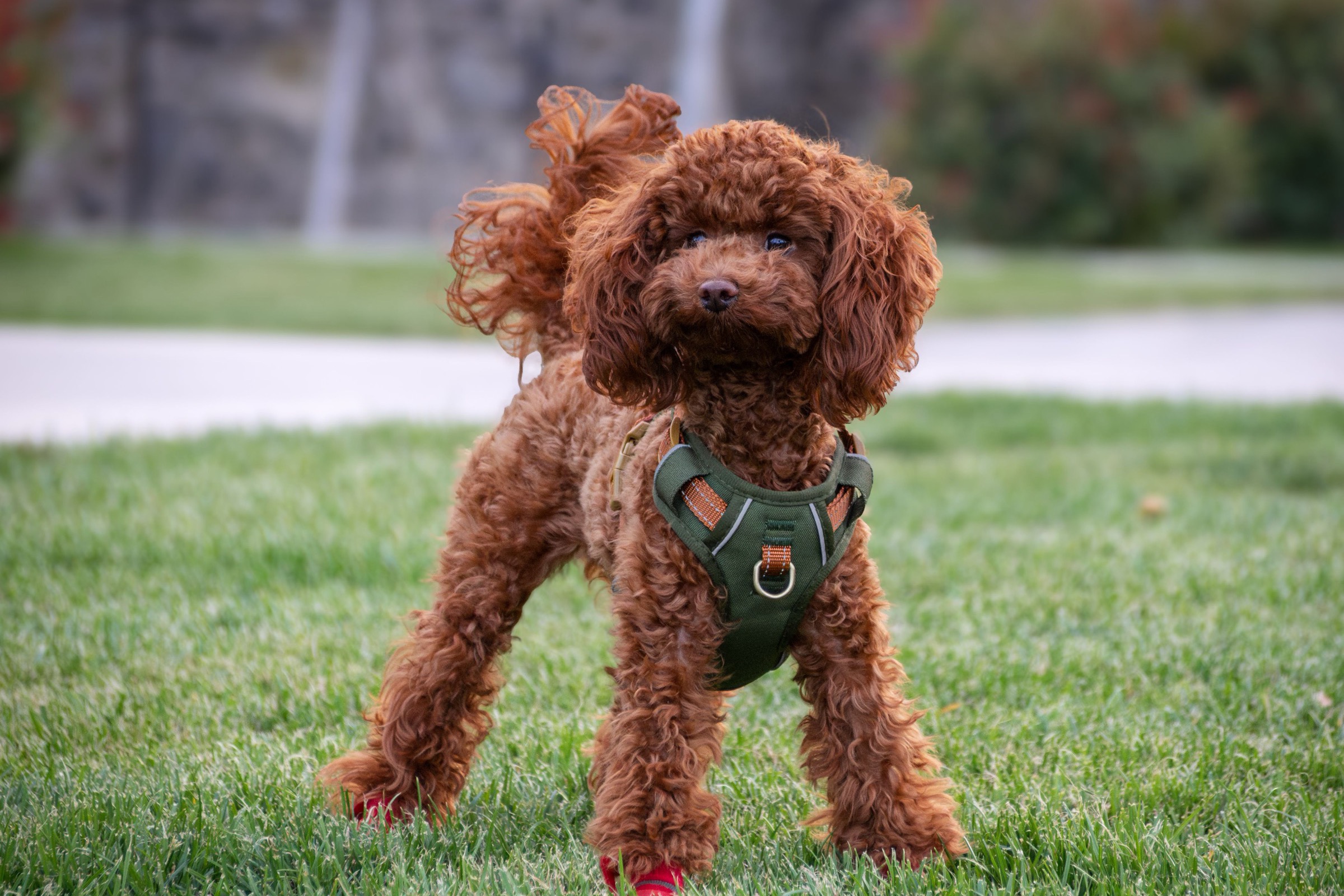
Can Poodles swim? Not only can they: swimming is what the breed was invented for. The Poodle began centuries ago as a water retriever, fetching downed waterfowl from lakes and marshes, and the name says so in two languages: the German Pudel comes from puddeln, to splash in water, and in French the breed is the Caniche, from canard, meaning duck dog. Even the flamboyant show clip has working roots: coat left on to keep joints and chest warm in cold water, the rest shorn away for less drag. So yes: most Poodles swim well, and many are true water enthusiasts. But "bred for water" is a breed average, not a promise about your individual dog, and safe swimming has a few rules worth knowing, especially for the small sizes.
A water dog in four sizes
All four Poodle sizes carry the same water-retriever heritage, but the practical picture differs:
- Standard (45-60 cm, 20-30 kg): the original working format: a strong, enduring swimmer for whom retrieving from water is about the best exercise there is. Swimming is also joint-friendly exercise for a big, active dog.
- Medium and Miniature: capable, often enthusiastic swimmers; sessions should just be shorter than a Standard's.
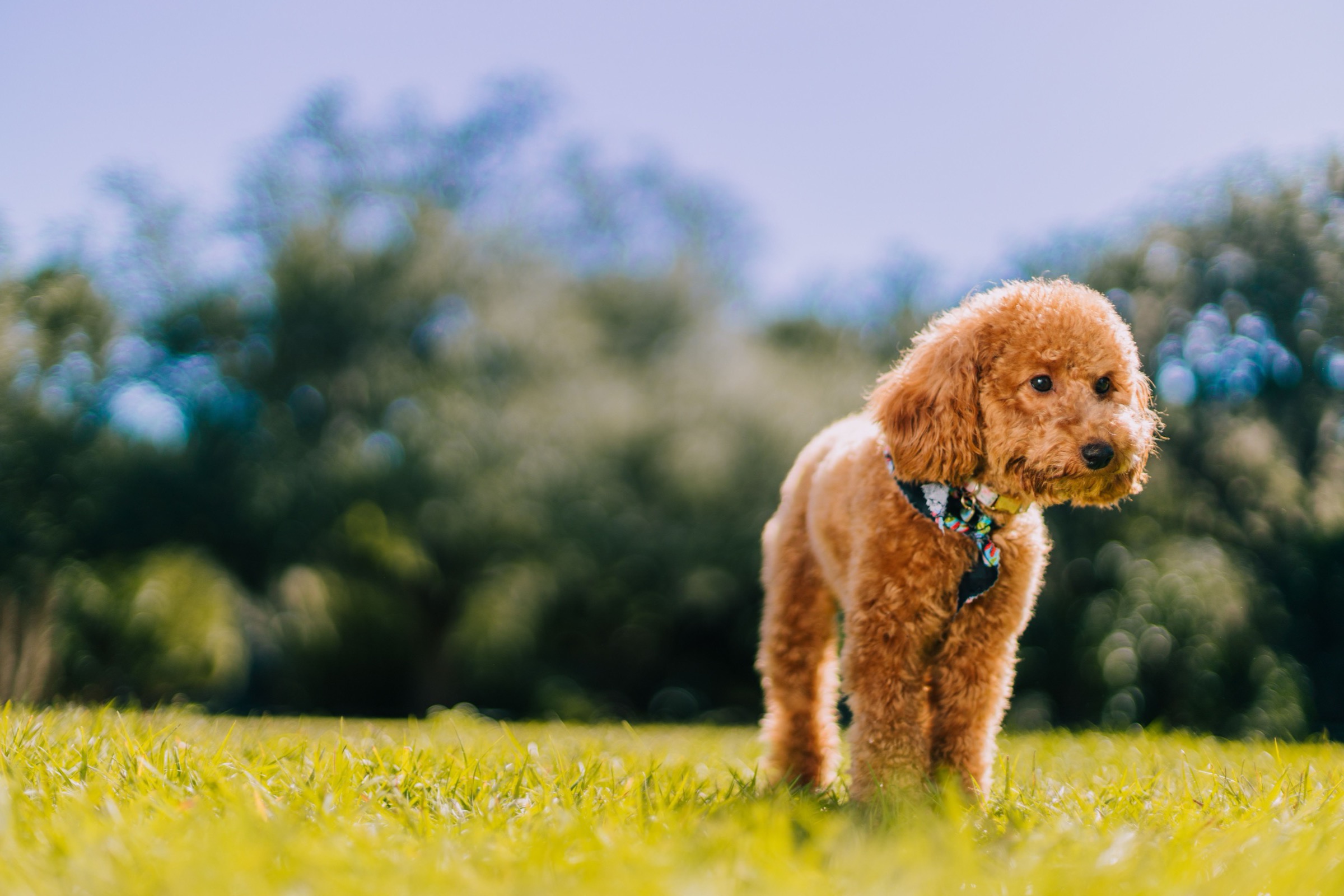
- Toy (2-4.5 kg): can absolutely swim and often loves it, but the miniature format changes the safety math: a 3 kg dog tires quickly, gets swept by currents a bigger dog shrugs off, and crucially cools down fast in cold water. Short sessions, warm days, calm water, and out at the first sign of fatigue.
Not every Poodle read the history books
Breed origin raises the odds; it doesn't guarantee the individual. Some Poodles launch themselves at the first pond they meet, others are cautious paddlers, and a few genuinely dislike water: all normal. What is never acceptable: throwing or forcing a dog into water. One bad experience can create a lifelong aversion, and a panicked first swim is also physically dangerous. Instead, let the dog choose the pace:
- Start where there's a walk-in entry, a shallow beach or gently sloping bank, never a steep pool edge or dock.
- Wade in yourself or use a floating toy a meter out; reward every voluntary step. For a breed this trainable, swimming usually clicks within a few relaxed sessions.
- Keep first sessions short, a couple of minutes, ending on success. Swimming is intense exercise for an unfit beginner.
- Use a long line in open water until recall around distractions is solid.
- Teach the exit. In a pool, show the dog the steps repeatedly: a dog that knows where "out" is doesn't panic, and a dog that doesn't can drown in a fenced backyard pool. Never leave a dog unsupervised around a pool.
A well-fitted dog life vest with a grab handle is cheap insurance for Toys, beginners, seniors and any open-water swimming. It buys a tired dog time and lets you lift it out in one motion.
Know the water before the dog goes in
The Poodle's enthusiasm is your responsibility to aim well. Check for:
- Blue-green algae (cyanobacteria): the big summer danger. Blooms in warm, still water and is genuinely toxic to dogs: swimming in it or drinking it can be fatal. Heed local warnings; when water looks like green paint or pea soup, nobody swims. If your dog has been in suspect water, rinse it off and call your vet immediately.
- Currents and boat traffic in rivers and at the coast: what a Standard handles can overpower a Toy.
- Cold water, even on warm days: spring lakes stay cold long after the air warms up. Small Poodles chill fastest, the same physics as in our winter guide.
- Steep or slippery exits: always confirm the dog can get out on its own before it gets in.
- Chlorinated pools are fine for supervised swims; just rinse afterwards and don't let the dog drink pool water.
- Fresh drinking water on the bank: a swimming dog swallows enough lake as it is.
On hot days, swimming is one of the best cooling activities there is, so combine it with the shade-and-timing rules from our guide to Poodles in hot weather.
The after-swim routine: coat and ears
Here's where owning a curly-coated water dog gets specific. Two things need attention after every swim:
1. Rinse and dry the coat
Chlorine, salt and murky lake water all irritate skin or leave residue in the curls, and a repeatedly wet-then-dry Poodle coat mats with impressive speed. Rinse with clean water, towel off, and once mostly dry, brush through to prevent tangles from setting. If your dog swims a lot in summer, tell your groomer: a shorter, practical summer trim makes the whole routine faster, and swimming season is a reason to keep, not stretch, the 6-8 week schedule.
2. Dry the ears, every time
The Poodle's drop ears plus hair growth in the ear canal make a warm, moist environment that bacteria and yeast love. Water in the canal after swimming is the classic route to an ear infection. So after every swim: dry the outer ear and canal entrance gently with a towel or cotton pad (never push anything into the canal). A dog that shakes its head repeatedly, scratches at an ear or develops a smelly ear in the days after swimming needs a vet visit; our Poodle ear care guide covers the full routine.
In short
- Poodles were bred as water retrievers: most swim well and many love it, in all four sizes.
- Breed history is not an individual guarantee: introduce water calmly and never throw or force a dog in.
- Toy Poodles can swim but tire and chill fast: short sessions, calm warm water, and a life vest is smart for small dogs, beginners and open water.
- Check the water first: blue-green algae is toxic and a summer emergency; mind currents, cold water and the exit.
- After every swim: rinse and dry the coat, and dry the ears, since moisture in the ear canal is the main cause of Poodle ear infections.