Poodle Nail Care: How Often to Trim and How Far to Cut
By The Poodle Guide editorial team · Updated on July 27, 2026
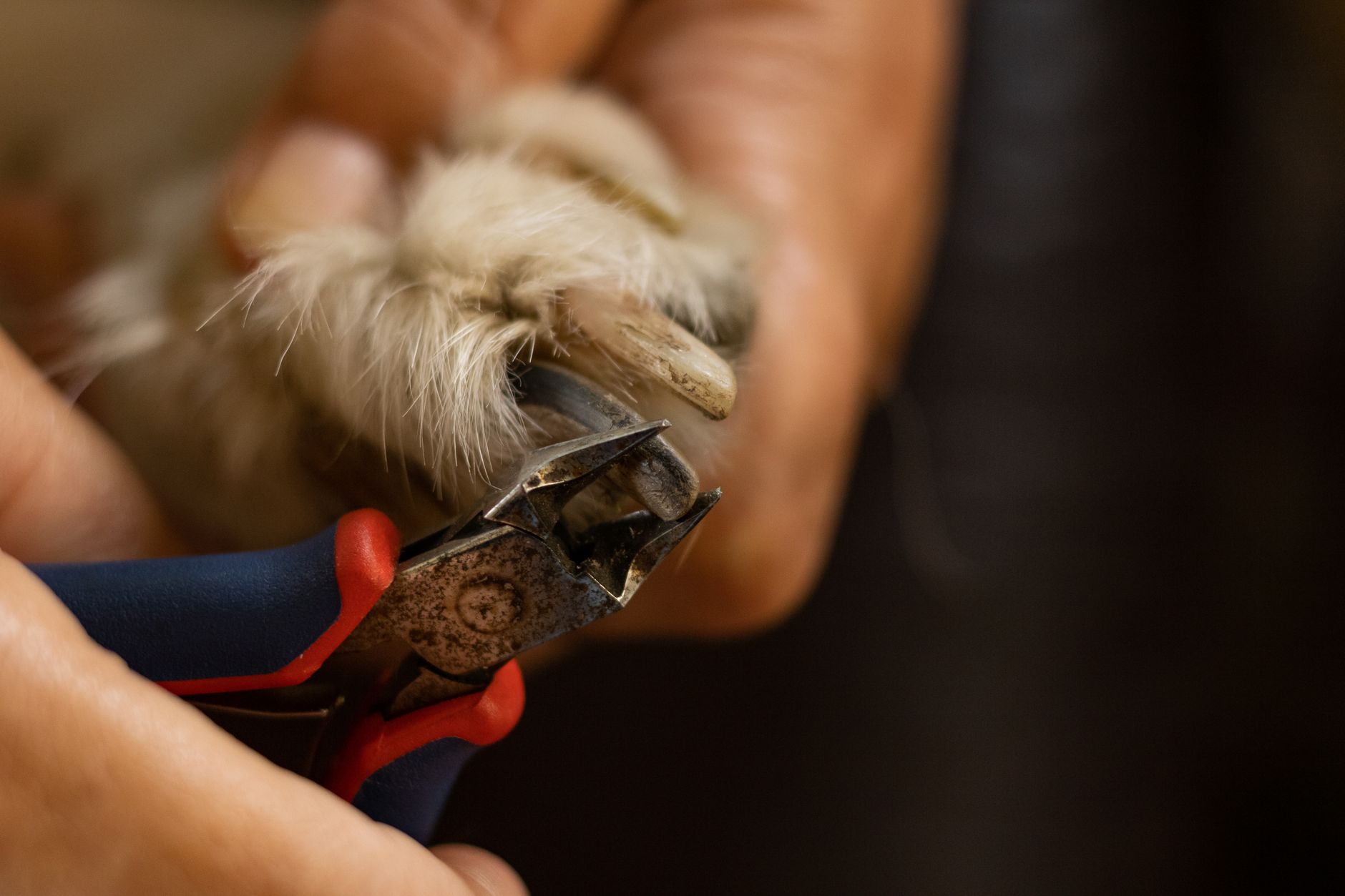
Nail trimming is the grooming job most Poodle owners put off longest, which is why it so often goes wrong. The rule of thumb is simple: if you hear a tick-tick-tick as your dog crosses tile or laminate, the nails are too long.
Why overgrown nails are more than a cosmetic issue
A healthy nail does not touch the ground when your dog stands relaxed. Past that point the floor pushes back against the tip with every step, and the pressure goes straight into the toe. Vets link long nails to splits and tears, nails that curl into the pad and, over time, an altered toe and foot position, joint strain and limping.
Then there is the dewclaw on the inside of the front leg. It never touches the ground, so it never wears down, and it grows in a curve: left unnoticed it can curl right round into the skin. Part the hair and check it at every trim.
Size changes how fast nails wear down
Nail care applies to every Poodle, but not on the same schedule. A Standard Poodle of 45 to 60 cm and 20 to 30 kg, covering miles of pavement, files its nails down largely by itself. A Toy Poodle of 24 to 28 cm and 2 to 4.5 kg, indoors and on grass most of the day, wears them down almost not at all. Of the four sizes the Toy most reliably needs the clippers, the Miniature (28-35 cm, 4-7 kg) close behind and the Medium (35-45 cm, 9-13 kg) in between. Registries differ here: the FCI recognises four sizes, the AKC and the UK Kennel Club three, with the AKC capping the Toy at 10 inches.
Puppies and senior Poodles need watching too: puppy nails grow fast on little mileage, and older dogs walk less, so nails get away from you exactly when standing steadily matters most. Look every two weeks and trim every three to six.
Where the quick sits, and how far you can go
Running through every nail is the quick, the tissue carrying the blood vessel and nerve. Cut into it and it hurts and bleeds freely, which is why most people avoid nail trimming.
- Pale nails: the quick shows as a pink line inside the nail. Cut a couple of millimetres in front of it.
- Dark nails: you see nothing, so take a small sliver off the tip and check the cut surface each time. A grey or black dot appearing in the middle means you are close: stop on that nail.
Usefully, the quick recedes when you take small amounts off regularly, which is what makes badly overgrown nails fixable over weeks rather than in one sitting.
Clippers or a grinder?
Small clippers give far more control on a fine Poodle nail than a model built for large breeds, and keep the blade sharp: a blunt one crushes the nail. A rotary grinder takes it down fraction by fraction, so the odds of hitting the quick drop sharply and the tip ends up smooth. The downside is the buzz, alarming to a dog that has never met one, so introduce it slowly. This is the second most intelligent breed in Coren's ranking; a Poodle learns "this noise means chicken" fast.
Step by step, without the wrestling match
- Pick a sleepy moment, after a walk. Not before dinner, not mid-play.
- Set up so nothing slips: your lap or a table with a towel, under a lamp.
- Ease the toe forward with light pressure on the pad, clearing the nail of hair.
- Cut with the direction of growth, square to the nail, two small slices rather than one big one.
- Reward per nail. A puppy doing one nail a day has a front foot finished in four days.
- Stop while it is going well: four nails today, the rest tomorrow.
If your dog is wary, hold the clippers near the paw for a few days without cutting, rewarding calm.
If you cut too far
It happens to everyone, groomers and vets included. A small nail produces a startling amount of blood, but it is rarely serious. Press styptic powder against the nail, or dip it in cornstarch or plain flour, and hold light pressure for about two minutes. Press, do not rub: rubbing makes it worse. Call your vet if the bleeding does not stop within a few minutes, the toe swells or your dog limps. Then trim one nail again a few days later, treat in hand, so the incident is not the memory that sticks.
Doing it yourself or handing it over
There is nothing wrong with paying someone else, and with dark nails or a dog that will not accept it, that is often the sensible call. In the US and UK both grooming salons and veterinary practices offer nail trims as a standalone service, at prices that vary by region. For most owners it is covered anyway, since every Poodle needs a full groom every 6 to 8 weeks and most salons include nails in the package. Between visits, one fixed care moment a week is the easiest habit: nails, ears, teeth and a going-over of the coat.
When to call the vet
Book an appointment for a nail grown into the pad, a loose or half-torn nail, swelling, redness or pus around the nail bed, or a dog that licks one toe or limps on it. If the nails have gone too far for you to know where to start, let a professional do the first trim.
In short
- Nails clicking on a hard floor are too long; a healthy nail does not touch the ground at rest.
- Small Poodles, Toys above all, barely wear their nails down: look every two weeks, trim every three to six.
- Stop a few millimetres short of the quick; on dark nails, take slivers until a grey dot appears.
- Badly overgrown? A little every week, and the quick recedes on its own.
- Keep styptic powder in the house, and press rather than rub. Never forget the dewclaw.