Tracheal Collapse in Poodles: That Honking Cough Explained
By The Poodle Guide editorial team · Updated on September 7, 2026
A short, dry cough that sounds as though a goose has walked into the room, usually after excitement or as your dog pulls on the lead, drinks or bolts its food. In an older Poodle from the small end of the breed, that is tracheal collapse until proven otherwise.
What goes wrong in the windpipe
The trachea is a tube of C-shaped cartilage rings closed along the top by a band of connective tissue, the dorsal membrane. In tracheal collapse the rings, the membrane, or both are too soft, so the tube flattens from top to bottom. The cartilage proves hypocellular and short of the glycoproteins and glycosaminoglycans that give it spring; why, nobody knows. Obesity, air pollution, allergens and kennel cough contribute, but none is the cause, and nothing undoes a softened airway. The course is slowly progressive, though an airway infection can tip a quiet case into a loud one inside a week.
Which Poodles this actually affects
This is a small-breed condition, and spreading the warning evenly across the breed would be dishonest. A Toy (24 to 28 cm, 2 to 4.5 kg) and a Miniature (28 to 35 cm, 4 to 7 kg) sit in the risk group; a Medium (35 to 45 cm, 9 to 13 kg) far less so, and a Standard (45 to 60 cm, 20 to 30 kg) barely appears at all. A 2024 retrospective study in Frontiers in Veterinary Science reviewed fluoroscopy in 110 South Korean dogs under 10 kg: the Maltese led at 30.9 per cent, the Pomeranian followed at 22.7, the Poodle came third at 15.4 and the Chihuahua at 7.2. A second cohort of 51 dogs put Toy and Miniature Poodles together at 15.7 per cent.
Registry labels muddy this. The FCI recognises four varieties with the Toy at 24 to 28 cm, while the AKC caps its Toy at 10 inches across three varieties, as does the UK Kennel Club, so an American Miniature can fall inside the FCI's Medium range, as Poodle sizes explains. Read the scales, not the pedigree.
An older dog's condition
Mean age in that cohort was 11.37 years give or take 3.26, range 2 to 19, with 91.8 per cent over eight and a mean weight of 4.68 kg. That timing is no accident: the small sizes live longest, so they live long enough for softened cartilage to matter. This belongs to the last third of a long Toy Poodle life and to senior Poodle care. One figure stands out: the mean body condition score was 5.44, with 97.2 per cent at 4 or higher, which makes a healthy weight for your Poodle the page to read next.
The four grades
Vets grade it on the Tangner and Hobson scale, by how much of the airway's diameter is lost:
- Grade 1: the rings keep their shape and the membrane bulges inwards, around 25 per cent lost.
- Grade 2: the rings widen and flatten, the membrane grows more mobile, around 50 per cent.
- Grade 3: the edges of the rings are palpable and the airway is nearly closed, around 75 per cent.
- Grade 4: more than 75 per cent, essentially flat, membrane lying on the floor of the trachea.
The grade says less than expected: in that cohort, neither location nor degree of collapse correlated with the severity of the cough, and the worst collapse sat at the carina, where the windpipe divides. Bronchial collapse was present in 68.1 per cent. Treat the dog, not the number.
Coughing is not automatically the windpipe
The heart. Among those 110 dogs, 55.4 per cent also had myxomatous mitral valve degeneration at ACVIM stage B or higher and 26.4 per cent had pulmonary hypertension, so a cough at this age can come from the heart, the airway, or both.
Reverse sneezing. The dog forces air inwards through the nose instead, snorting, legs braced and neck extended, for seconds to a few minutes. It is usually harmless, and collapse pushes a cough the other way.
How it is diagnosed
Chest radiographs come first, on both inspiration and expiration, because different segments give way in different phases of the breath. They are not conclusive: sensitivity runs from 60 to 90 per cent, with around 25 per cent false positives, and they underestimate severity compared with fluoroscopy. Tracheoscopy is the gold standard but needs general anaesthesia; costs vary by country, so ask for a written estimate and check what Poodle pet insurance excludes.
Medication first, a stent much later
The first line is medical, and more effective than owners expect. In a survey of 100 dogs (White and Williams, Journal of Small Animal Practice, 1994), 71 per cent had control lasting more than twelve months; in the Korean cohort 86.6 per cent improved with environmental changes, weight loss and medication, whatever the grade. Prescriptions combine a cough suppressant such as codeine, a corticosteroid and an antibiotic where indicated, sometimes a bronchodilator, whose value is disputed.
If that falls short, surgery enters. Extraluminal plastic rings cause laryngeal paralysis in 11 to 30 per cent by damaging the recurrent laryngeal nerve, risk tracheal necrosis, and cannot reach the chest segment, where collapse sits in 65 per cent of cases. An intraluminal self-expanding nitinol stent reaches it and is minimally invasive, but can never be removed. In a study of 18 dogs, mortality was 11.1 per cent within 60 days, and complications include stent fracture, migration, tracheitis, granulation tissue, tracheal perforation and laryngospasm. More than half of stented dogs are alive two years on, and medication is still needed.
What you can do at home
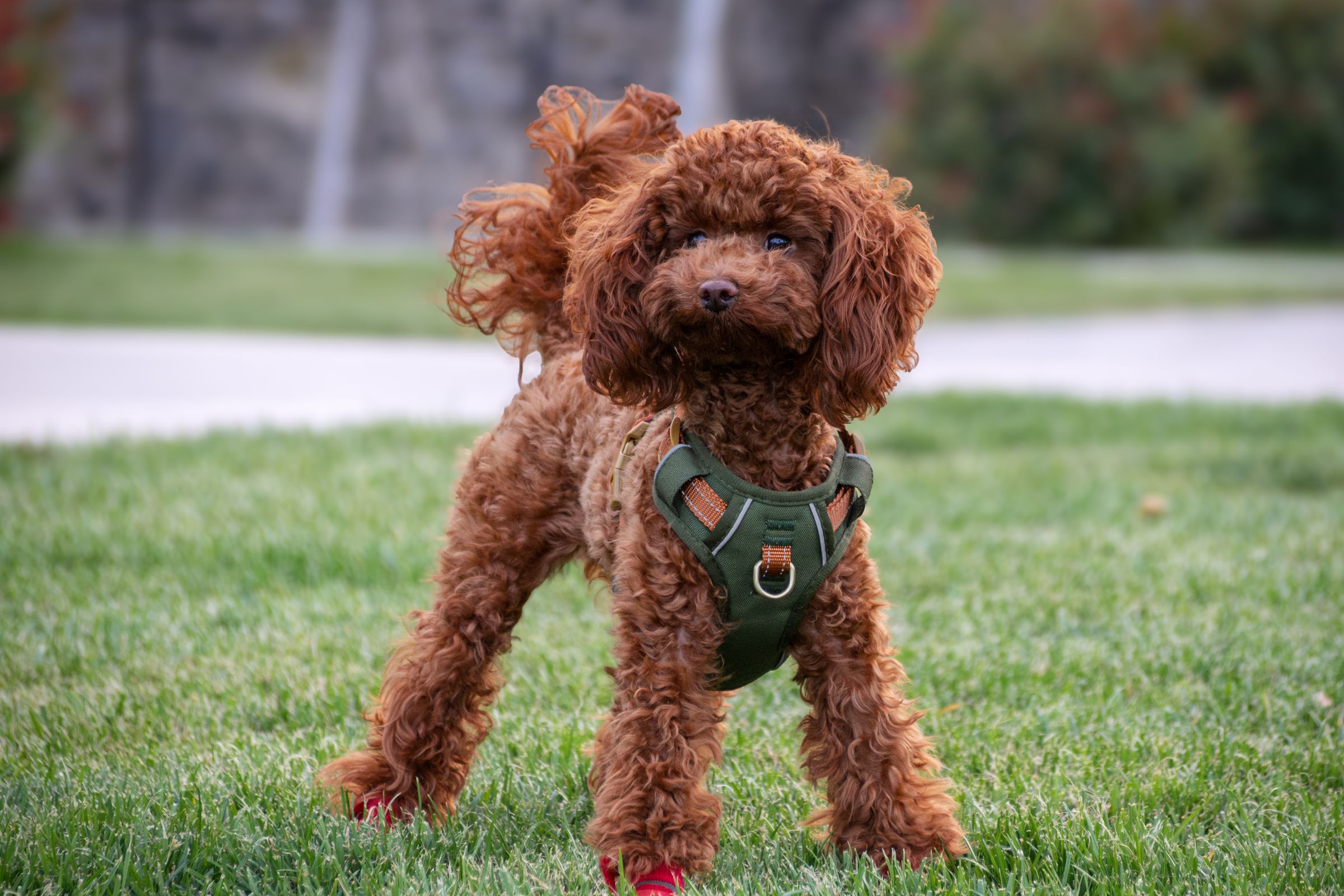
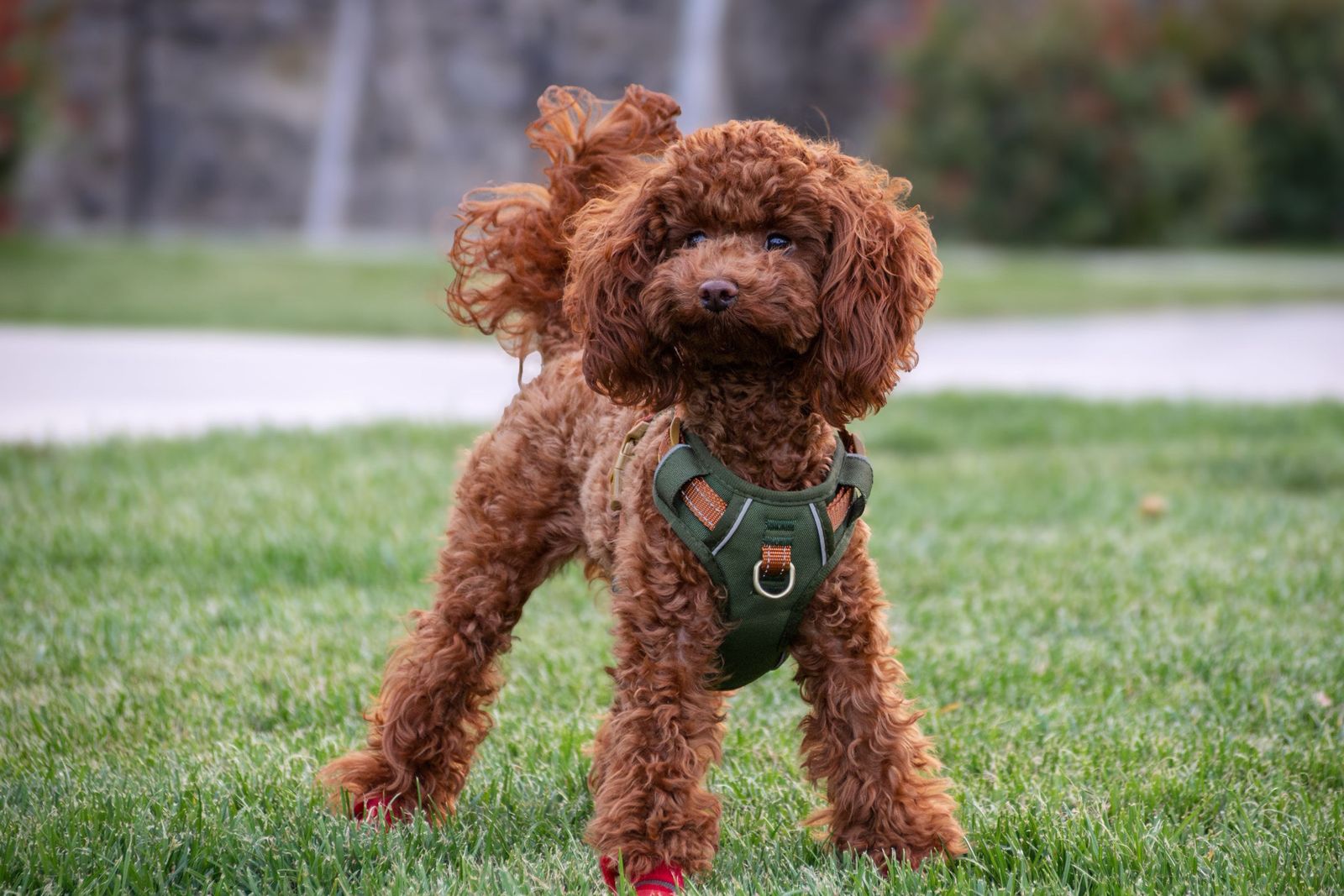
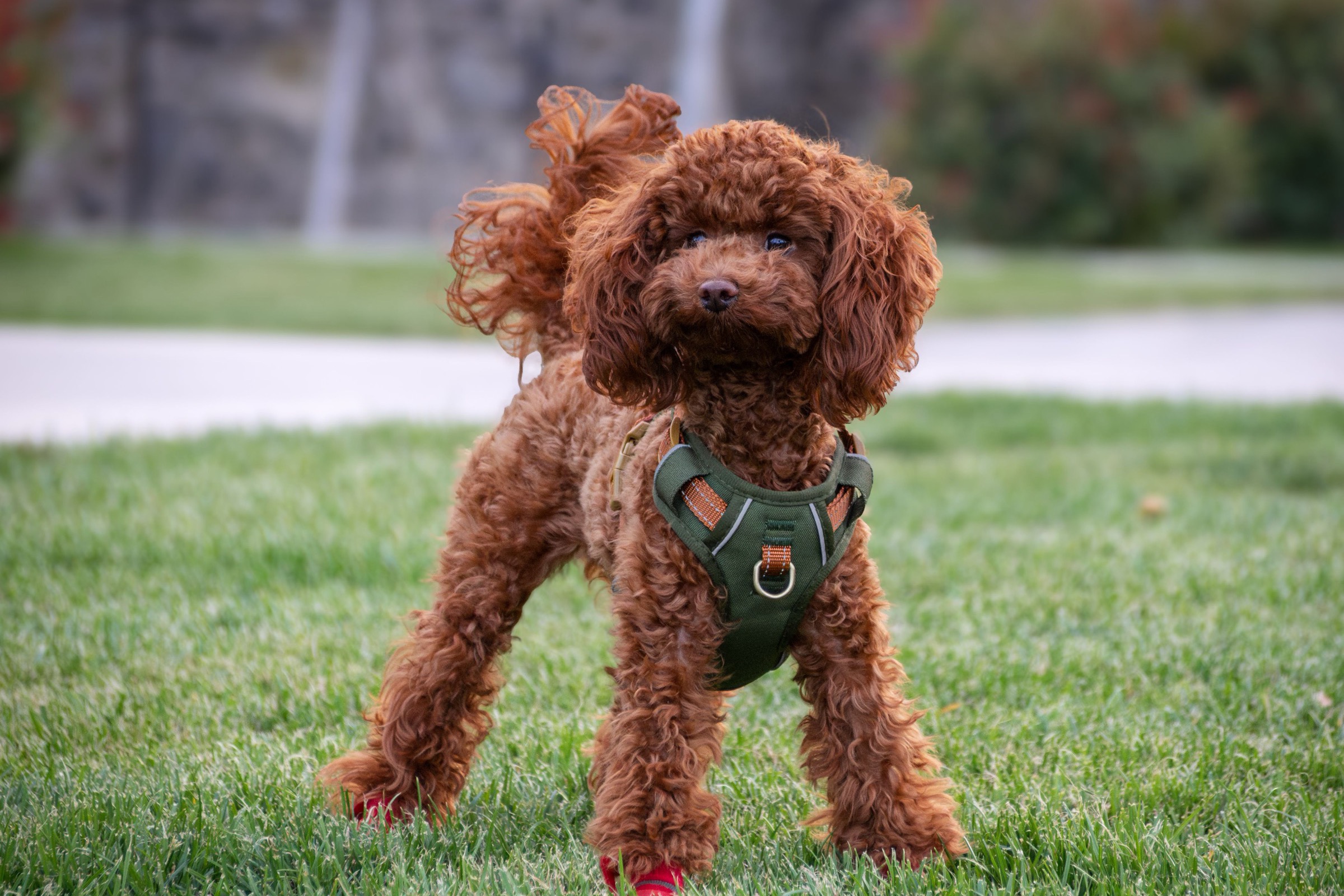
- Retire the collar for walking. Pressure on the trachea is a direct trigger, and the switch to a harness appears at every grade: see harness or collar.
- Weigh, don't guess. On a 3 kg dog, 200 grams only shows up on a scale.
- No smoking around the dog. Smoke and dust are the most cited irritants.
- Avoid heat and peaks of excitement. Warmth, panting and noisy greetings set the cough off.
And the breeding?
Unlike patellar luxation, there is no screening examination and no breeding requirement for the windpipe anywhere in the world: the tests asked of Poodle breeders cover knees, eyes and DNA. What a buyer can ask instead is how the older dogs in a line are doing, since this surfaces only in a dog's final years. When choosing a breeder, that answer tells you more than any certificate. More in Toy Poodle health.
In short
- A dry, honking cough on excitement, lead pressure, eating or heat is the classic sign.
- Toys and Miniatures are the risk group; Mediums and Standards far less so.
- Mean age just over eleven, and the grade correlates poorly with the cough.
- Medication plus a harness, weight loss and smoke-free air controls signs in about 71 per cent; a stent is the exception.