Patellar Luxation in Poodles: The Skipping Step, the Grades and the Costs
By The Poodle Guide editorial team · Updated on August 31, 2026
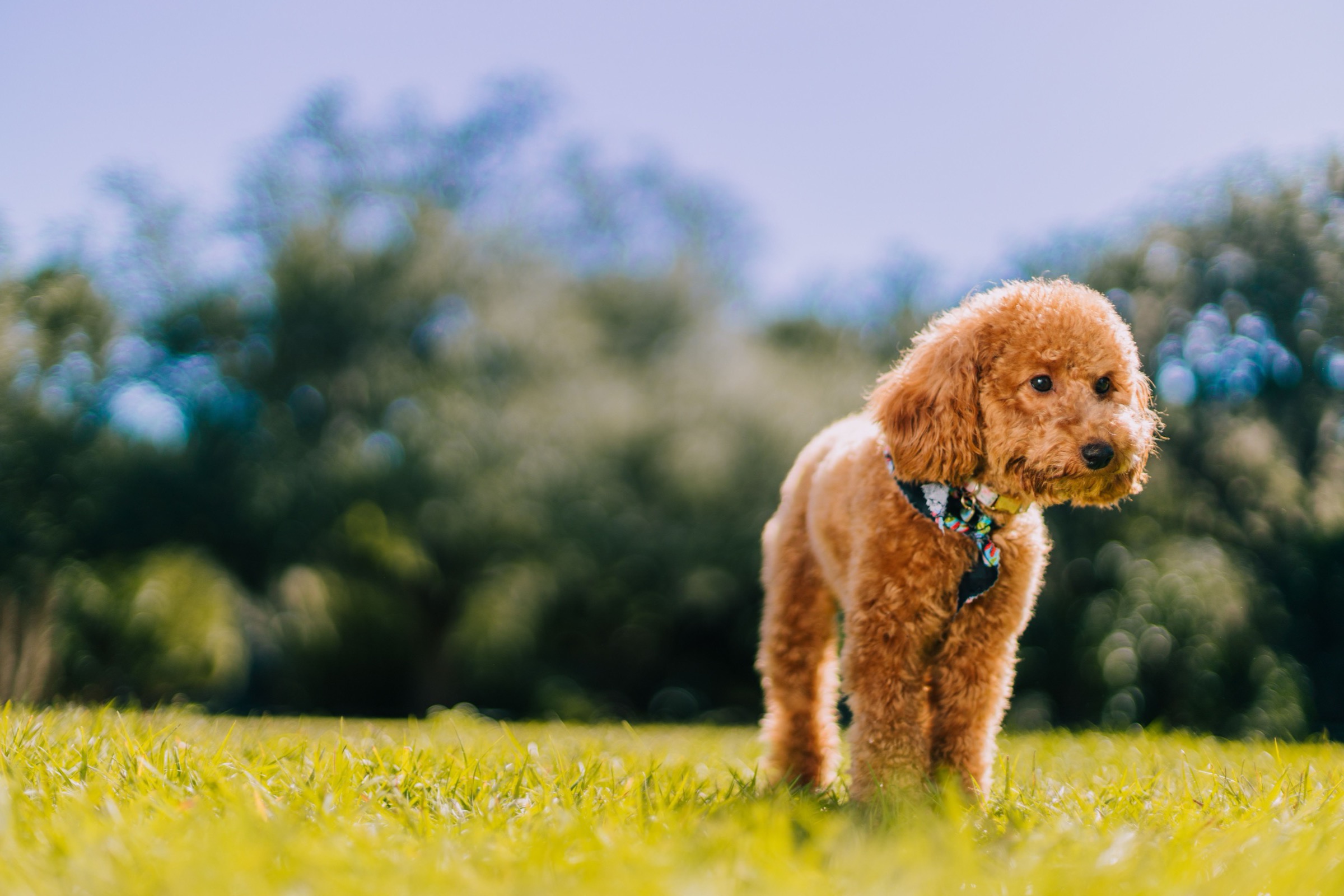
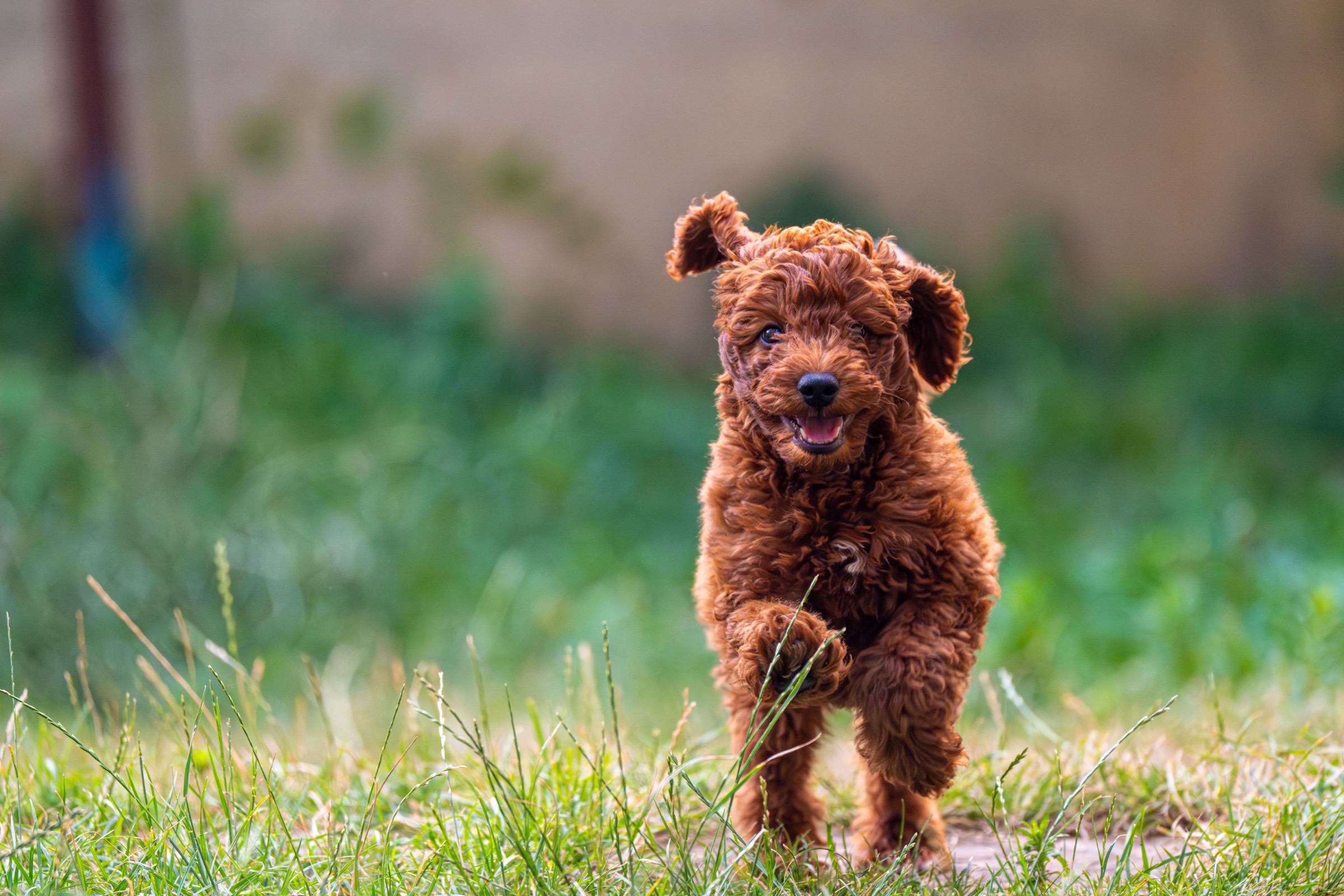
Your Poodle runs across the garden, lifts a hind leg, hops two or three steps on three legs, then carries on as though nothing happened. No yelp, no obvious pain. That skipping step is the classic picture of patellar luxation, and in the smaller sizes it is anything but rare.
What happens in the knee
The kneecap, the patella, sits in a groove at the bottom of the thigh bone and slides in it with every stride. If the groove is too shallow, or the lower leg slightly rotated, it pops out under load. In small breeds it almost always goes towards the inside of the leg, medially, which explains the step: with the kneecap out of its groove the dog cannot straighten the knee, so the leg comes up. The American College of Veterinary Surgeons puts diagnosis at roughly 7 per cent of puppies, both knees in about half of patients, and the medial form is around twelve times more common in small breeds than large.
Why the Toy Poodle tops the table
A Japanese study published in 2019 examined 2,048 puppies from nine popular breeds at an average age of 43 days. Of all of them, 20.3 per cent had a luxating patella. The Toy Poodle led at 38.1 per cent, ahead of the Shiba at 34.9 and the Pomeranian at 26.9, with the Maltese at 2.1. Of those affected, 86 per cent had both knees.
Those puppies came from commercial dog auctions, so the figure describes breeding without selection rather than the breed itself: across 119 first-opinion practices in England, patellar luxation was diagnosed in 1.30 per cent of 210,824 dogs, at a median age of 4.0 years. What the Japanese data does establish is heritability. Littermates of an affected Toy Poodle puppy carried a 6.3 times higher risk, rising to 16.2 times from grade II upwards, which makes the breeder half the story.
Size changes the picture
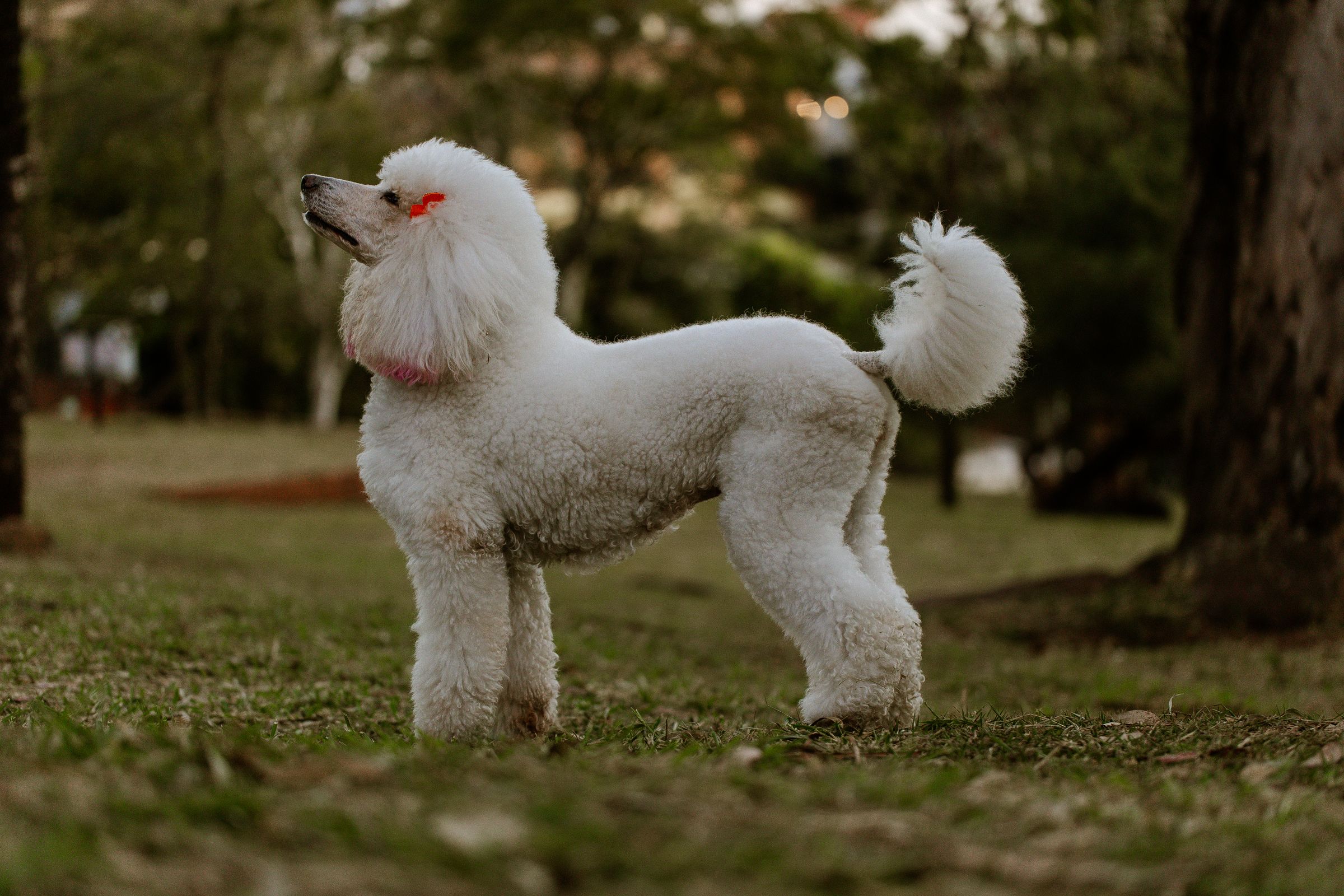
The medial form clusters at the light end of the breed: a Toy at 2 to 4.5 kg and a Miniature at 4 to 7 kg sit in the risk group, a Medium at 9 to 13 kg less so, a Standard at 20 to 30 kg much less again. Large dogs are instead over-represented for lateral luxation, where the kneecap slips outwards, and that risk rises with size. A Standard owner is not immune, then, but the picture differs: a wide, knock-kneed stance rather than the three-legged skip.
Registry labels blur this. The FCI recognises four varieties with the Toy at 24 to 28 cm, while the AKC caps the Toy at 10 inches and works with three, as does the UK Kennel Club, so a Miniature registered in the United States can sit in the FCI's Medium range, as our guide to Poodle sizes shows. Read the weight, not the pedigree.
The grades, I to IV
A vet feels, standing and lying, whether the kneecap can be pushed out of its groove. Most English-speaking countries use the Putnam scale:
- Grade I: luxates only under finger pressure and springs straight back.
- Grade II: luxates spontaneously and returns spontaneously, usually with rotation of the lower leg.
- Grade III: sits out of the groove permanently but can be pushed back by hand.
- Grade IV: sits out permanently and cannot be replaced by hand.
What the registries and breed clubs ask for
There is no single international rule. In the United States, registries such as the Orthopedic Foundation for Animals maintain a patella database of submitted veterinary examinations. In the UK it runs through Kennel Club and BVA health-scheme structures, and elsewhere FCI member clubs use the FCI grading. The Poodle Club of America and comparable clubs list patella evaluation among their recommended health tests.
For a buyer that becomes one question when buying a puppy: ask to see both parents' patella results in writing, not just the word "healthy". A breeder who tests has nothing to hide; one who shrugs is telling you something.
What you see at home
Besides the skipping step, watch for a wide or stiff gait, stumbling, trouble getting up, or a dog that quietly stops jumping onto the sofa. Because it is so often bilateral it hides in plain sight: there is no good leg to compare against. It is also more than cosmetic. An unstable knee wears and arthritis follows, and cranial cruciate injury turns up alongside medial patellar luxation in 13 to 25 per cent of dogs, which puts this at the centre of Toy Poodle health.
Watching or operating
Grade I and mild grade II are usually managed conservatively: a lean weight, targeted muscle building, often physiotherapy. That is not the same as doing nothing. Among dogs with an unnoticed grade II followed for four years, half had chronic lameness or surgery after all.
For grade III, grade IV and a symptomatic grade II, surgery is the route. Surgeons typically deepen the groove in the thigh bone, move the knee tendon's attachment on the shin bone so the pull runs true, and tighten the joint capsule. More than 90 per cent of owners are satisfied afterwards, but complications run from 13 to 48 per cent, most often loosened implants or reluxation, and eight to twelve weeks of restricted activity follow.
Costs vary too much between countries and practices to quote a figure, but with work-up, anaesthesia and aftercare this is a four-figure sum per knee in most practices, doubled for two knees. Ask your clinic for a written estimate, and read the exclusions in Poodle pet insurance early: cover only helps if the signs were absent when the policy began.
What you can do at home
- Weight is the first dial. Every hundred grams counts on a dog of 2 to 4.5 kg: see a healthy weight for your Poodle.
- Limit jumping and slipping. A ramp saves dozens of landings off the sofa; rugs, non-slip socks and short hair between the pads stop the hind legs sliding out on every turn.
- Build muscle quietly. A daily walk at a steady pace does more than ten minutes of wild ball chasing; if you do agility, ask which elements are sensible.
- Have the skipping step graded, even if your dog seems untroubled: it is your comparison point through senior Poodle care.
In short
- A few steps on three legs, then normal walking again, is the classic signal.
- The medial form is twelve times more common in small breeds and the Toy Poodle tops the tables; large dogs get the lateral form instead, and that risk rises with size.
- It is heritable: littermates carry a 6.3 to 16.2 times higher risk. Ask for both parents' results.
- Grade I and mild grade II: weight, muscle, physiotherapy. Grade III and IV: surgery and a slow recovery.