Poodle Anal Glands: Scooting, Emptying and What Actually Helps
By The Poodle Guide editorial team · Updated on August 24, 2026
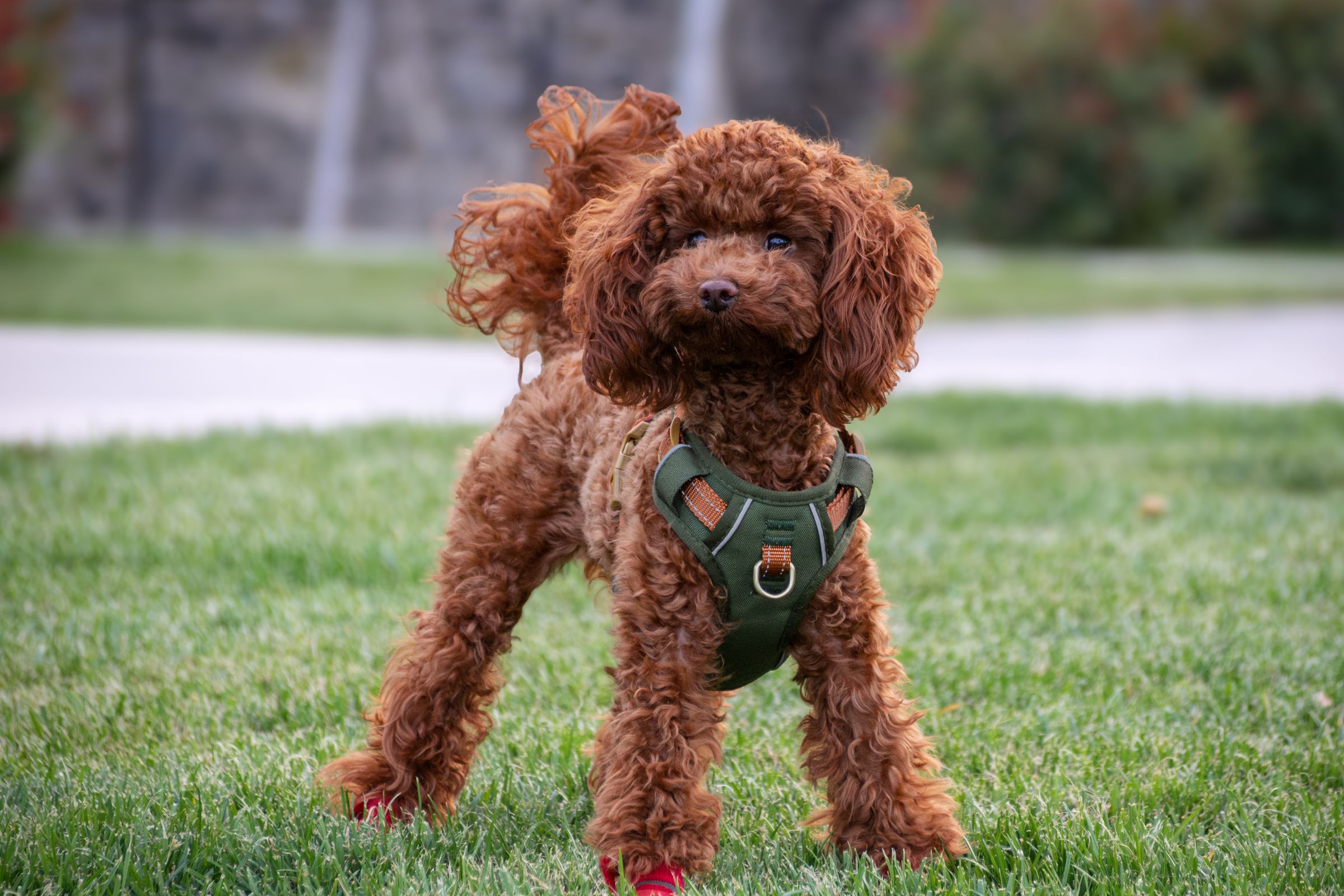
Your Poodle drags its bottom across the carpet, or licks under its tail all evening. Usually that is not worms and not bad manners, but a signal from two small sacs beside the anus. Every dog has them; the trouble clusters in the small sizes.
What anal glands are and what they do
The anal sacs are two pouches either side of the anus, at the four and eight o'clock positions, one to two centimetres out from the opening. They lie between the internal and external sphincter and drain through a narrow duct along the rim of the anus. The fluid is sharp and fishy: a calling card that gives the stool an individual smell and helps dogs recognise one another. Every firm stool squeezes a little out, and while that works you notice nothing.
Why this is mainly a Toy and Miniature problem
A questionnaire study among Dutch veterinary surgeons put the incidence of non-malignant anal sac disease at 15.7 per cent: impaction 8.9, inflammation 4.05 and abscess formation 2.75 per cent. Just over 60 per cent of the vets named dogs under 10 kg as over-represented, against barely 3.5 per cent for dogs over 30 kg. American veterinary sources list the Toy and Miniature Poodle among the predisposed breeds, with the Chihuahua, Lhasa Apso, Cocker Spaniel and Basset Hound.
Weight matters more than the label here, because the registries disagree: the FCI recognises four varieties with the Toy at 24-28 cm, while the AKC (Toy capped at 10 inches) and the UK Kennel Club work with three, so a Miniature registered in the United States can sit in the FCI's Medium range (our guide to Poodle sizes compares them). A Miniature Poodle of 4 to 7 kg is in the risk group; a Standard at 20 to 30 kg largely is not.
The breed link is softer than it looks. Today's Veterinary Practice notes that the true per-breed risk has never been established, and that in two retrospective studies the German Shepherd and Labrador were the most heavily represented. First-opinion incidence runs from 4.4 to 15.7 per cent, anal sacculitis about 12 per cent of cases. Small size raises the odds; it decides nothing.
What actually drives it
- Loose stools. One study found a history of diarrhoea in 75 per cent of cases, a more recent one poor stool quality in 20.6 per cent. Without a firm stool, the pressure that empties the sacs is missing.
- Allergy and atopic skin disease, the most common comorbidity by far. Atopic dogs show an altered anal sac microbiome, which encourages sacculitis.
- Body weight, where the evidence is split: 31.6 per cent of vets see a link, 66.7 per cent see no difference in body condition score, and a British study found none. A healthy weight is worth keeping anyway, but will not fix the anal sacs.
The signs
- Scooting across the floor or grass, usually the first sign.
- Licking or biting at the tail base until the coat is damp and thin.
- A sharp, fishy smell in the house or on the bedding.
- Sitting awkwardly, or straining to pass a stool.
- Redness or a painful swelling one to two centimetres beside the anus: inflammation or an abscess, and a call the same day. Blood or pus: it has burst.
From impaction to abscess
The sequence rarely varies: the secretion thickens, the duct blocks, the sac swells and itches, bacteria multiply in the trapped material, and at worst an abscess forms and ruptures through the skin, leaving a draining tract.
Treatment means emptying the sac and flushing out congealed material, plus antibiotics and pain relief if it is infected and light sedation if the dog is sore. The clinical protocol is digital expression, a catheter into the duct, a saline flush, then infusion of an antibiotic-antifungal-glucocorticoid ear preparation, repeated roughly every two weeks. If that keeps failing, surgical removal of the sacs is the last resort, not routine. Cover varies by policy, worth checking in Poodle pet insurance.
Do not have them emptied as a precaution
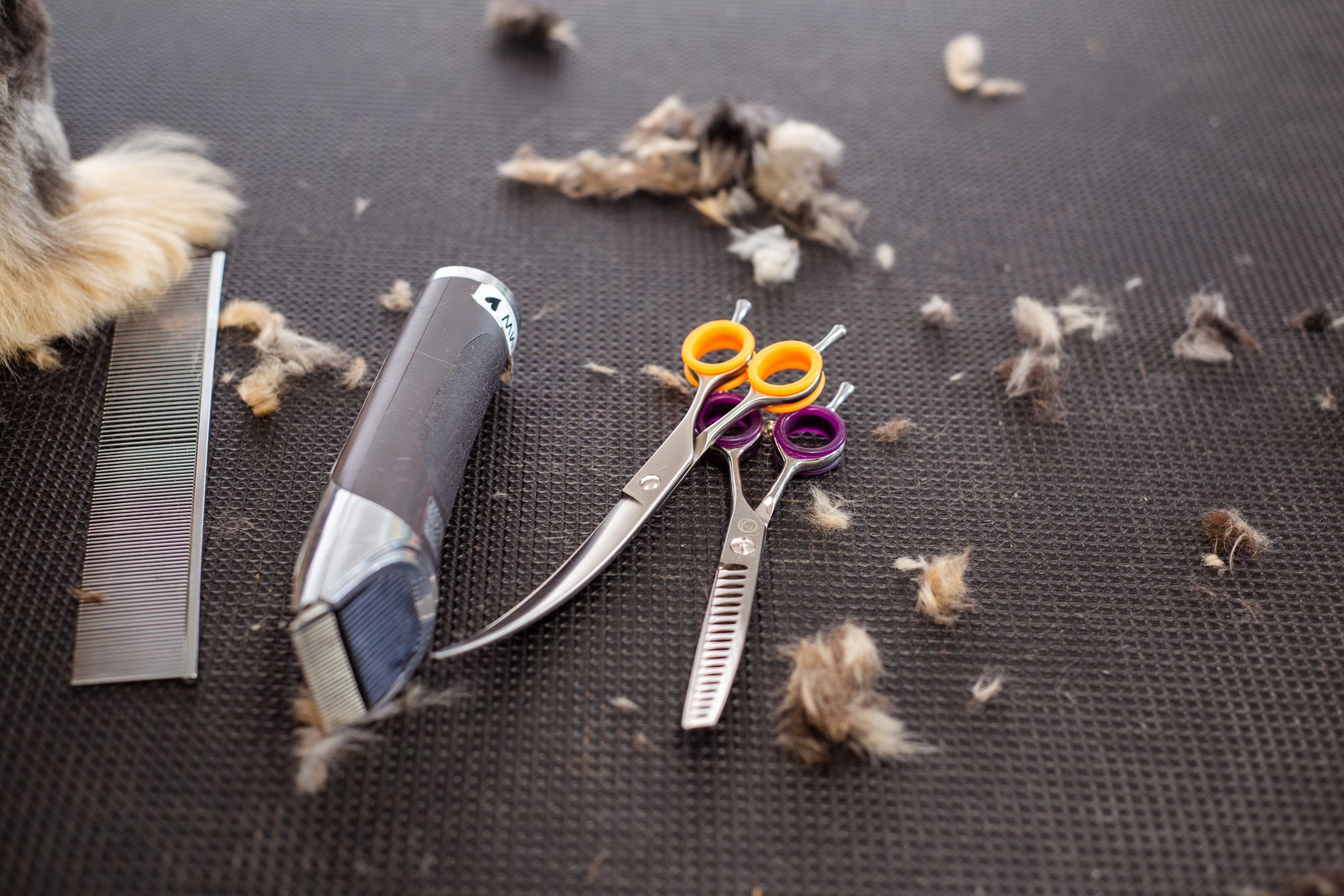
Many salons empty the anal glands as standard, which matters for a breed on the grooming table every six to eight weeks. Veterinary dermatologists are clear: sacs that cause no trouble should be left alone. Routine expression lets fluid build back up, so the sacs fill faster and seem to need doing more often, while over-expression irritates and damages the wall, making impaction, infection and abscesses more likely. Ask for it only when there are signs, and raise it with your groomer if it happens by default. Doing it yourself is worse: the wrong pressure damages the sac or duct.
What does help
A firm, bulky stool is what empties the sacs naturally, so start there. Psyllium, a soluble fibre, is prescribed by vets for anal sac impaction: easy to dose, few calories. Commercial "anal gland" supplements, by contrast, have no scientific backing. Agree any dose with your vet first.
Beyond fibre: take recurring diarrhoea seriously, check nothing is going in that should not be on the menu, have persistent itching investigated rather than treating the rear end alone, and keep the coat there short so you can see what is happening. More in our overview of Toy Poodle health.
One exception in the older dog
A firm lump beside the anus in an older Poodle always needs assessing. Apocrine anal sac adenocarcinoma makes up roughly 2 per cent of canine skin tumours and 17 per cent of perianal tumours, and affected dogs average around ten years old, often picked up by chance on a rectal examination. Other signs include straining, constipation, lethargy, poor appetite, vomiting and increased drinking and urination, and 25 to 40 per cent develop high blood calcium. Cornell advises an annual check-up with a rectal examination, twice a year for older dogs, part of good senior Poodle care.
In short
- Scooting and licking under the tail come first.
- Dogs under 10 kg are over-represented: a Toy and Miniature issue.
- Loose stools and itchy skin drive it, not the breed.
- Routine emptying without symptoms backfires.
- Redness, swelling, blood, pus, or a firm lump in an older dog: see your vet.