Crate Training a Poodle: From Scary Box to Favorite Place
By The Poodle Guide editorial team · Updated on July 24, 2026
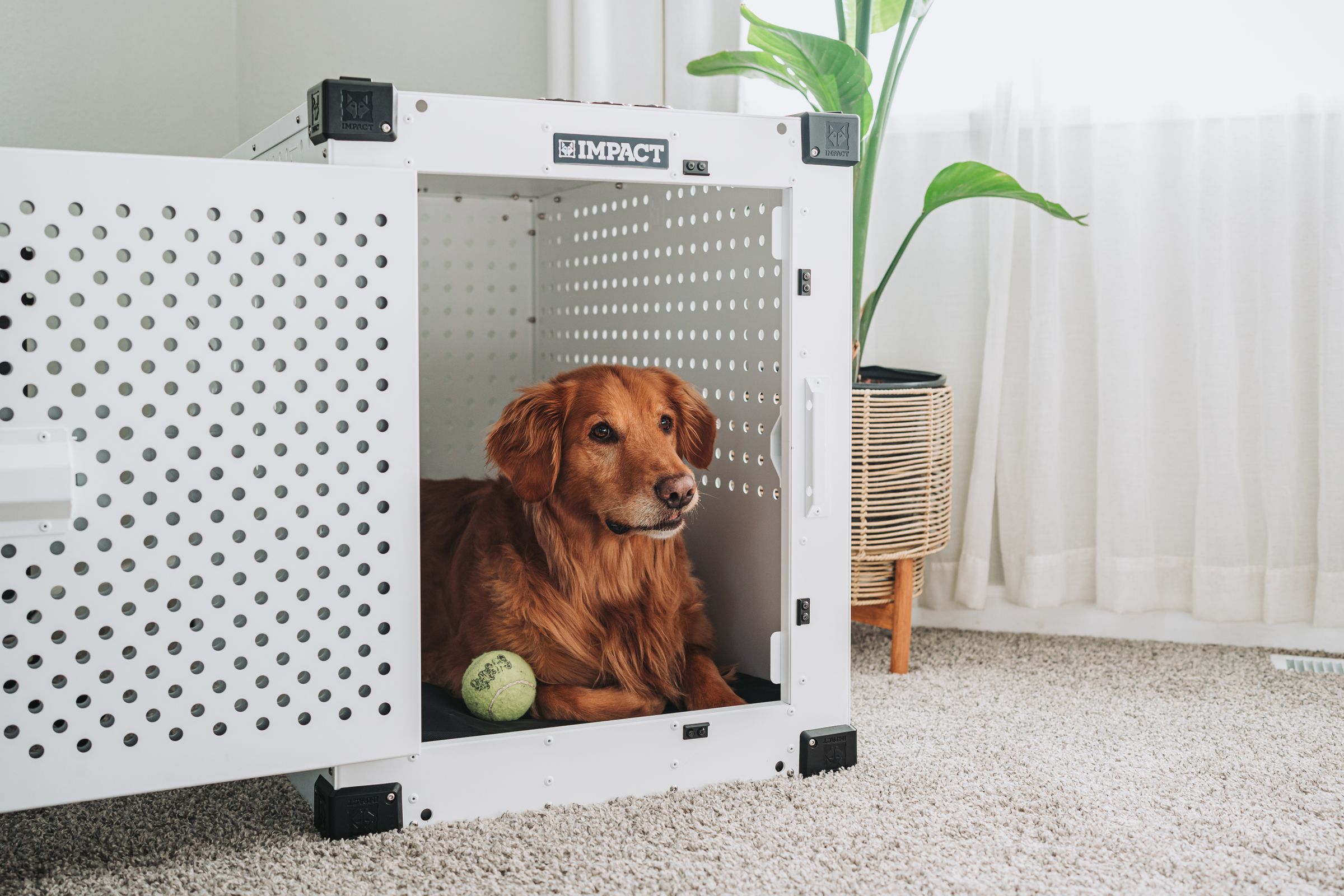
Crate training a Poodle is one of the most useful things you'll ever teach, if you do it the right way round. Done well, the crate becomes your dog's own den: the place it chooses for a nap, its refuge when the household gets busy, its familiar base at the vet, in the car or on holiday. Done badly, as a punishment cell or a parking spot for whole workdays, it becomes a source of stress. The good news: with a breed as clever and food-motivated as the Poodle, the positive route is fast. Here's the full plan: the right crate size for each Poodle variety, a step-by-step build-up, and the honest time limits.
Why a crate at all?
Dogs are den animals at heart: a small, covered, safe space to rest in is naturally attractive, provided nothing bad ever happens there. A well-trained crate gives you four things at once. It's a powerful house-training tool, because healthy dogs avoid soiling their sleeping spot. It gives your puppy a safe place to sleep, ideally next to your bed in the first nights. It's a portable safe zone for travel, vet visits and stays elsewhere. And it gives a sensitive breed like the Poodle a legitimate retreat, which matters double in a household with children, where the iron rule should be: a dog in its crate is left alone.
Choosing the right crate: size decides success
The single most common mistake happens before training starts: buying a crate that's too big. The rule is just big enough to stand up, turn around and lie fully stretched, no bigger. Too large, and a puppy will sleep in one corner and quietly use the far corner as a toilet, sabotaging house training. Poodles span an enormous size range, so this genuinely varies per variety:
| Variety | Adult shoulder height | Adult weight | Crate note |
|---|---|---|---|
| Toy Poodle | 24-28 cm | 2-4.5 kg (4.5-10 lbs) | The smallest standard crates fit; a soft travel crate doubles as a cabin bag base later. |
| Miniature Poodle | 28-35 cm | 4-7 kg (9-15 lbs) | Small crate; still compact enough to sit beside the bed. |
| Medium Poodle | 35-45 cm | 9-13 kg (20-29 lbs) | Medium crate; measure your dog rather than guessing. |
| Standard Poodle | 45-60 cm | 20-30 kg (44-66 lbs) | Large crate: plan where it lives before you buy it. |
For a puppy of one of the larger varieties, buy the adult-size crate and shrink it with a divider panel, growing the space as the dog grows. Kit the crate out with a washable blanket, water if the dog spends longer periods in it, and place it somewhere calm but not isolated: the edge of the living room beats the laundry room.
The build-up schedule: small steps, always positive
The golden rule above all others: the crate is never punishment. Not once. One angry "get in your crate!" can undo weeks of goodwill. Every step below is repeated until your Poodle is visibly relaxed before you extend it.
- Step 1: door open, good things inside. Toss treats in, feed meals just inside the entrance, hide a chew in the back. The dog goes in and out freely. No door, no pressure. Many Poodles are napping in the open crate within days.
- Step 2: door closed for seconds. While the dog eats something tasty inside, close the door, open it before the food is finished. Build from seconds to a minute or two. Calm is rewarded; whining means you went too fast, so back a step.
- Step 3: minutes, with you in the room. Give a long-lasting chew or a stuffed food toy, close the door, sit nearby and do something boring. Build to 10-15 minutes.
- Step 4: you leave the room. Same setup, but you walk out and return, first seconds, then minutes. Undramatic exits and returns: no farewell speeches, no jubilant reunions.
- Step 5: real absences. Short errands, building up gradually. This overlaps with training your dog to be home alone generally: the crate can be part of that, but the same hard ceiling applies.
- Never open the door for whining. Wait for a beat of quiet, then open, otherwise you teach that noise works. But persistent distress means the step was too big: go back, don't push through.
Expect the whole ladder to take one to three weeks of short daily sessions. Poodles are the second most intelligent breed and thoroughly food-motivated: few breeds train onto a crate faster, provided every association stays positive.
The honest time limits
This is where crate training goes wrong in practice. A crate is a bedroom, not a storage unit:
- Puppies: a couple of hours at a time during the day at most, plus nights, with toilet breaks, since young puppies can't hold their bladder through the night.
- Adult dogs: no more than a few hours at a stretch.
- Never a full working day. Crating a dog for eight hours isn't training, it's confinement. No Poodle should be left alone more than 4-5 hours in any form, and a crate doesn't stretch that limit, it sits inside it.
When can the crate go, and should it?
Once your Poodle is reliably house-trained and no longer chews the furniture, often somewhere between one and two years old, you can start leaving the crate door permanently open, and later test short absences with the dog loose. Many owners then retire the crate entirely. Just as many discover their Poodle disagrees: the crate has become the dog's chosen bed, and it stays. Both outcomes are success. The crate also keeps earning its place at the vet, on trips and during grooming-day logistics: a dog that relaxes in a crate anywhere is simply easier to take everywhere, which suits a breed that you chose to share your life with, not to park.
In short
- The crate is a positive den, never, ever a punishment.
- Size decides success: standing, turning, lying stretched, no bigger, or house training suffers. Use a divider for growing puppies.
- Build in small steps: door open with treats → door closed seconds → minutes → you leave → real absences. One to three weeks of short daily sessions.
- Hard limits: puppies a couple of hours plus nights with toilet breaks; adults a few hours; never a full workday.
- Once house-trained, the door can stay open: many Poodles keep the crate as their favorite bed anyway.