How Smart Are Poodles?
By The Poodle Guide editorial team · Updated on July 20, 2026
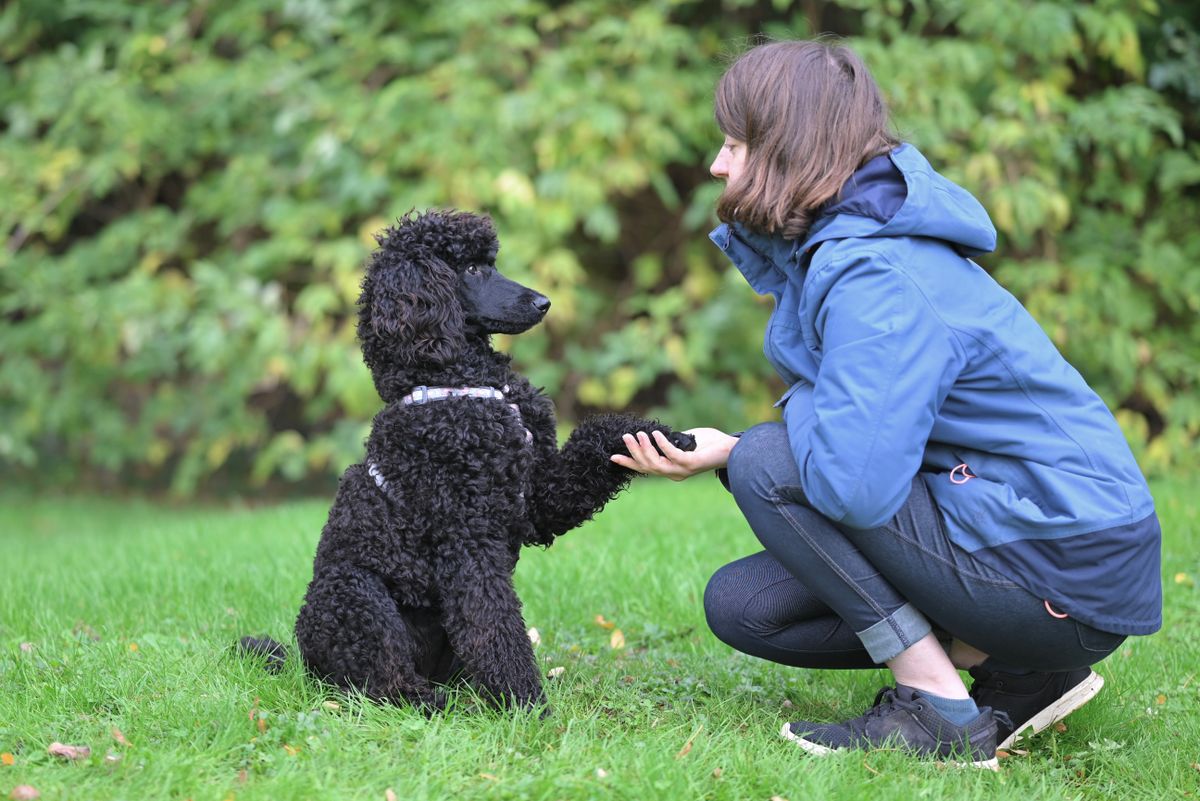
Of all dog breeds, none gets called "the smart one" as often as the Poodle, and it's no myth. The Poodle consistently sits at the top of intelligence rankings, and that has direct consequences for how you should raise, train and occupy a Toy Poodle.
Where does that reputation come from?
The best-known source on dog intelligence is the work of Canadian psychologist Stanley Coren, who in the 1990s asked nearly 200 obedience judges in North America (AKC and CKC) to rate breeds on working and obedience intelligence: how quickly a dog learns a new command and how reliably it performs it afterwards. The Poodle finished second, just behind the Border Collie and ahead of breeds like the German Shepherd and the Golden Retriever. That makes the Poodle not merely the smartest companion dog, but one of the smartest dog breeds in the world, full stop.
That outcome doesn't surprise breeders or behaviorists: the breed was shaped over centuries as an independently working hunting retriever and later as a circus performer, both jobs where only the smartest, fastest-learning dogs succeeded. That selection pressure is still in the breed today.
What "dog intelligence" actually means
Intelligence in dogs isn't one-dimensional. Researchers usually distinguish three forms:
- Instinctive intelligence: how well a dog does what it was bred for (in the Poodle's case: retrieving, swimming, staying alert).
- Adaptive intelligence: the ability to solve problems independently: how to reach something, or how to get a door open.
- Working and obedience intelligence: how fast a dog learns what a human asks of it. This is where the Poodle ranks a clear second.
In practice, a Toy Poodle scores strongly on all three: it learns commands at lightning speed (working intelligence), knows exactly how to approach a closed treat jar (adaptive intelligence), and puts its innate retrieving and watchdog instincts to daily use, even if it has never seen a duck in its life.
What does this look like day to day?
- Lightning-fast learning: where many breeds need dozens of repetitions, a Poodle often gets a new command after just a few tries.
- Quick to learn, quick to mislearn: that speed cuts both ways. A Poodle picks up a bad habit as fast as a good one, so consistency from day one pays double.
- Problem-solving behavior: from opening door handles to inventing clever tricks for attention: a bored Poodle is surprisingly inventive.
- Emotional intelligence: Poodle owners often report that their dog reads moods flawlessly, which fits the sensitive nature we describe in the Toy Poodle temperament.
The flip side: a smart head wants work
Intelligence is no guarantee of an easy dog; rather the opposite. A Poodle that gets physical exercise but is mentally underused will go looking for its own challenge: excessive barking, chewing on furniture or general restlessness are classic signals of a bored, clever dog. This applies to every Poodle size, but it's overlooked most often in the Toy Poodle, precisely because its size makes people treat it like a cuddly toy instead of the thinking, full-fledged dog it is. Regular puzzle toys, snuffle mats and short training moments several times a day keep that clever head content.
In short
- The Poodle ranks second in the best-known dog intelligence ranking, behind the Border Collie.
- That intelligence stems from centuries of breeding for independent work and fast learning.
- A Toy Poodle is exactly as smart as a Standard: size has nothing to do with learning capacity.
- Too little mental challenge leads to problem behavior faster in this breed than in less clever ones.