Poodles in Hot Weather: Keeping Cool Without Shaving the Coat Off
By The Poodle Guide editorial team · Updated on July 24, 2026
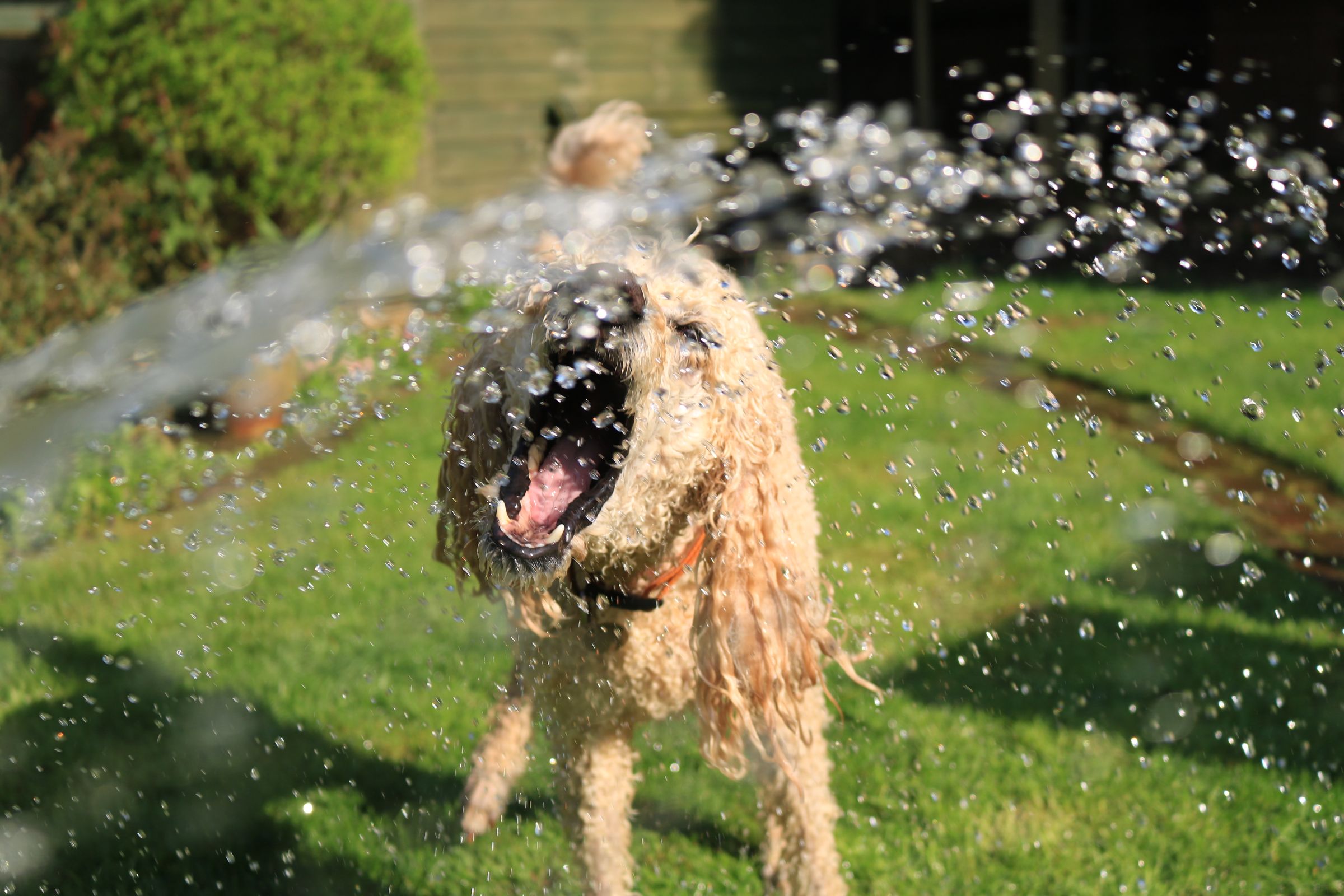
How do you keep a Poodle comfortable in hot weather? Mostly by doing less than you'd think, and by resisting one popular mistake. Dogs don't sweat the way we do; they cool themselves by panting, which is far less efficient. That makes heat management about smart timing, shade and water, not about shaving your Poodle bald. The curly coat you're tempted to remove actually works both ways: it insulates against cold and buffers against heat and sun. Here's what genuinely helps, what the warning signs of overheating look like, and where the size differences matter.
Why you shouldn't shave a Poodle down to the skin
It feels logical: less hair, cooler dog. But a Poodle's coat is not a winter jacket the dog is stuck wearing: it's a regulating layer. A properly maintained coat keeps a pocket of air between sun and skin, and it's the only sun protection your dog has. Shave to the skin and you get:
- Sunburn risk. Dog skin burns, and a shaved Poodle in direct summer sun is exposed exactly where it can't protect itself.
- No heat buffer. Radiant heat now reaches the skin directly instead of being partially blocked by the coat.
- A matting-prone regrowth phase that makes the next months of coat care harder.
What is smart: a short summer trim. Ask your groomer for a shorter all-over clip that leaves a protective layer, a practical variant of the popular short pet trims. Combined with the normal 6-8 week grooming rhythm and regular brushing (a mat-free coat ventilates far better than a matted one), that's all the "summer coat strategy" a Poodle needs.
Walk in the edges of the day
The simplest heat rule: shift your schedule, not your dog's limits. In a heat wave, the long walks happen early in the morning and after sunset; midday is for a short, shaded toilet break only. Before any walk on a warm day, do the 5-second pavement test: press the back of your hand flat on the asphalt for five seconds. Too hot for your hand means too hot for paw pads: asphalt stores heat long after the air starts to cool, and burned pads are as painful as they sound.
Trade the cancelled midday exercise for indoor work. Ten minutes of scent games or trick training tires a breed this intelligent as effectively as a walk, without the heat risk.
Recognize overheating, and treat it as the emergency it is
Heatstroke kills dogs every summer, and the progression is fast. Know the ladder:
- Early: heavier panting than the activity justifies, seeking shade, slowing down, tongue very long and wide.
- Warning: excessive panting that doesn't settle, heavy drooling, wobbling or weakness, gums turning dark red.
- Emergency: vomiting, disorientation, collapse.
From the warning stage on, act immediately: move the dog to shade, cool it with lukewarm water (not ice-cold, that constricts blood vessels and can worsen things) over the belly, armpits and paws, offer small sips of water, and get to a vet right away, cooling en route with airflow. Don't wait to see if it passes; heatstroke damage continues internally after the dog seems calmer. When in doubt, call your vet, always.
And the scenario behind a tragic share of these emergencies: never leave a dog in a parked car, not in the shade, not with windows cracked, not "for two minutes." Car interiors reach lethal temperatures within minutes.
Cooling that actually works
- Shade and fresh water everywhere the dog spends time, outside and inside, refreshed often
- A cooling mat, or simply a damp towel to lie on and tiled floors to sprawl on
- A paddling pool with a few centimeters of water: many Poodles love it, true to their water-dog roots (can Poodles swim? Usually, yes)
- Frozen treats: a food puzzle or ice tray with frozen broth or wet food keeps a Poodle busy and cool at once
- Airflow indoors: a fan helps a panting dog far more than it helps a sweating human
- No ball-chasing or running in the heat of the day, even if the dog is willing, Poodles will overwork before they self-limit
- No muzzle-tight harnesses or carriers that restrict panting on hot days
- No shaving to the skin, and no leaving any dog in a parked car, ever
Size differences in the heat
All four sizes cool the same way, panting, but the practical risks differ:
- Toy and Miniature (2-7 kg): closer to the hot pavement, so they absorb more radiated street heat on summer walks, and small bodies dehydrate faster. Advantage: you can pick them up and carry them across a scorching parking lot. Carry water on every warm-weather walk.
- Medium and Standard (9-30 kg): bigger bodies store more heat and shed it more slowly once overheated: a large, enthusiastic Standard Poodle that's been fetching in the sun can tip from "tired" to "in trouble" quickly. Enforce breaks; this breed's work drive outruns its self-preservation.
- Seniors and puppies of any size regulate temperature less well and deserve the strictest version of every rule above, our senior Poodle guide covers the older-dog specifics.
One reassurance: the Poodle has a normal muzzle and no extreme anatomy, so it handles heat better than flat-faced breeds. That's a lower baseline risk, not a free pass.
Finally, keep an eye on hydration across the whole hot spell, not just during walks. A dog that drinks noticeably less on hot days, seems listless indoors, or loses its appetite for more than a day is telling you something. Fresh water in several spots around the home, and a quick call to your vet if the flat mood persists, hot weather makes many problems look like "just the heat" until they aren't.
In short
- Dogs cool by panting, not sweating: heat management is about timing, shade and water.
- Never shave a Poodle to the skin: the coat protects against sun and heat. A short summer trim with clippers is the right move.
- Walk early and late; use the 5-second hand-on-asphalt test before every warm-weather walk.
- Know the heatstroke signs, excessive panting, drooling, wobbling, dark red gums, and treat them as an emergency: cool with lukewarm water and go to the vet immediately.
- Never leave a dog in a parked car. Small Poodles dehydrate faster; big ones overheat harder, adjust for your size.