Clipping a Poodle at Home: Clippers, Blade Sizes and a Step-by-Step Plan
By The Poodle Guide editorial team · Updated on September 21, 2026
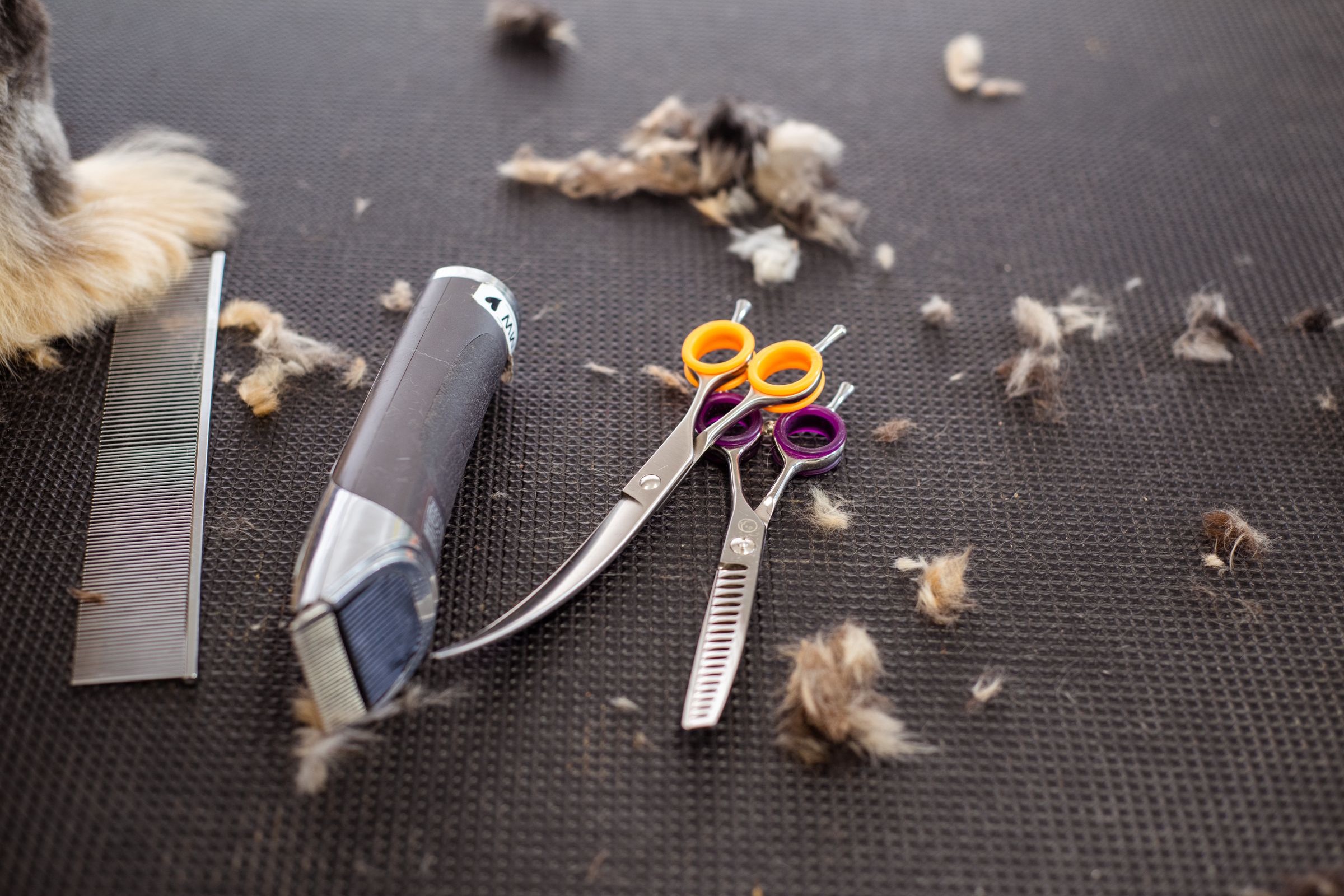
A Poodle needs clipping every six to eight weeks for life, and sooner or later most owners wonder whether they could do it themselves. You can, if you know which parts are yours and which belong to a professional. Salon prices are in Poodle grooming; this page is about doing it at home.
Should you clip your own Poodle?
The chief veterinarian of the American Kennel Club advises owners not to clip or shave a dog themselves without proper training, because the sensitive zones take know-how. Read that as an order of doing things, not a ban: get shown first, then start.
Ask your groomer whether you can watch a session, and begin with the forgiving part: body and legs at one length. The face, the feet and the shaping of a teddy bear cut take more practice. In the UK a grooming business needs no license, so voluntary qualifications such as the City & Guilds Level 3 Diploma in Dog Grooming are what to look for in a teacher.
Size decides how big the job is. A Toy (24 to 28 cm, 2 to 4.5 kg) or a Miniature (28 to 35 cm, 4 to 7 kg) is the realistic home project. A Medium (35 to 45 cm, 9 to 13 kg) takes longer. A Standard (45 to 60 cm, 20 to 30 kg) carries many times the coat and calls for a full-size clipper, spare blades to swap as they heat up, and a table that takes the weight. Labels can mislead: the AKC's Miniature runs up to 15 inches (38 cm), which overlaps the FCI's Medium, as Poodle sizes explains.
Do not do it yourself with a matted coat, skin problems, a dog that panics at the machine, or a puppy that has never met one. A puppy gets used to it first, from around 12 to 16 weeks: clippers switched off along the body, then running without cutting.
What kind of clippers do you need?
- Cordless. You move around the dog constantly; no cord means nothing to step into or tug.
- Quiet, with little vibration. Makers of "quiet" models quote around 50 to 60 decibels, but no independent standard exists. Some dogs mind the buzz on their skin more than the sound.
- Detachable blades or guard combs. You need a short length for belly, rear and face and a longer one for the body. Most professional-style clippers share one snap-on blade system (often called A5), so blade numbers mean the same in the US and the UK.
- A ceramic cutter. According to manufacturer Andis it runs cooler than steel. It still warms up.
Blade numbers in millimeters and inches
The higher the blade number, the shorter the result. From the Andis blade chart:
- No. 30: 0.5 mm. Poodle feet and under guard combs; not for beginners.
- No. 15: 1.2 mm. Face and feet, in practiced hands.
- No. 10: 1.5 mm (1/16 in). The safe standard for belly, sanitary area and face, and the base under guard combs.
- No. 7F: 3.2 mm (1/8 in). A short summer clip.
- No. 5F: 6.3 mm (1/4 in) and no. 4F: 9.5 mm (3/8 in). Practical body lengths.
Three things the packaging rarely says. The stated length applies when you clip against the growth of the hair; with the coat, about one blade size more is left standing (a no. 7 leaves roughly 1/8 inch against and 1/4 inch with). Lengths differ slightly between brands. And choose finish blades (F or FC): on coarse "skip tooth" blades a fold of skin can slip between the teeth, which is why trade supplier PetEdge warns against them near ears, lips, eyes and tuck-up.
Guard combs (also sold as snap-on combs or comb attachments) fit over a no. 10 or no. 30 and come in steps from about 3 to 25 mm (1/8 to 1 inch). They are the safest route for beginners, because the comb keeps the blade off the skin, but they only glide through a clean, blow-dried, tangle-free coat.
Step by step: from bath to feet
1. Brush, bathe, blow-dry
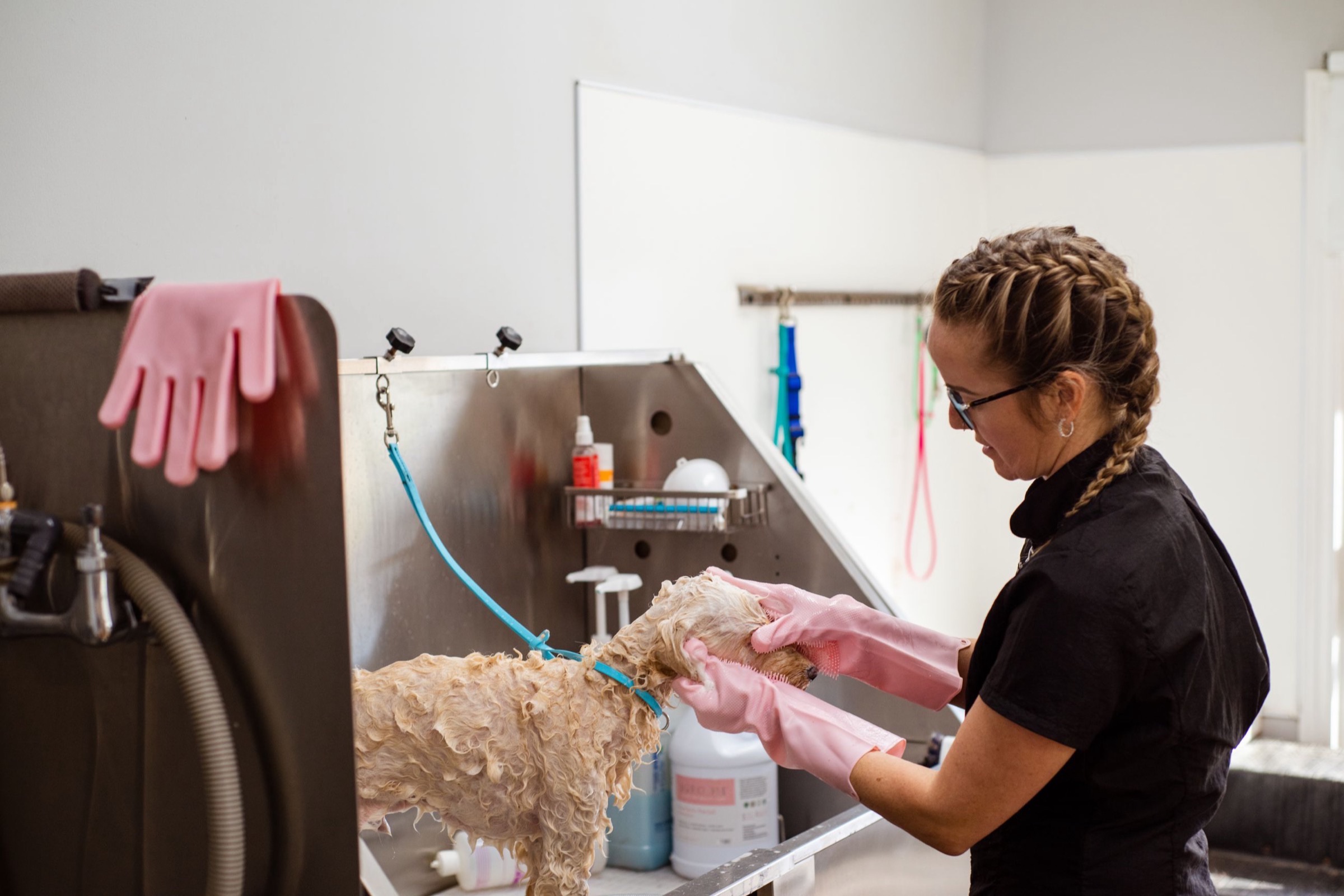
Brush out every tangle first, because water tightens them. Then follow bathing a Poodle and dry the coat completely on a low setting while you brush, so the curl is stretched straight.
2. The comb test
Run a metal comb down to the skin through the whole coat: behind the ears, in the armpits, between the hind legs. If it snags anywhere, the clippers stay off.
3. Belly and sanitary area first
Fit the no. 10 and start on the belly, from the navel toward the groin. Hold the skin taut and mind the nipples, on males too. Under the tail, skim the hair away lightly, moving away from the anus. A dog that scoots a lot needs a look at Poodle anal glands first.
4. The body
Switch to the guard comb and work from the neck toward the tail, with the lie of the coat, in long overlapping strokes. Keep the blade flat: tilted, the cutting edge meets the skin. Then the sides and chest, top to bottom.
5. The legs
Clip from shoulder or hip downward, lifting each leg in the direction it bends naturally. In the armpit and at the tuck-up, where the hind leg joins the body, the skin is thin and loose: short blade only, never a guard comb forced through.
6. The face
The classic Poodle face is clipped clean. With a no. 10, take a straight line from the inner base of the ear to the outer corner of the eye, then work toward the nose, always away from the eye. On the throat, the Adam's apple is the lower limit. Stretch the lips taut and watch the fold beside the lower lip.
7. The feet
Clean-shaved feet are the hardest part: groomers use a no. 15 or no. 30 against the grain, between webbed toes. The beginner's alternative: use round-tipped scissors to trim the hair under the foot level with the pads, then round off the foot. Do the nails while you are there.
Safety: where it goes wrong
- A hot blade. Test it against the inside of your wrist every few minutes; too warm for you is too warm for your dog. Swap blades or use coolant spray. Clipper burn, which a blunt blade also causes, often shows only hours later: redness and bumps in the groin, armpits, belly or face.
- Ears. Lay the ear flat on your hand and clip from the middle toward the edge, never the other way. Clippers stay out of the ear canal; see Poodle ear care.
- Armpits, tuck-up and sanitary area. Loose skin slips between the teeth. Skin taut, no. 10 only, no pressure.
- The table. Use a non-slip mat and never leave your dog alone up there.
How often?
Keep the salon rhythm: a full clip every 6 to 8 weeks, a quick tidy of face, feet and rear in between, and brushing several times a week. During the coat change, around nine months in the small sizes and later in a Standard, the coat mats fast, so do not stretch the schedule then.
Common mistakes
- Cutting mats out with kitchen scissors. The AKC's advice: keep household scissors in the drawer, because the skin rides up into the mat.
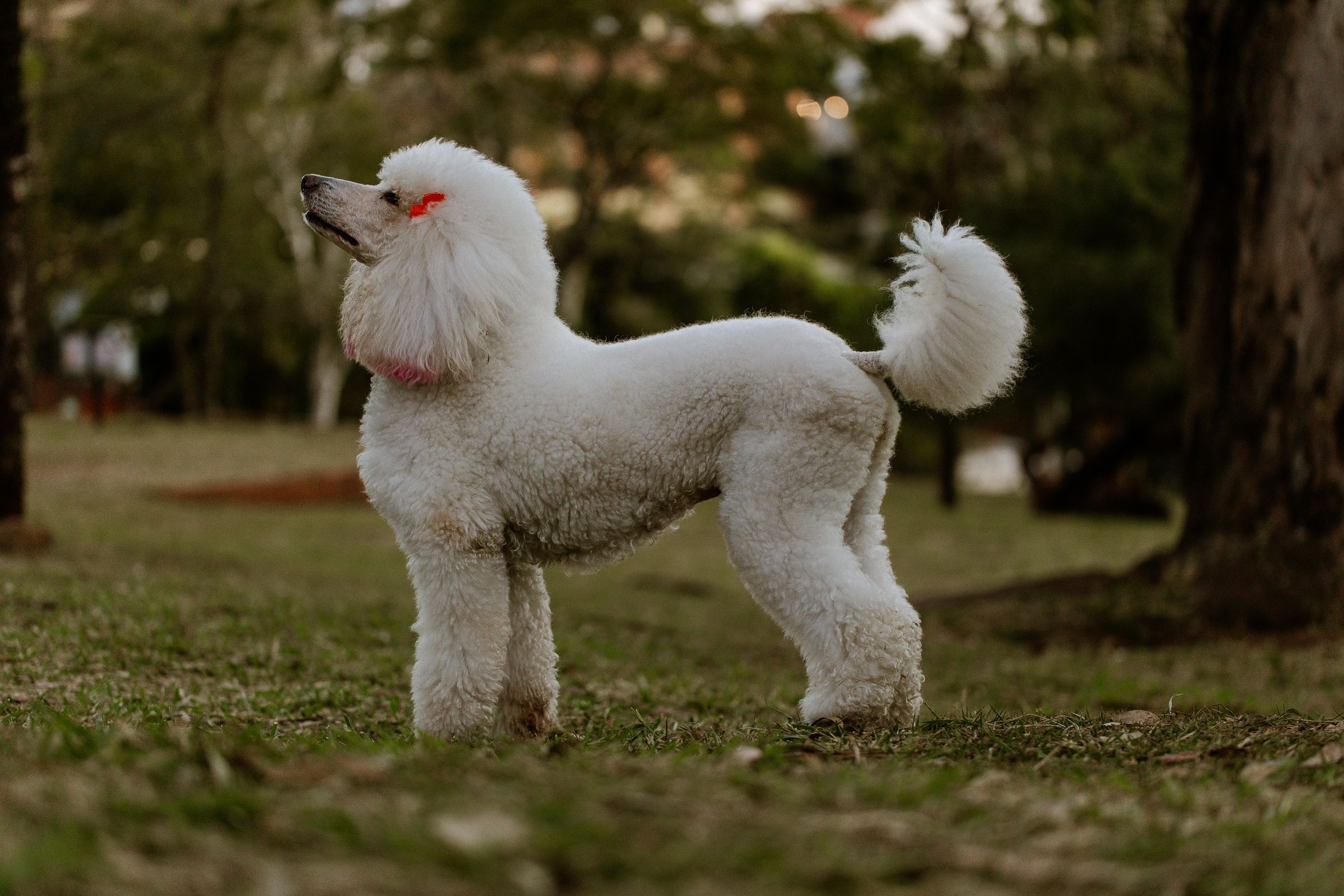
- Going against the grain with a short blade. The result is far shorter than the number suggests. Never shave a Poodle to the skin, not even in a heatwave: the coat protects against sunburn, as Poodles in hot weather explains.
- Pushing on too long, then putting the blade away dirty. Two short sessions beat one struggle; afterward, brush the hair out of the blade and oil it.
When to go to the groomer after all
Always with a felted coat: matting sits tight on the skin and has to come off from underneath with a short blade, which is work for experienced hands. Book the salon as well for a first shape that you then maintain, for any skin problem, and whenever your dog cannot stay relaxed at home.
Sources and checks
Blade lengths: the Andis blade chart. With versus against the coat, and skip tooth blades: trade supplier PetEdge. Order of work and sensitive zones: a Master Pet Stylist writing for Chewy, and the trade magazine Groomer to Groomer. Untrained clipping and scissoring out mats: the American Kennel Club. UK position: local council guidance in England and the qualification list of City & Guilds. No article replaces a lesson from a trained groomer.
In short
- Home clipping works: start with body and legs, and get shown once first. Toys and Miniatures are easiest; a Standard is a far bigger job.
- Cordless, quiet, with guard combs. No. 10 (1.5 mm, 1/16 in) for belly, rear and face; 6 to 13 mm (1/4 to 1/2 in) for the body.
- Bathed, blow-dried and tangle-free first; check the blade every few minutes.
- Felted coat, skin trouble or panic: go to the groomer.