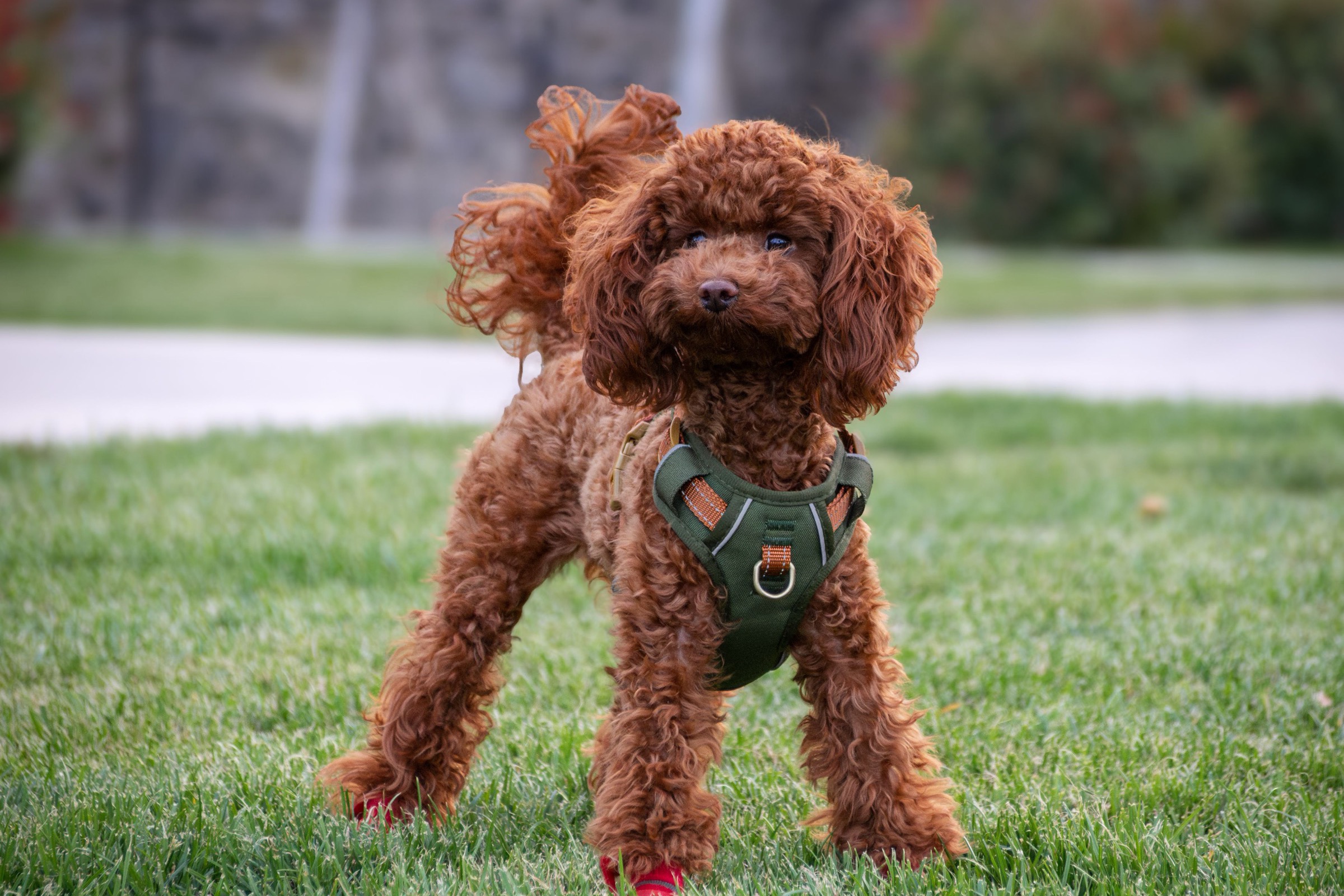
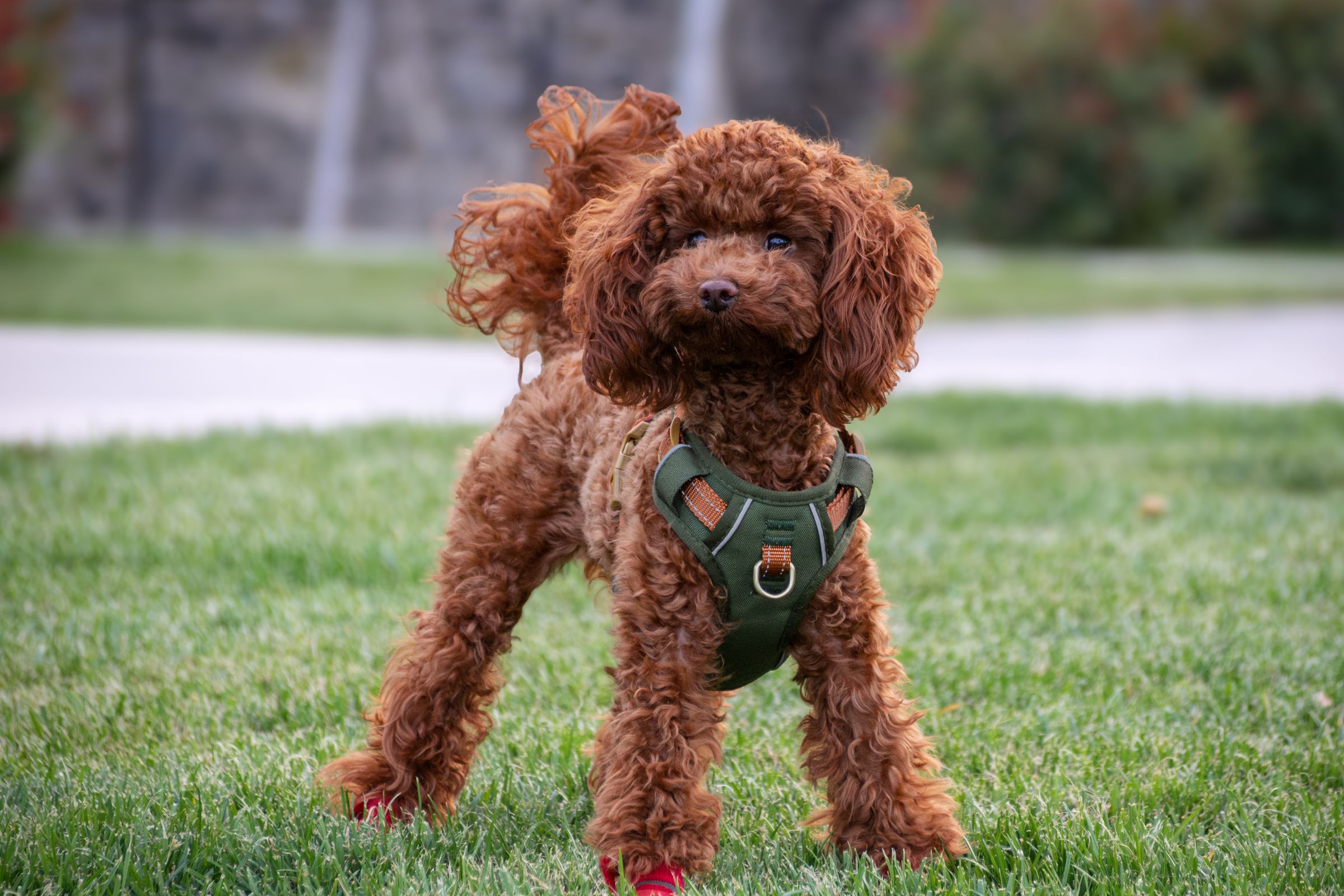
Poodles and Cats: How to Make the Introduction Work
By The Poodle Guide editorial team · Updated on July 24, 2026

Poodles and cats are one of the better dog-cat combinations you can pick. Poodles were never bred to dispatch small animals, unlike terriers, their prey drive is comparatively mild, and their intelligence and trainability mean you can genuinely teach them how to behave around a cat. But "better than most" is not a guarantee: individual Poodles vary, some love a good chase, and even the friendliest dog can terrify a cat if the first meeting goes wrong. The introduction determines almost everything. Here is how to get it right, step by step.
Why Poodles and cats usually work
Three breed traits stack the odds in your favor. First, the mild prey drive: a Poodle notices the cat, but most don't get the hard, fixated stare that spells trouble. Second, trainability: the second most intelligent breed learns "leave the cat alone" in a handful of repetitions, provided you actually teach it. Third, sensitivity: Poodles read the room, and a cat's clear "back off" signals tend to land. Size can even help: a Toy Poodle at 2-4.5 kg is barely bigger than the average cat, so the physical intimidation factor is close to zero. Be honest about the flip side, though: in that pairing the cat is often the boss, and a confident cat can bully a soft-natured small Poodle. Watch both directions.
Size differences matter at the other end of the range too. A Standard Poodle of 20-30 kg means no harm at all when it invites a cat to play, but a bouncy play bow from a dog ten times her weight can be terrifying for the cat. With the larger sizes, calm behavior training does the heavy lifting; with the smaller sizes, protecting the dog from the cat is occasionally the real task.
The introduction: a step-by-step plan
Plan for days to weeks, not hours. Every step is repeated until both animals are relaxed before you move on, and if a step fails, you go back one, not forward.
- Step 1: Separate territories. Give the newcomer its own room with everything it needs. Dog and cat live apart for the first days and get used to each other's sounds and household rhythm through a closed door.
- Step 2: Scent first. Swap blankets or rub a cloth on one animal and place it near the other's food bowl. Scent is how both species do their first "meeting", without any pressure.
- Step 3: Sight at a distance. First visual contact: dog on a leash and calm, cat free to leave at all times. Keep it short, a few minutes, and reward calm behavior on both sides with treats. End on a good note.
- Step 4: Build duration. Repeat daily, gradually decreasing distance and increasing time. The dog learns that a calm dog gets rewards and the cat learns the dog is background noise, not a threat.
- Step 5: Free contact, supervised. Only when the dog can stay relaxed on a slack leash and the cat moves through the room normally. Keep sessions supervised until you've seen many boring, uneventful encounters.
- Never force contact. Don't hold the cat up to the dog, don't push them together, don't lock them in one room to "sort it out". Forcing sets you back weeks.
Set the house up for success
A cat that can always escape upward is a cat that rarely panics. Before the introduction starts, make sure the cat has high perches, shelf routes or a cat tree in every shared room, plus a dog-free zone (a baby gate the cat can slip through works well) for the litter box and food. Feed them in separate places: food is the most common flashpoint. And keep the dog's own needs met: a Poodle with enough exercise and mental work has far less spare energy to spend on pestering the cat. A bored Poodle, by contrast, will discover that chasing the cat is the best game in the house.
Which combinations work best?
- Puppy meets adult cat: often the easiest. The puppy grows up accepting the cat as furniture, and a confident adult cat sets boundaries early: one well-aimed hiss teaches a puppy more than a week of training. Do protect a small puppy from a genuinely aggressive cat.
- Adult Poodle meets kitten: works well if the dog is calm and cat-tested. Supervise closely with the larger sizes purely because of the weight difference.
- Adult meets adult: perfectly doable, just slower. Both have established habits; give the plan above extra weeks rather than extra pressure.
If you're still choosing your Poodle and a resident cat is part of the equation, tell the breeder: some litters are raised around cats, which is a genuine head start. It's one more question for the list when buying from a responsible breeder.
Red flags, and when to get help
Most Poodle-cat pairs settle into peaceful coexistence, and many become genuine friends. But take these signals seriously: the dog stiffening and fixating on the cat, chasing it cannot be interrupted from, the cat living on top of the wardrobe and skipping meals, or any contact with teeth or claws out. If that pattern persists, separate them again, restart the introduction from step one, and if it still doesn't improve, bring in a qualified behaviorist early. And a practical note for the dog's side: cat scratches near the eye deserve a vet check, and if you're ever unsure whether a scuffle caused real harm, our health check helps you decide how urgent it is.
In short
- Poodles and cats are a promising match: mild prey drive, high trainability, sensitive nature, but individuals vary.
- The introduction decides the outcome: scent first, then sight at a distance, then gradual free contact over days to weeks. Never force it.
- Give the cat escape routes and high perches, and keep food and litter box in a dog-free zone.
- Toy Poodle and cat are near-equals in size: sometimes it's the dog that needs protecting; with a Standard, train calm play instead.
- Persistent fixating, chasing or a permanently hiding cat: go back a step and involve a behaviorist early.